December 2024
Detection of Hydration on Nominally Anhydrous S-complex Main Belt Asteroids
DAPS co-authors include faculty Cristina Thomas and Josh Emery, and current postdoc Lauren McGraw.
Congratulations to the following presenters and my apologies if I missed anyone:
Faculty:
Christopher Edwards, Chris Haberle, Josh Emery, Cristina Thomas, Haley Sapers
Postdocs:
Ben McKeeby, Cheng Ye
Graduate students:
Dede Chapline, Natalie Jones, Laura Lee, Ian Marrs
There’s also a Logan Tegler on the list — Steve’s younger daughter!
We are very proud of each one of you.
PhD:
Schuyler Borges (advisors: Josh Emery, Lillian Ostrach) Anna Engle (Steve Tegler, Jennifer Hanley) Andy Lopez-Oquendo (David Trilling) James Windsor (Ty Robinson)
MS:
Helen Eifert
BS:
Hayden Green
Ryan Milligan
November 2024
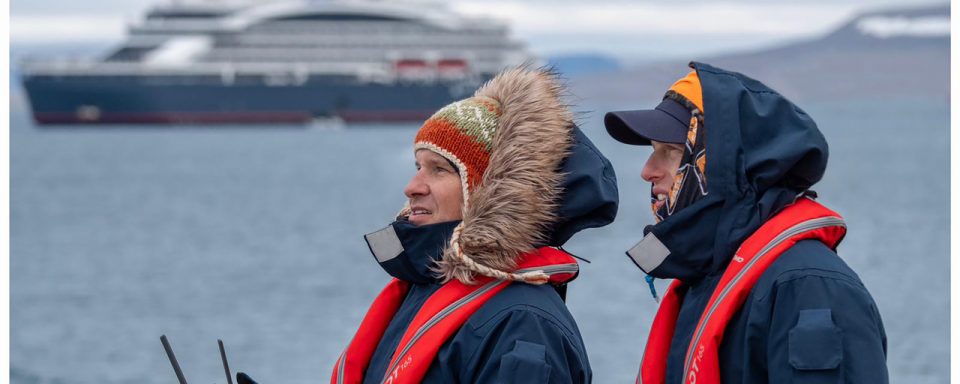
A rapid-response program to characterize Near Earth Objects with LCO’s MuSCAT instruments.
This is a three year program ($556K) that will support PhD student Remi Cantelas, and we’ll use Las Cumbres Observatory (LCO) telescopes in Hawai`i and Australia.
where she met with students and faculty in the Department of Earth, Ocean, and Atmosphere Science
(EOAS) and the department of Department of Microbiology and Immunology. She was invited to give a special seminar as well as the weekly EOAS colloquium.
at the monthly Walker Observatory star party at De Miguel Elementar school.
Mary Lara is the director of the observatory, and Ed Anderson is their technical support.
Meteor Crater – The World’s Best Preserved Asteroid Impact Crater
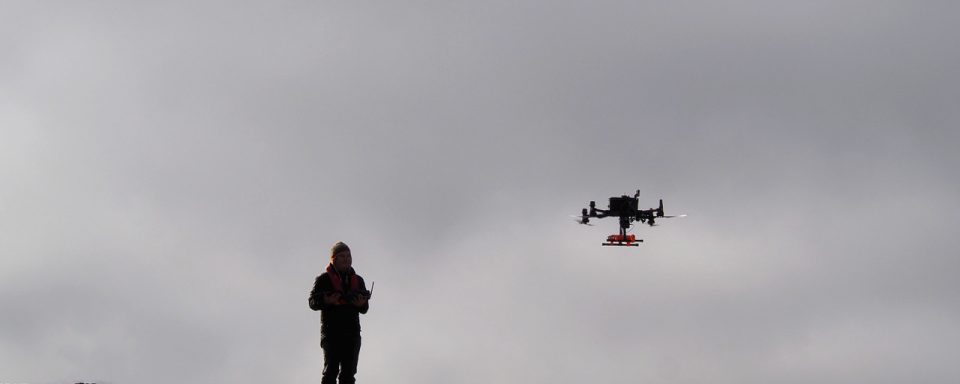
This is from when the NAU film crew came out with us to Meteor Crater when we were doing some of the surveying work for the Barringer family. This highlights some of the recent drone work that we’re doing at Meteor Crater, and demonstrates the sort of collaborations that MC has been so generous in helping us to establish.
Congratulations to Mark, postdoc Ben McKeeby, and undergrad student Hayden Green!
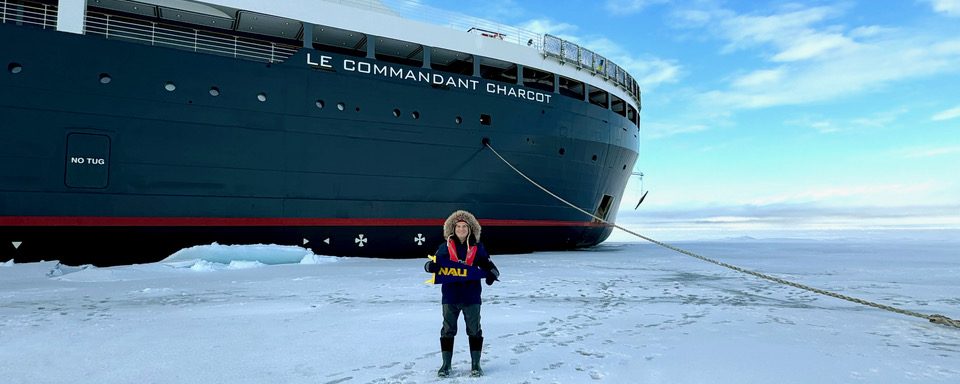
for a set of field experiments associated with the NSF Long-Term Ecological Research McMurdo program he is a co-investigator on. Mark will be carrying out in situ and remote sensing experiments related to ecology and geology in the Antarctic Dry Valleys.
Mark — have a great trip! We’ll miss you!
See you in January.
in an attempt to figure out if it was an impact crater or not.
(Spoiler, it almost certainly is contrary to the posted national park sign ambiguity!).
Christopher Edwards notes that “this work, related to the formation of the South Pole Aiken Basin on the Moon, was what Jessica had presented on several occasions at conferences and in the department. She was working diligently to get this published the summer she passed away. In the accident, a significant portion of the manuscript materials, including text, figures, and data she had worked so hard on, were unrecoverable from her laptop. After combing through files on my lab servers, shared Google drives, and other sources, Dr. Hannes Bernhardt, a good collaborator of hers, led the effort to finalize the analysis and write up the paper. Many thanks are owed to him and the other co-authors for working through this and turning it into something I think Jessica would be proud of. This is, of course, only a small recognition of the impact Jessica would have made on the field throughout her career. Nevertheless, I’m happy to say this work is published in her memory.
I’ll also note that former postdoc Aurelien Stcherbinine had a paper published in Icarus, On the impact of the vertical structure of Martian water ice clouds on nadir atmospheric retrievals from simultaneous EMM/EXI and TGO/ACS-MIR observations, related to Mars clouds, and he perhaps summed it up best in the acknowledgment section of his article:
October 2024
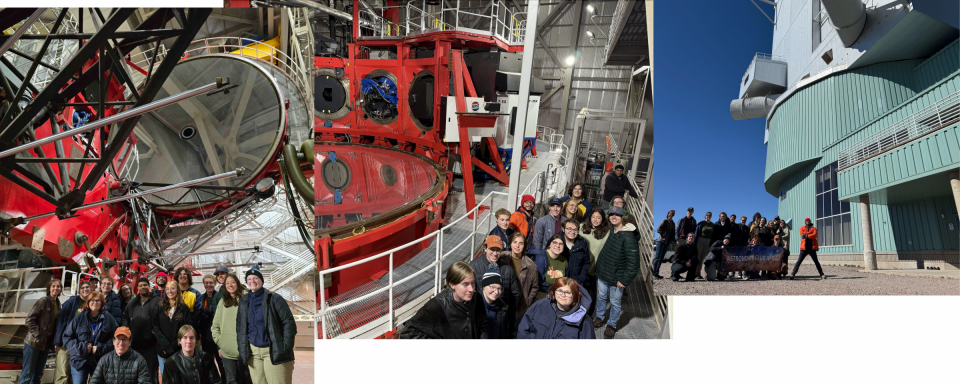
Club president, Audrey Smith reports, “The trip went really well. We had to read a sign a promise to not harm the red squirrels but we only got to seen them while driving. We were able to tour the SMT as well. When there they were observing so we got to see how things ran as well as a tour of the instruments. The LBT facility was amazing and huge. We actually saw in on top of the mountain while driving to Safford. The entire tour was amazing. They moved both the telescope and dome for us. We were all amazed by how massive everything was. We were also shocked to see Kitt Peak and Mount Lemmon from the kitchen. It was a fun trip. No one got sick going up or down the mountain which was a good thing. Joe and Joannah also offered to help us tour Kitt Peak and the MMT.”
Joe here is Joe Shields, director of the LBT, who was our colloquium speaker earlier this month — which allowed us to make the connection for this visit. (Joannah is the deputy director of LBT.)
Faculty: Josh Emery, Haley Sapers, Steve Tegler, Cristina Thomas, David Trilling, Chad Trujillo
Postdocs: Annika Gustafsson (PhD), Lauren McGraw (PhD), Will Oldroyd (PhD)
PhD students: Will Burris, Maria Chernyavskaya, Anna Engle, Kennedy Farrell, Lucas McClure, Ana Morgan, Ryder Strauss, Cece Thieberger
Alumni: Wilnelia Barea-Carrion (REU), Colin Chandler (PhD), Jarod DeSpain (BS), Max Hood (BS), Rachel Huchmala (BS), Oriel Humes (PhD), Jay Kueny (BS), Audrey Martin (PhD)
This is Sam’s first first-author paper!
And then got to enjoy a hurricane-impacted post-launch vacation!
Other NAU authors include Steve Tegler, Jennifer Hanley, Will Grundy, Gerrick Lindberg, Cece Thieberger, and Shy Dustrud.
Other NAU authors include Steve Tegler, Jennifer Hanley, Will Grundy, Gerrick Lindberg, Cece Thieberger, and Shy Dustrud.
September 2024
From the NSF, a continuation of the Active Asteroids project started by Colin Chandler for his dissertation based on archival DECam data and at activeasteroids.net.
And from NASA, a new spinoff project based on archival Subaru data which, being from an 8m telescope, is more sensitive to activity than all prior surveys and the future Rubin Observatory.
Together, these two projects will produce tens of millions of images of about 75% of the main belt asteroids in a search for activity.
Congratulations, Chad!
Discovery of 118 New Ultracool Dwarf Candidates Using Machine Learning Techniques
Congratulations, Hunter!
This is a prestigious postdoctoral fellowship for the top young people working in the field of exoplanet science (and related topics). Zach got his PhD in physics at CU-Boulder and will take this postdoc fellowship to Cornell.
and the author list includes former PhD students Will Oldroyd (presently an NAU postdoc) and Colin Chandler, former NAU postdocs Andrew McNeill, Cesar Fuentes, and Michael Mommert, and faculty David Trilling and Chad Trujillo.
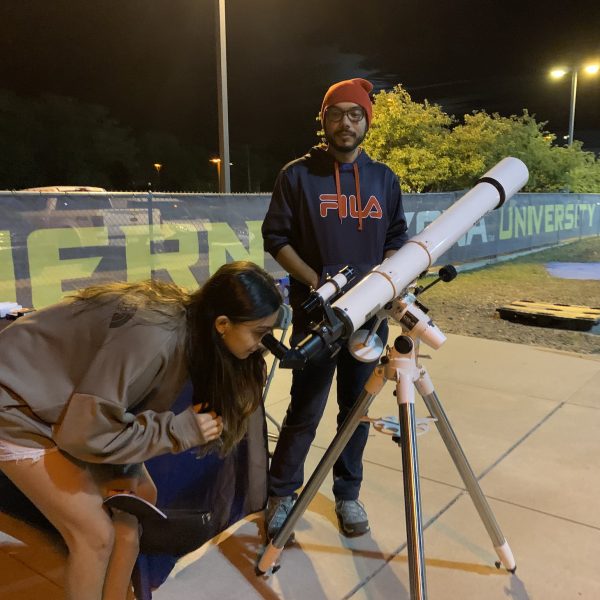
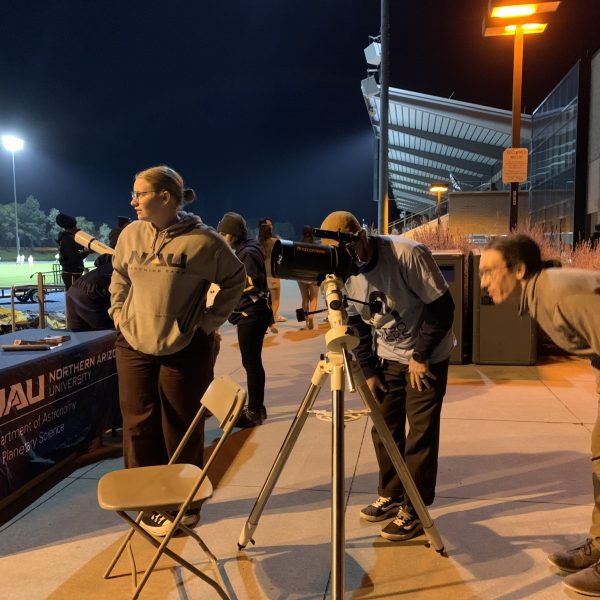
Alternate branding for NAU’s athletic department, and our astronomy club was on hand with some telescopes and their usual blend of competence and good cheer! Thank you Audrey Smith, Gary Rosip, and club co-advisor Matt Lydy for sharing the excitement of astronomy with the attendees of that soccer game.
August 2024
OSIRIS-APEx, a NASA mission to asteroid Apophis. The science team meeting was held NAU.
Congratulations also to the NAU presenters, and to those who attended the meeting to meet and interact with science team members from all over the world.
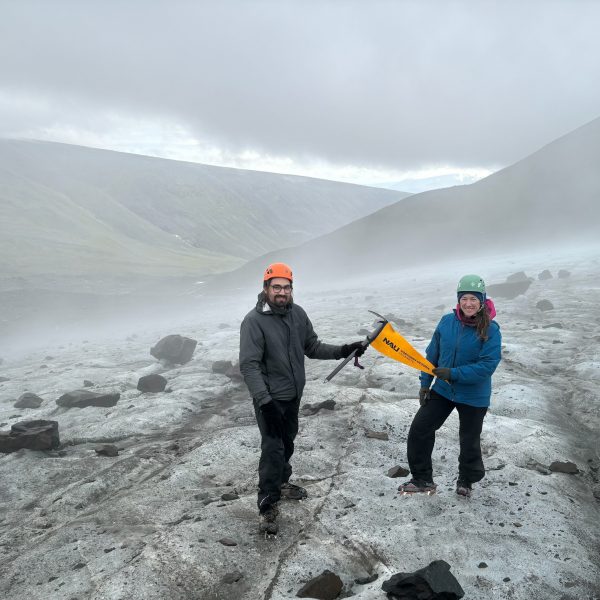
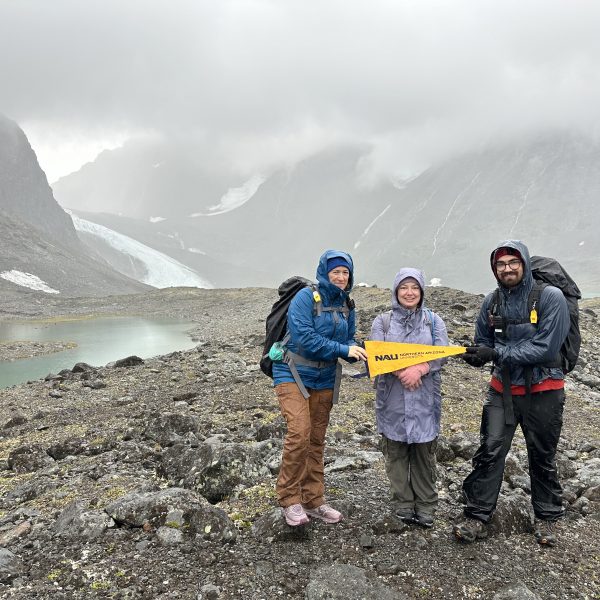
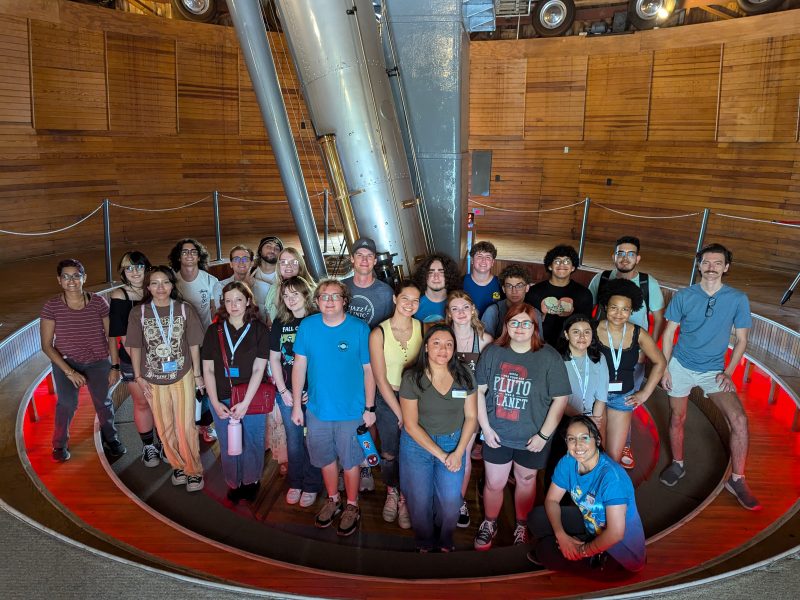
Along with Co-I Mark Salvatore and external Co-Is, they are investigating cold-based glacial alteration in Mars-like terrain. They had an amazing field season working out of Tarfala Research Station (University of Stockholm), even if the weather didn’t always cooperate.
July 2024
Here’s the co-investigator list: Colin Chandler (former NAU PhD student), Will Grundy (Lowell and NAU adjunct faculty), Teddy Kareta (Lowell), Ana Morgan (current NAU PhD student), Will Oldroyd (former NAU PhD student and current NAU postdoc), and Steve Tegler (NAU faculty). Keeping it local!
at the University of North Carolina Charlotte starting in the fall! She will be working on a project trying to get Orange Hydrogen from Catalytic Low Temperature Serpentinization.
She’s looking forward to working in a new ‘low temperature’ range (~375 K as opposed to 95 K)!
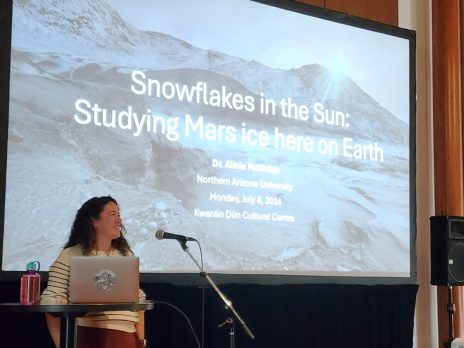
at the 8th International Conference on Mars Science and Exploration in Whitehorse, Yukon Territory.
She also gave a public talk to the community one evening.
Last year’s sabbatical visitor John Stansberry also a co-author.
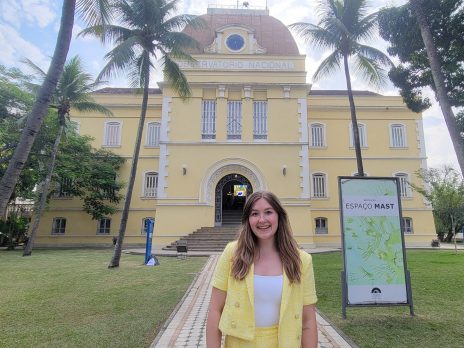
She presented computer-modeled spectra for a Wolf-Rayet star, BAT99-3, and discussed the implications of stellar characteristics on the evolution of massive stars.
While in Rio, she met several monkeys and ate a lot of acai!
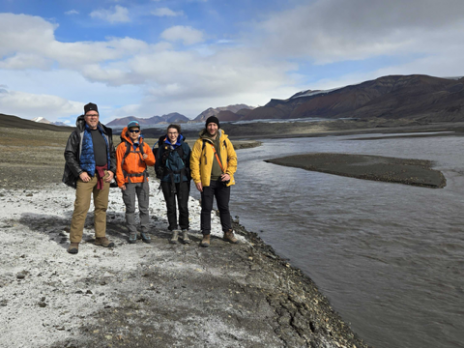
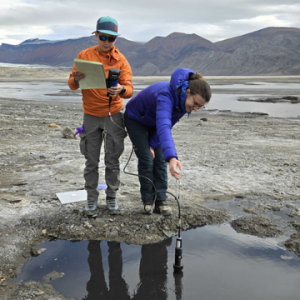
Sapers and her team joined other researchers at the remote McGill Arctic Research Station (MARS). Haley is testing ICOS [integrated cavity output spectroscopy] technology developed by ABB Inc. as a remote sensing tool as part of a instrument development program to build a methane spectrometer to measure methane seeps in the High Arctic and as a potential flight instrument to characterize near surface methane emissions on Mars. The team also collected samples from a suite of permafrost hosted perennial hypersaline cold spring methane seeps to investigate the ability of the seep-associated microbial community to oxidize methane and characterize the biogeochemical diversity of these unique springs and how they responding to rapid warming and potential increased methane emissions.
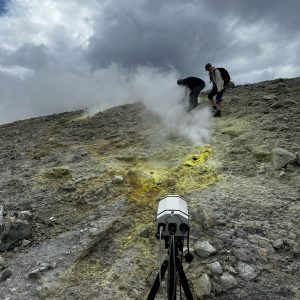
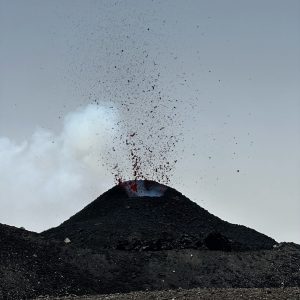
They look at how to accurately quantify gas and aerosols from eruptive plumes with a common monitoring tool, the Open-Path FTIR spectrometer. It’s a new method that allows them to look at sulfur speciation in the gas plumes as they are being emitted and how they vary as the activity at the vent varies.
This is in support of research grant on which he is co-I with collaborators from University of Pittsburgh, UT Austin and the INGV (volcanic and seismic observatory of Italy). They are testing a new multi-spectral thermal infrared camera, and how it can help us retrieve accurate measurements of volcanic gases, aerosols and ash from eruptions with very different styles.
This is in support of the joint NASA / Italian space agency SBG mission (Surface Biology and Geology), which is a new satellite instrument providing data in the IR and scheduled to launch in 2027-28.
The experiments were the basis of PhD student, Ana Morgan’s second-year projec; and undergrad, Ryan Wocher’s AST 485 research.
Orbital Observations Suggest Decoupled Olivine and Carbonate Enrichments in Jezero Crater
which is about the origins of the Carbonate-bearing unit the Perseverance Rover is currently exploring.
The key findings are that the carbonate-bearing unit, when examined from the entire suite of datasets available, shows different characteristics than the other carbonate bearing units when observed from orbit.
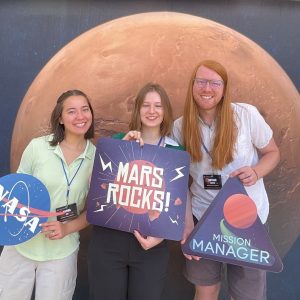
Laura, Nathan, and Anna had poster presentations that all received high interest from conference goers. They also met up with former NAU postdoc, Aurelien Stcherbinine.
June 2024
A Novel Surface Energy Balance Method for Thermal Inertia Studies of Terrestrial Analogs
With Co-Authors Christopher Edwards, current NAU APS Grad students Helen Eiffert and Dede Chapline, and former NAU Postdoc Kristen Bennett.
The paper demonstrates the a newly developed, quantitative field-based model for deriving thermophysical and material properties from remote sensing data. This is the culmination of more than 5 years of field work, model development, and data analysis.
Congrats Ari et al!
Terrific to see our students succeed post-NAU!
with about 25 students completing a four-week multi-disciplinary field course.
Congratulations, Mark, for seeing this stage through — we know how much work you put into this.
TNO == Trans-Neptunian Objects
NAU had a really impressive presence:
Colin Chandler (former PhD student), Josh Emery, Will Grundy (adjunct faculty), Brittany Harvison (former undergrad), Audrey Martin (former PhD student), Ana Morgan, John Stansberry (last year’s sabbatical visitor), Ryder Strauss, David Trilling.
There were about 100 people at the meeting — pretty impressive that nearly 10% of the attendees for this very international meeting are, or recently have been, part of our department!
May 2024
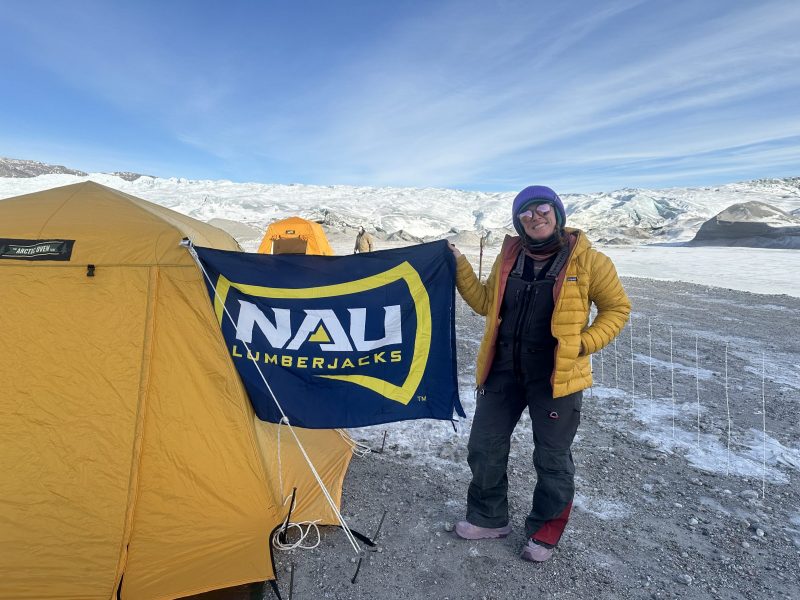
She was measuring spectral data, collecting field samples to measure glacial alteration, and generally freezing her fingers off.
The main goal of the NSF-funded project is to characterize seasonal shifts in the Greenland ice sheet melt cycle and how that is changing in a warming climate. This kind of deep field science isn’t possible without a lot of work by a lot of people, and she’s very grateful to folks in the department – especially Jagoda Janiszewska and Christopher Edwards – for being so supportive of mid-semester fieldwork!
Congratulations, Gavin, and fast work!
Congratulations Andrew!!!
This is a 3 year $2.1M proposal. Christopher Edwards is a Co-I, Allie Rutledge is a collaborator, and there is funding for a full time graduate student and 2 undergraduates per year.
The work would use a multispectral imager and thermal emission spectrometer to perform field analog investigations of hot spring silica sinter deposits in Utah and Chile. Field samples will be acquired for a rigorous laboratory characterization focusing on spectroscopy, mineralogy, and biosignature preservation and modification.
There are also Co-I’s from ASU, Western Washington University, and University of New Mexico.
Congratulations, Chris!
And to the rest of our graduates!
Astronomy majors: Max Hood and Riley Williams.
Astronomy minors: Fern Carter, Shannon Comstock, Grace Morris, and Zoe Spalding.
PhD: James Windsor.
April 2024
Congratulations also to Laura’s mentor Christopher Edwards; and to Josh Emery, for leading our graduate seminar on proposal writing, which continues to be incredibly successful in helping our students win these nationally competitive awards!
In addition to working on a research project with Mark Salvatore and majoring in astrophysics. Kaitlyn is also the drum major for the NAU marching band!
The project is titled, The Stability of Organosulfur and Organic Compounds in Solar System Ices. The project investigates how stable amino acids and astrophysically-relevant organosulfur compounds may be in icy environments found on extraterrestrial surfaces. The results will have implication for what compounds scientists may be likely to find when observing surfaces of icy moons that have been chemically altered over time.
The award is for $458K over 3 years.
Congratulations, Mark!
They are proposing to build a constellation of cubesats that would enable rapid detection of fires before they reach a catastrophic size.
You can learn more here
As part of their NASA SSERVI grant, they helped run nano-impactor experiments at 0.08 and 0.05 g. The impactors had motion sensors installed that monitored speed and spin upon impact in various density media. There were 4 flights over the course of the week, and each flight consisted of 8-9 parabolas. The modified Falcon 20 would reach the desired low gravity conditions for ~20 seconds, with ~2g on either side of the arc.
The flights took place at the National Research Council in Ottawa, CA.
A couple of video files of the experiment can be found here and here.
Hayden Green, Audrey Smith, Yves Wood, Riley Williams, William Rosen, Lleyton Hull, Emily Clark (x2), Margaret Mayhook, Rachel Fry (x4), Gavin Moriarty, Jack Kohm, Kayla Blair (x3), Hunter Brooks, Nolan Thompson, Jarod DeSpain
The proposal is titled, Investigating compositional, thermophysical, and original variabilities of ancient volcanic materials on Mars.
This project is going to comprehensively investigate the large circus-Hellas volcanic province and small isolated volcanic edifices across the southern highlands of Mars to examine the compositional variations, eruption types, temporal and spatial distributions, and possible formation mechanisms of ancient volcanism on Mars.
There are two Co-Is on this proposal: Christopher Edwards and former APS postdoc Valerie Payre (currently assistant professor at University of Iowa). This proposal is ~$578K for 3 years.
Congratulations!!!
The project is to investigate the composition and nature of the Medusa Fossae in a proposal entitled, Origins of the Medusae Fossae Formation: Stratigraphy and Depositional History.
This proposal will send ~230K to NAU and support a graduate student to help complete the work.
Congratulations!
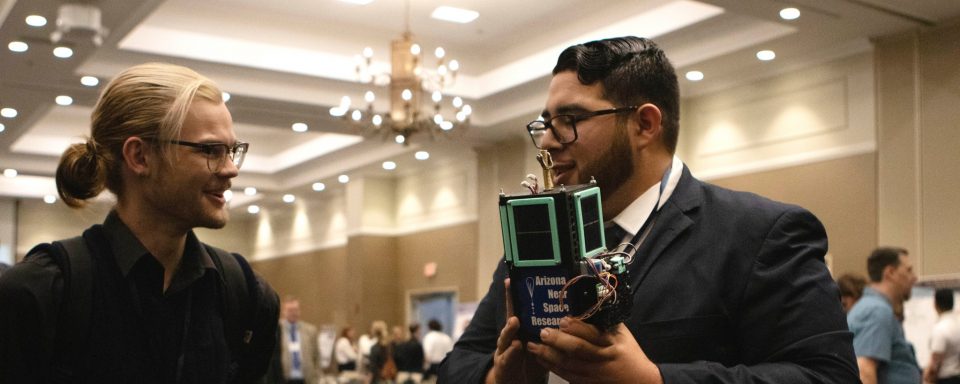
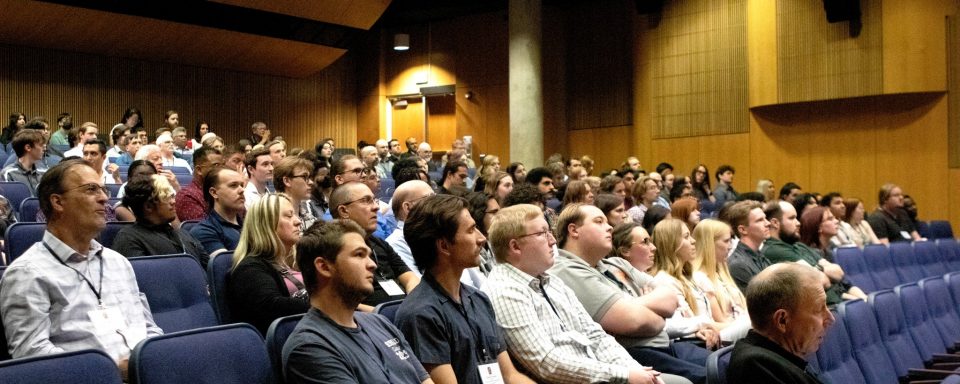
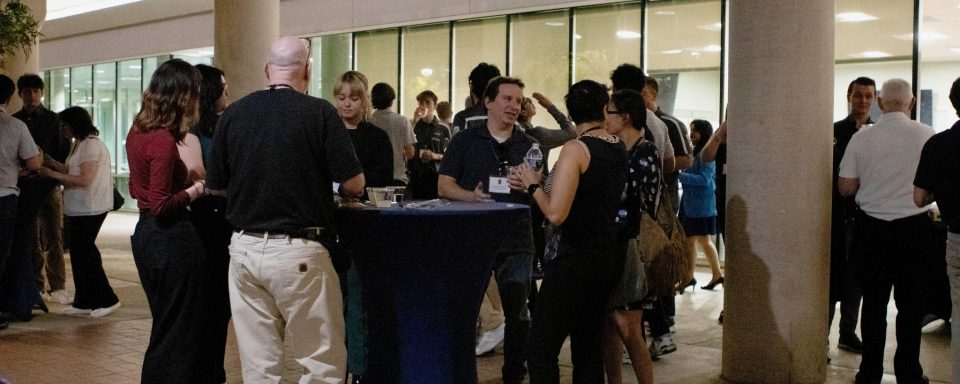
This is a statewide event that includes student presentations from Northern Arizona University, NASA Space Grant Interns. The Symposium includes presentations on a variety of topics based on research done by the students over the duration of their fall/spring internship. Twenty-one NAU/NASA Space Grant interns presented their research at the Symposium this past month at the University of Arizona. Student majors this cohort included Engineering, Biology, Chemistry, Physics and Astrophysics, Biomedical Science, Geology, Computer Science, Forensics and Criminalistics, Environmental Science and Climatology.
Faculty and research staff mentors from NAU’s College of Engineering, Informatics, and Applied Sciences and College of the Environment, Forestry, and Natural Sciences, participated, as well as research scientists from USGS Astrogeology Center and Lowell Observatory, and the editor from the local Flagstaff Arizona Daily Sun.
Congratulations to all interns and mentors!
March 2024
Undergraduate students Greta Freeman, Emily Clark. PhD students Anna Baker, Nicole Ozdowski, Laura Lee, Natalie Jones, Ian Marrs, Ana Morgan. Postdocs Cheng Ye, Chris Wolfe.
We also note a first-author presentation by Jessica Walsh. We miss her.
The Active Asteroids Citizen Science Program: Overview and First Results
Co-authors include Chad Trujillo, Will Oldroyd, Jay Kueny, Will Burris, Jarod DeSpain, Kennedy Farrell, David Trilling, and Annika Gustafsson.
This was also picked up by the Arizona Daily Sun
Other papers recently published by this group using citizen science:
AI-enhanced Citizen Science Discovery of an Active Asteroid: (410590) 2008 GB140
2016 UU121: An Active Asteroid Discovery via AI-enhanced Citizen Science
Cometary Activity Discovered on Vacationing Centaur 2019 OE31
New Active Jupiter Family Comet 2008 QZ44: a Discovery with Citizen Science
Mars-Crossing Minor Planet 2018 VL10: a Jupiter-family Comet Discovery via Citizen Science
Activity Discovered on Mars-Crossing Jupiter Family Comet 2018 OR by Citizen Scientists
This one is Kennedy’s first 1st-author paper!
The awarded proposal is titled: The Stability of Organosulfur and Organic Compounds in Solar System Ices.
The projects investigates how stable amino acids and astrophysically-relevant organosulfur compounds may be in icy environments found on extraterrestrial surfaces. The results will have implication for what compounds scientists may be likely to find when observing surfaces of icy moons that have been chemically altered over time. The award is for $458K over 3 years.
You can watch his defense here: https://youtube.com/watch?v=5IW5fomCoLA.
Connor is now starting a postdoc position working on the Burst-alert-telescope AGN Spectroscopic Survey.
Thanks to Lisa Chien for providing this update.
Taxonomy of Subkilometer Near-Earth Objects from Multiwavelength Photometry with RATIR
Samuel completed his PhD at UNAM (Mexico) a few years ago. Most of his PhD work was carried out while a long-term visitor here at NAU.
Great to see this paper finally get published! Other NAU authors include David Trilling and Michael Mommert (now faculty at the Stuttgart University of Applied Sciences in Germany).
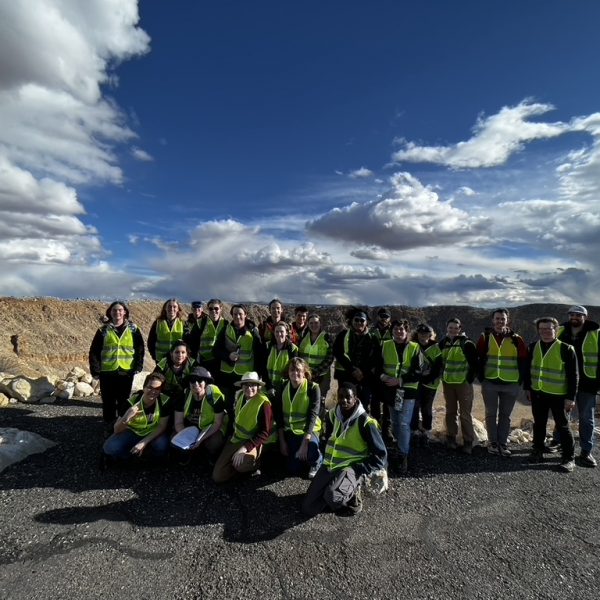
NAU is the only university in the world that can offer this class! They take an NAU bus to Meteor Crater every Friday afternoon for a few hours at the world’s best preserved impact crater, and the topic of the class is impact cratering.
“This is the annual Winter PI meeting where the leaders debrief from the past field season and strategize for the upcoming season.”
Remember that Mark is part of the Antarctic/McMurdo LTER team.
He starts in June and will be working on software for upgrading satellites.
The Distribution of Highly Red-sloped Asteroids in the Middle and Outer Main Belt
Co-authors are professor Cristina Thomas and postdoc Lauren McGraw.
The paper discusses emissions during the first Icelandic eruption on the Reykjanes peninsula in 2021, in which they look into Sulfur budgets between gas and ground mass, and how observed emissions are integrated within gas dispersion models in real time.
Both Christopher and Mark are incredible mentors, researchers, teachers, and colleagues. Their contributions to our department, and to the success of our students, are enormous, and we are very fortunate to have them as colleagues and members of our department.
February 2024
The PI of this program is David Trilling — it was run for many years by emerita faculty Kathy Eastwood. 2024 will be the 34th year of our REU program, and it is the longest continually operating REU site in astronomy in the country. In fact, we’re pretty sure this program was selected in the first-ever REU cohort in astronomy, and has been operating here ever since. Congratulations to everyone involved in the success of this proposal and the success of this program over many, many years.
This position is part of the NASA Postdoctoral Program, and Andy is one of only six people selected in this round.
At Goddard he’ll join other recent NAU PhD graduates who are now postdocs there: Ari Koeppel, Amber Young, and Patrick Tribbett. It’s a party of successful great young NAU-trained scientists!
Mary Lara (NAU AIMER Coordinator) met Nathan Tohtsoni, the Education Coordinator for Navajo Transitional Energy Company, two years ago at a Girl Scout Camp at Dine College in Tsaile. This past fall, he offered Mary $5,000 in grant money to the AIMER Program to purchase Alpha rockets to use with Shonto Prep, Ganado Middle School and the Girl Scouts. He also requested that she use some of the grant money to purchase space t-shirts for the Girl Scouts.
Wow, 10:1 oversubscription is a really tough game, making our successes even more impressive!
Congratulations to Cristina Thomas and Josh Emery, who are co-investigators on 1 and 3, respectively, selected proposals!
Also, PhD student, Lucas McClure (CoI, 1 proposal) and adjunct faculty, Will Grundy (CoI, 1 proposal) on the acceptance list.
Also on the list of accepted programs two alumni from our department: former undergrad Brittany Harvison (CoI, 1 proposal) and MS alumna Ryleigh Davis (PI 1 proposal, CoI 1 proposal).
What’s a STEMMY? These are Flagstaff-area STEM awards. Ed is a finalist for the Community Partner of the Year category, and we’ll find out Thursday, March 7, whether he wins!
January 2024
Citizen Science Discovery of a Recurrently Active Jupiter-Family Comet: (551023) 2012 UQ192
Co-authors include faculty supervisor, Chad Trujillo; recent PhD’s Colin Chandler and Will Oldroyd; current grad-students Will Burris and Kennedy Farrell; and alumnus (class of 2019), Jay Kueny.
The same team also published a paper at the end of last year as well:
New Active Quasi-Hilda Asteroid 2004 CV50: A Citizen Science Discovery
Thes are faint objects in the distant outer Solar System.
The team led by David Trilling and including Chad Trujillo, Will Oldroyd, Ryder Strauss, and Colin Chandler.
This is the first batch of discoveries from DEEP. Over the next year or so they will announce thousands of such objects, making their survey the largest to date.
by PhD student Laura Lee and research faculty Chris Haberle.
VISIONS will be installed on NASA’s EscaPADE mission, to be launched for Mars in August, 2024. This successfully concludes the hardware construction and delivery phase of the project. The next phases are integration, and eventually in-flight operations
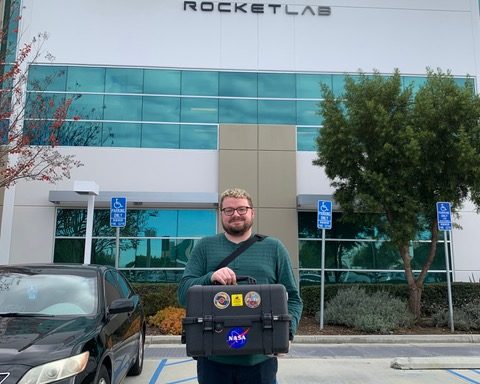
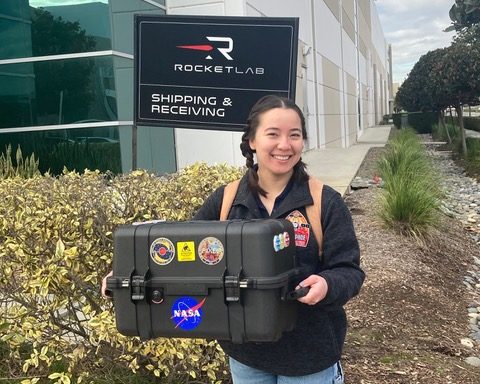
Congratulations to all involved!
He is PI on a recently accepted proposal in NASA’s ATP program (Astrophysics Theory) for the project entitled Accreting Massive Black Hole Binaries in Galactic Nuclear Clusters.
This is a 3 year program that will support an NAU grad student and an undergrad for three years. The total award is $383,012.
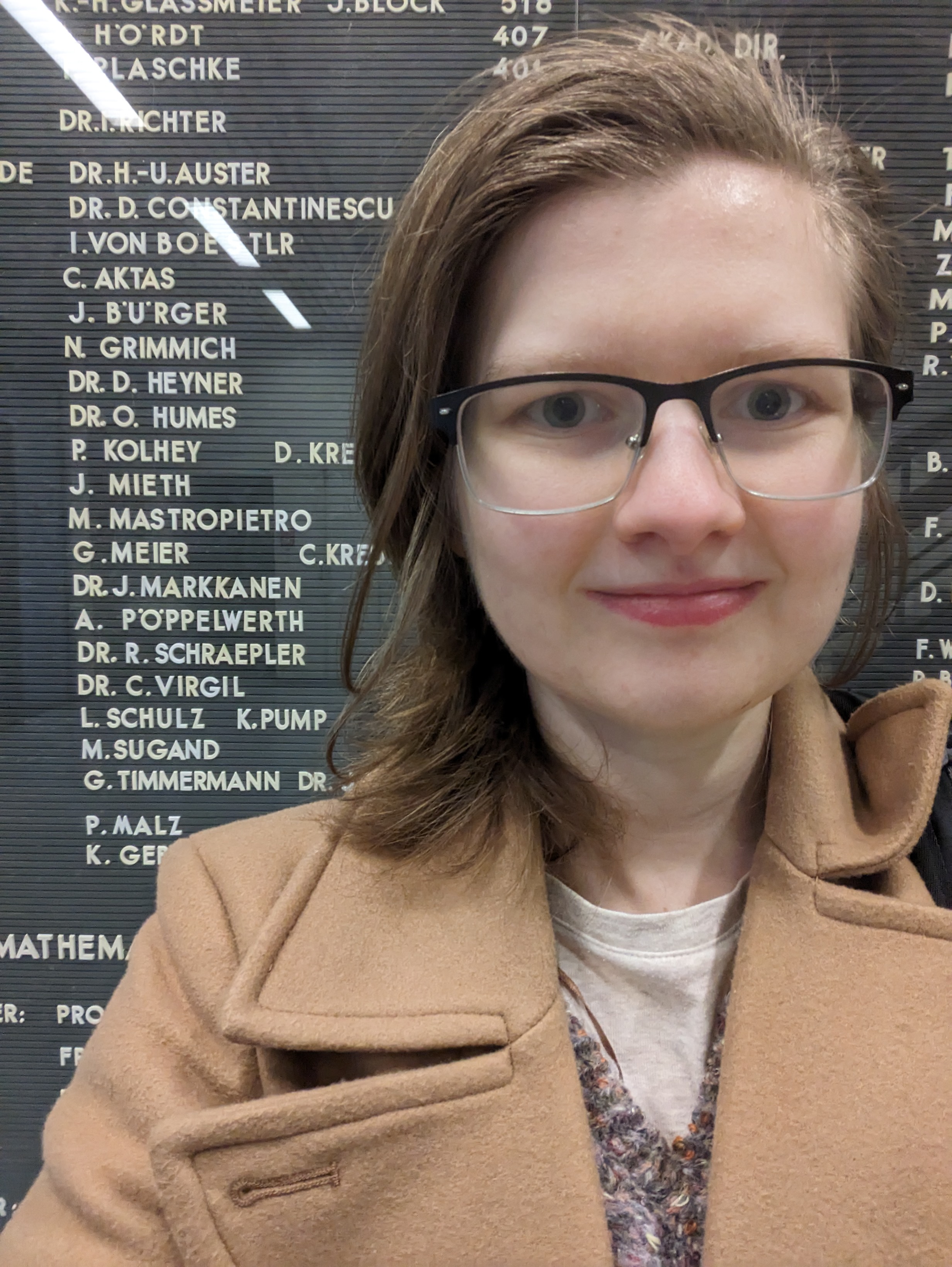
“I’ve been in Braunschweig [Germany] at my new postdoc position for a month now! Now that I’ve settled in I wanted to send you this update including a picture of me with my name on the TU Braunschweig IGEP (Institute for Geo- and Extraterrestrial Physics) directory to be included in the next good news email. I also gave a seminar this week at the IGEP about my PhD research to introduce myself to the department.”
The voluntary review session was attended by ten participants (including two from NAU Marketing and two from NAU ITS Enterprise Information Services), seven of whom made the trip to Embry-Riddle Aeronautical University the following Friday to take the exam and become certified pilots.
We are happy to report that all participants who took the exam passed and are now licensed drone pilots!
President Cruz-Rivera’s Welcome Back message.
Looking good, folks!
Congratulations to both!
“Right now until the end of March, there’s a small group of students who are astronomy majors, and minors participating in the Plant Mars Challenge. The group leaders are PhD student Laura Lee and recent BS graduate and current MS student Loren Larrieu. I’m excited that NASA Space Grant could fund this and I really hope this project is a success and a great learning experience.”
Michael has had a couple of positions since leaving NAU, and next month will become professor of AI and remote sensing at Stuttgart University of Applied Sciences (Germany).
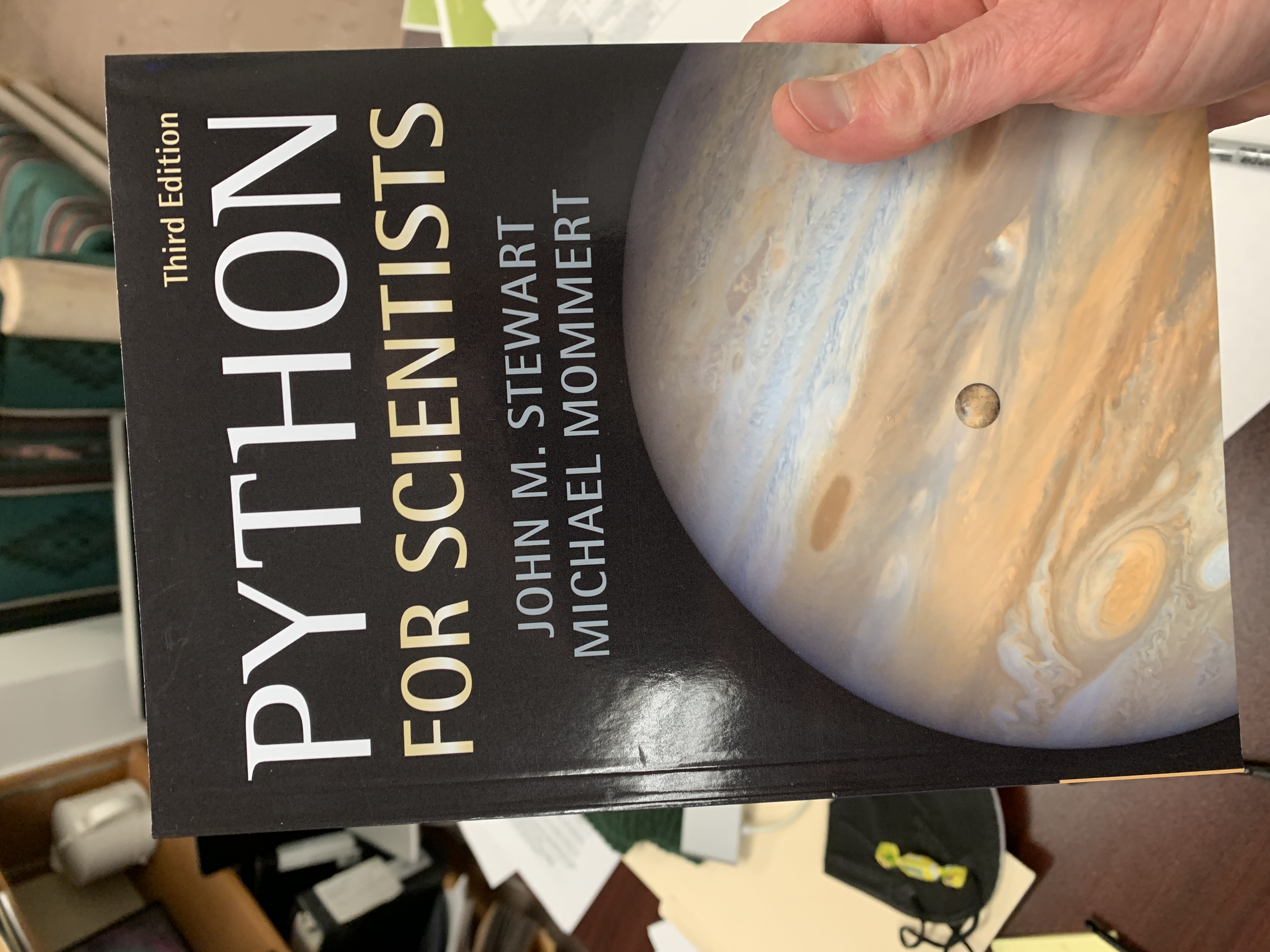
Congratulations, Michael!!
Retrievals Applied to a Decision Tree Framework Can Characterize Earthlike Exoplanet Analogs
Former faculty, Ty Robinson is one of the co-authors.
Inner Edge Habitable Zone Limits Around Main Sequence Stars: Cloudy Estimates
Recent PhD graduate, Amber Young; and former faculty, Ty Robinson are among the co-authors.
Brian Abramowitz from the Florida Museum of Natural History has an initiative to bring scientists to Florida schools and reached out to Laura looking for an astronomy expert to talk to Freedom 7 Elementary school.
She remotely presented to 60 some odd students about differentiating bodies in the Solar System.
Here’s the link to her slides: https://www.canva.com/design/DAF6k8Y1l2Q/PVIuzzDuO_7iUHVXrLq7EQ/edit
That’s a great number — congratulations!
He was a named postdoc on both projects, contributed to the proposal writing, and is now an active investigator with substantial funding for 3 years. Both projects will explore the application of multi-spectral infrared imaging for the monitoring of natural hazards.
The first project, entitled “UAS Thermal Infrared Spectroscopy will Improve Real Time Evaluation of Hazards and Environmental Impacts of Wildfires”, was submitted to the FireSense Technology program, which is a technology development program managed by the Earth Science Technology Office (ESTO) seeking new, innovative Earth system observation capabilities to predict and manage wildfires and their impacts. Using drone-mounted IR multi-spectral imaging, the team will develop new tools to measure thermal flux, monitor burn area and quantify gas and ash emissions.
The second project, entitled “Validating volcanic degassing retrievals using a novel ground-based thermal infrared camera system: Preparing for the upcoming SBG mission”, was submitted to the ESI program (Earth Surface and Interior). This project will use ground-based multi-spectral IR to monitor changes in the thermal flux and gas outputs at 3 persistently active volcanic systems in Italy, with the specific goal of developing level 4 products for the upcoming SBG mission.
J-F’s role in both projects will be to develop retrieval codes for gas and particle emissions from the camera data.
Exoplanet Analog Observations of Earth from Galileo Disk-integrated Photometry
Co-authors include faculty, David Trilling; former faculty, Ty Robinson; and former undergrads, Ryan Cummings and Christopher Smith.