Contact the Department of Educational Psychology
Join our graduate program
Graduate quick links
-
-
-
-
-
-
- current tuition and fees
- financing your education
- loan forgiveness for teachers
-
-
-
-
-
Future students
Visit the College of Education's future students page to get helpful links for both undergraduate and graduate students. M.A. Human & Community Relations Information PacketPrograms of study
For a complete listing of all programs of study, please visit the Office of Graduate and Professional Studies Programs of Study page.Human and Community Relations, Master of Arts
This theoretically oriented plan is appropriate if you are in the business world, the military, or education-and are seeking advanced preparation in facilitating an understanding of human behavior and the learning process.
To receive a master's degree at Northern Arizona University, you must complete a planned group of courses from one or more subject areas, consisting of at least 30 units of graduate-level courses. Many master's degree programs require more than 30 units.
You must additionally complete:- All requirements for your specific academic plan(s). This may include a thesis.
- All graduate work with a cumulative grade point average of at least 3.0.
- All work toward the master's degree must be completed within six consecutive years. The six years begins with the semester and year of admission to the program.
Individual degree programs may exceed the baseline University Policy for a master's degree. The program-specific requirements are provided on the Details tab below.
Read the full policy here.
In addition to University Requirements:
- Complete individual plan requirements.
| Minimum Units for Completion | 30 |
| Additional Admission Requirements | Individual program admission requirements over and above admission to NAU are required. |
| Some online/blended coursework | Required |
| Progression Plan Link | View Program of Study |
Purpose Statement
The MA in Human and Community Relations (HCR) prepares you to navigate the complexities of human behavior, communication, leadership, and community engagement. This program offers a blend of theoretical foundations and practical tools for creating inclusive, collaborative environments in both professional and community settings. You will explore learning processes, leadership strategies, analytical reasoning, and community development and evaluation, equipping you to design and assess initiatives that foster positive relationships.
This 30-unit, online degree attracts individuals from a range of fields, particularly those pursuing or looking to advance their careers in business, education, public service, nonprofit organizations, and community development. You can tailor your education with the addition of a graduate certificate in areas such as Indigenous and Tribal Nation-Building, Community Planning, Educational Technology, or Positive Behavior Support, allowing you to tackle real-world challenges while building specialized expertise.
Throughout the program, you will collaborate with a diverse cohort of peers, faculty, and community organizations, gaining fresh perspectives and deepening your understanding of the social dynamics that shape communities. This collaborative environment will strengthen your ability to work across sectors and cultures, an essential skill for driving inclusive, equitable change.
Aligned with the College of Education's mission, the HCR program prepares compassionate professionals to create a positive impact in your workplace and community. Graduates are equipped for a range of careers, including Community Relations Specialists, Nonprofit Managers, Organizational Development Consultants, Youth and Community Program Coordinators, Policy Advocates, and more, leading initiatives that promote equity, inclusion, and community well-being.
Student Learning Outcomes
- Apply and interpret core principles of human behavior - including lifespan development, personality, and educational psychology - in community and organizational contexts.
- Examine how individual, social, and cultural contexts shape human behavior and interaction across settings.
- Evaluate learning and development processes to inform responsive and effective practice.
- Apply leadership and interpersonal strategies that foster respectful, collaborative, and inclusive environments in professional and community contexts.
- Develop skills for guiding group interactions and resolving conflicts effectively, with awareness of cultural and social dynamics.
- Develop and apply skills that support effective relationship-building and constructive engagement in community and organizational contexts.
- Analyze and assess community-based programs using foundational program evaluation and needs-assessment approaches developed in core coursework.
- Apply research design, measurement, and analytical reasoning to interpret findings and support evidence-informed decisions aligned with community priorities and goals.
- Apply and evaluate established theories and methods to address challenges in human relations and community development, fostering inclusive and effective practices across communities.
- Compose clear, coherent arguments that integrate theory, evidence, and practical application.
- Create professional products and materials that demonstrate interdisciplinary integration across core coursework and, where relevant, elective or certificate areas.
- Deliver complex ideas in varied formats appropriate for different professional or community audiences, demonstrating adaptability and awareness of stakeholder perspectives.
- Reflect critically on personal and professional experiences to identify assumptions and enhance self-awareness in community engagement.
- Apply ethical reasoning frameworks to navigate complex issues in human relations and community development, with attention to fairness, integrity, and social responsibility.
- Use feedback and reflection to refine professional practice and strengthen culturally responsive approaches.
- Synthesize knowledge and methods from multiple disciplines to address complex social and organizational challenges.
- Incorporate insights from elective or certificate areas, as appropriate, to enrich strategies for community development and human relations practice.
Graduate Admission Information
The NAU graduate online application is required for all programs. Admission to many graduate programs is on a competitive basis, and programs may have higher standards than those established by the Office of Graduate and Professional Studies.
Admission requirements include the following:- Transcripts.
- Undergraduate degree from a regionally accredited institution with a 3.0 GPA on a 4.0 scale ("A" = 4.0), or the equivalent.
Visit the NAU Graduate Admissions website for additional information about graduate school application deadlines, eligibility for study, and admissions policies.
Ready to apply? Begin your application now.International applicants have additional admission requirements. Please see the International Graduate Admissions Policy.
Additional Admission Requirements
Individual program admission requirements over and above admission to NAU are required.
- Essay/Letter of Intent/Personal Statement*
*See the application for details.
Master's Requirements
This Master's degree requires 30 units distributed as follows:
- Required Courses: 24 units
- Electives: 6 units
Take the following 30 units:
Required Courses (24 units)
Electives (6 units)
OR
Select six (or more) units that comprise a graduate certificate offered through Northern Arizona University. Note: most certificate programs require 12 -15 credit hours. Certificate programs include:
- Assistive Technology
- Ethnic Studies
- Positive Behavior Support
- Public Management
- Women's and Gender Studies
Additional Information
Some courses may have prerequisites. For prerequisite information, click on the course or see your advisor.
- If you wish to pursue a career as a school counselor, check out our School Counseling M.Ed.
- If you wish to pursue a career as a school psychologist, check out our School Psychology, Ed.S.
- If you wish to pursue a career as a mental health counselor, check out our Clinical Mental Health Counseling, M.A.
- EPS 525: Introduction to Statistics
- *This course serves as a prerequisite to EPS 664
- EPS 550: Foundations of Inquiry and Practice in Human Relations
- *This course should be taken during the first semester/year of your HR program
- EPS 580: Human Development
- EPS 591: Personality Adjustment
- EPS 596: Development Perspectives of Human Diversity
- EPS 605: Educational Psychology Applied to Learning
- EPS 664: Tests and Measurement
- *Students must complete EPS 525 prior to enrolling in this course
- EPS 671: Consultation in the Helping Professions
- *This course should be taken during the final semester/year of your HR program
- CCHE 580: The Community College
- EDR 610: Introduction to Research -
- EPS 590: Substance-Related and Addictive Disorders
- EPS 595: Self-Management Techniques
- EPS 602: The Impact of College on Students
- EPS 606: Applied Behavior Management
- EPS 610: Child Psychology
- EPS 611: Adolescent Psychology
- EPS 620: Vocational Counseling and Career Development
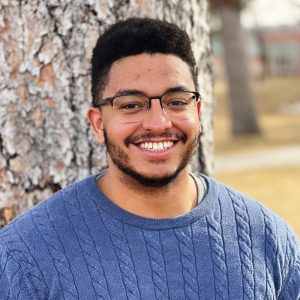 The best part of learning is seeing how novel ideas influence how you show up in the world. Being a financial aid administrator, I began the Human Relations program uncertain how concepts of lifespan development, identity exploration and integration, and other human learning theories would affect how – in any practical sense – I showed in work, or life, for that matter. Engaging in these topics challenged me to consider how and why we behave in different social landscapes. As I approach the first anniversary of my master's completion, I see how contributive this program was in understanding how remarkably similar yet beautifully distinct the human experience is person-to-person. NAU’s HR program is for students seeking to build authentic connections, navigate difficult conversations, or analyze the nature of self in relation to others.
Shane Metcalf, graduated 2023
The best part of learning is seeing how novel ideas influence how you show up in the world. Being a financial aid administrator, I began the Human Relations program uncertain how concepts of lifespan development, identity exploration and integration, and other human learning theories would affect how – in any practical sense – I showed in work, or life, for that matter. Engaging in these topics challenged me to consider how and why we behave in different social landscapes. As I approach the first anniversary of my master's completion, I see how contributive this program was in understanding how remarkably similar yet beautifully distinct the human experience is person-to-person. NAU’s HR program is for students seeking to build authentic connections, navigate difficult conversations, or analyze the nature of self in relation to others.
Shane Metcalf, graduated 2023
 I have loved this program since the first class I took Fall 2023 to start pursuing my Master's of Education in Human Relations. As an Enrollment Counselor Manager for the University of Arizona, it has continued to enhance essential skills needed to lead a team. Each class I am gaining more knowledge about communication, conflict resolution, effective team management and creating inclusive environments. By developing strong communication strategies and leadership abilities, I can create impactful initiatives that improve staff engagement, ultimately leading to a cohesive and productive work environment.
Paige Prather, graduating 2026
I have loved this program since the first class I took Fall 2023 to start pursuing my Master's of Education in Human Relations. As an Enrollment Counselor Manager for the University of Arizona, it has continued to enhance essential skills needed to lead a team. Each class I am gaining more knowledge about communication, conflict resolution, effective team management and creating inclusive environments. By developing strong communication strategies and leadership abilities, I can create impactful initiatives that improve staff engagement, ultimately leading to a cohesive and productive work environment.
Paige Prather, graduating 2026
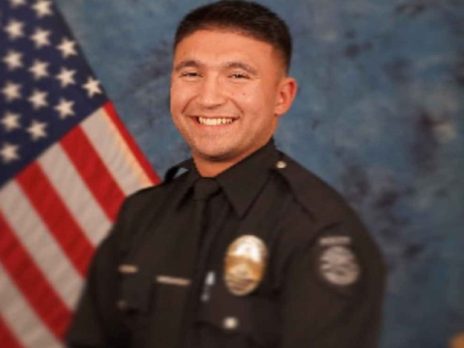 My Name is Marcel Perez and I had the pleasure of being a part of the Human Relations program from 2020-2022. This program has taught me so much about interacting with other individuals in many different circumstances, which I do on a day-to-day basis as a police officer in the valley. I give credit to this program for a lot of my accomplishments that I have accomplished thus far in my law enforcement career. This program will set you up for success in whichever career field you are in or will pursue.
Marcel Perez, graduated 2022
My Name is Marcel Perez and I had the pleasure of being a part of the Human Relations program from 2020-2022. This program has taught me so much about interacting with other individuals in many different circumstances, which I do on a day-to-day basis as a police officer in the valley. I give credit to this program for a lot of my accomplishments that I have accomplished thus far in my law enforcement career. This program will set you up for success in whichever career field you are in or will pursue.
Marcel Perez, graduated 2022
 After obtaining a position as an Assistant Director with NAU, I was looking for an advanced degree that would help me become a better manager, leader, and coach. Human Relations was that degree for me. It helped me build myself as a professional, improving my communication, empathy, critical thinking, and management style. It allowed me to explore leadership from a people’s perspective and cultivate a sense of caring and community with the people I work with. The content was engaging and the discussions in each course applied to issues or situations I was dealing with first-hand. I would recommend this degree to anyone interested in being a change-maker in the world of organizational leadership or organizational psychology.
Brian Dales, graduated 2024
After obtaining a position as an Assistant Director with NAU, I was looking for an advanced degree that would help me become a better manager, leader, and coach. Human Relations was that degree for me. It helped me build myself as a professional, improving my communication, empathy, critical thinking, and management style. It allowed me to explore leadership from a people’s perspective and cultivate a sense of caring and community with the people I work with. The content was engaging and the discussions in each course applied to issues or situations I was dealing with first-hand. I would recommend this degree to anyone interested in being a change-maker in the world of organizational leadership or organizational psychology.
Brian Dales, graduated 2024
 The Human Relations degree broadened my perspectives on human behavior, communication skills, human diversity and so much more. The program combined both research and theory, showcasing the importance of empathy towards others, while also helping me effectively examine research and statistical methods for data informed decision making. I completed the program fully online and felt engaged with my peers and faculty, while also being able to incorporate what I was learning into my full-time career. I am so thankful that I chose this program and find myself using the knowledge/skills on a daily basis both in my personal and professional life.
Lexi Bornstein, graduated 2022
The Human Relations degree broadened my perspectives on human behavior, communication skills, human diversity and so much more. The program combined both research and theory, showcasing the importance of empathy towards others, while also helping me effectively examine research and statistical methods for data informed decision making. I completed the program fully online and felt engaged with my peers and faculty, while also being able to incorporate what I was learning into my full-time career. I am so thankful that I chose this program and find myself using the knowledge/skills on a daily basis both in my personal and professional life.
Lexi Bornstein, graduated 2022