ARCS Foundation – Phoenix Chapter
Congratulations to our NAU ARCS Foundation Scholars!
To learn more, please visit the ARCS Foundation – Phoenix Chapter.
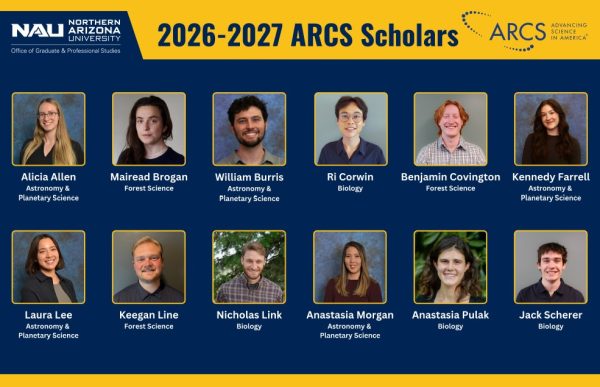
Our Recipients
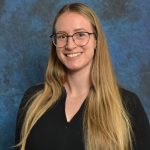
Alicia Allen – Hawes & ARCS Foundation Scholar
Ph.D. Student in Astronomy & Planetary Science
Alicia Allen earned her Bachelor of Science in Physics from the University of Central Florida, where she worked with the OSIRIS-REx team to identify how the spacecraft sampling maneuver altered the surface of asteroid Bennu. She is currently a fourth-year Ph.D. student in the Department of Astronomy and Planetary Science at NAU, where she has continued her research interest focusing on small bodies in the Solar System. One of her projects characterizes the sizes and compositions of near-Earth asteroids, including those that may pose potential hazards to Earth. Another one of her projects utilizes the James Webb Space Telescope to detect water ice on Main-Belt Asteroids and map the presence of water in the Solar System, which may give insight into the origins of water and life on Earth.

Mairead Brogan – ARCS Foundation Scholar
Ph.D. Student in Forest Science
Mairead Brogan earned a Bachelor of Science degree in Ecology and Evolutionary Biology from the University of Colorado, Boulder, and began her Ph.D. at Northern Arizona University in fall 2023. Her research investigates ecohydrological processes in a managed second-growth coast redwood forest, focusing on water movement, use, and stress under varying canopy cover conditions. Research in young forests is critical to understanding the long-term resilience of vast stretches of the redwood system, especially in the face of a warming and drying climate. Her work contributes to broader knowledge of forest resilience and ecosystem sustainability.
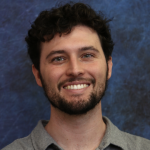
William Burris – Lawson Scholar
Ph.D. Student in Astronomy & Planetary Science
Will Burris earned a Bachelor of Science in Physics with a minor in Astronomy from San Diego State University. Currently, a Ph.D. student at NAU, he studies icy environments throughout the Solar System and interstellar space. In the lab, Will investigates different scenarios of chemistry to provide important context to the vast chemical inventory of space. He also measures key physical parameters of some of the simplest and most abundant species in the Universe to support future observational attempts to find them. Additionally, Will contributes to a long-term project monitoring changes in Triton’s surface ice, Neptune’s largest moon, now spanning more than 25 years.

Ri Corwin – Horejsi Charitable Foundation Scholar
Ph.D. Candidate in Biology
Ri Corwin is a Ph.D. candidate with the Gehring and Johnson labs at NAU. After completing a Bachelor of Arts in Asian Studies, Ri spent a year teaching in Japan as an assistant language teacher. Upon returning to the states, he gradually made a career shift into environmental work, eventually finding his niche in the exploration of fungal ecology. Ri’s first two chapters of dissertation research concern the potential of mycorrhizal fungal inoculum in grassland systems, while his third chapter has expanded to the study of mycorrhizal fungi in Patagonian beech forests.

Benjamin Covington – Krepper Family Trust Scholar
Ph.D. Student in Forest Science
Ben’s Covington’s current research centers around developing techniques for integrating fire moss species into post wildfire ecological restoration in Arizona forests. Fire mosses are among the earliest colonizers of severely burned soils, where they support microbial communities and reduce erosion by forming biological soil crusts. His long-term career goal is to improve access to cutting edge chemical analysis techniques and instrumentation for ecologists and land managers with the hope that this will facilitate improved land management outcomes.

Kennedy Farrell – Mary Ann White Memorial Scholar
Ph.D. Student in Astronomy & Planetary Science
Kennedy Farrell harnesses machine learning and computer programming to understand rare and dynamic objects in the solar system. After earning a Physics BS and English BA from Texas State University in 2017, she began researching the apparently rare population of solar system objects known as active asteroids. Kennedy is now a fourth-year Ph.D. student in Astronomy and Planetary Science at NAU, where she leads observations at telescopes including the Vatican Advanced Technology Telescope (Safford, AZ), Lowell Discovery Telescope (Happy Jack, AZ), and Magellan Baade and Clay Telescopes (Las Campanas Observatory, Chile). These observations allow her to integrate observed data with machine learning predictions and computational models to answer fundamental questions about the formation of our solar system and the arrival of terrestrial water to Earth.
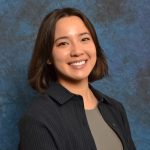
Laura Lee – Kucera Scholar
Ph.D. Candidate in Astronomy & Planetary Science
Laura Lee received a Bachelor of Science in Astronomy from Embry-Riddle Aeronautical University. Currently a fourth year Ph.D. candidate in Astronomy and Planetary Science at NAU, Laura is working on three diverse projects aiming to help future planetary science missions. First, Laura is the Instrument Scientist for two visible and infrared cameras (VISIONS) developed and built by NAU that are onboard NASA’s ESCAPADE mission to Mars. Laura’s second project focuses on classifying asteroids for an upcoming mission to the asteroid belt using observations from the Lowell Discovery Telescope. In her third project, supported by an NAU NASA Space Grant, Laura conducts crop growth experiments in lunar and martian simulated soils with root fungi to assess its impacts on crop stress, health, and biomass production.
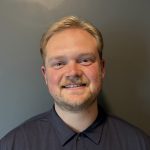
Keegan Line – Lawson Scholar
Ph.D. Student in Forest Science
Keegan Line graduated from Western Washington University in 2021 with a bachelor’s degree in statistics and a minor in economics. In 2024, Keegan graduated with a Master of Science in statistics from Northern Arizona University. Keegan is currently a second year PhD student at Northern Arizona University studying forest science. Keegan’s field of work is in quantitative ecology and uses remote sensing to study forest ecosystems. Specifically, Keegan is researching the applications of using light distance and ranging (LiDAR) data to predict individual tree species. The current project details using LiDAR scans of the entire Kaibab National Forest to predict a species map on an individual tree basis. The end goal is to help forest managers have a complete inventory of the forest to allow for proper management.
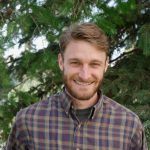 Nicholas Link – Magee & Martin Scholar
Ph.D. Candidate in Biology
Nick Link studies ecosystem and disturbance ecology across Alaska and the Yukon territory. Nick’s work on nature-based solutions to increasing wildfire risk across the region is providing land managers with information on how to best protect communities and natural resources in the wildland-urban interface. The project aims to help land managers develop strategies that can promote the growth of less-flammable deciduous trees after fuel breaks are installed. Deciduous trees may act as a living fuel break on the landscape, requiring no retreatment, and offering an entire suite of other ecosystem services.
 Ana Morgan – ARCS Foundation Scholar
Ph.D. Candidate in Astronomy & Planetary Science
Ana Morgan earned her B.A. in Astronomy from the University of Colorado and is currently a PhD candidate in Astronomy and Planetary Science at NAU. Her research focuses on small trans-Neptunian objects (TNOs), icy remnants at the edge of the Solar System that preserve a record of its earliest history. By combining observations from the Hubble and James Webb Space Telescopes, archival datasets, and laboratory experiments that simulate outer Solar System conditions, she investigates the physical and chemical properties of these distant bodies. This work helps constrain models of Solar System formation and provides insight into how similar processes may shape planetary systems around other stars.
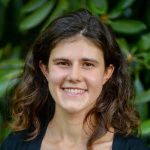 Anastasia Pulak – Kathryn Johnston West Scholar
Ph.D. Candidate in Biology
Anastasia Pulak grew up in Boston, Massachusetts, and earned a B.A. in Biology from Grinnell College in 2019. Before beginning graduate studies at Northern Arizona University, she worked as a research assistant at Woodwell Climate Research Center, where she conducted research in cranberry bogs and salt marsh ecosystems. Her current research focuses on how increasing wildfire activity is reshaping ecosystems in Alaska. Using soil science and ecosystem ecology approaches, she studies the impacts of wildfire on soil carbon storage and cycling. Through this work, she aims to improve our understanding of how northern forest and tundra soils will respond to future environmental conditions and what this means for the global carbon cycle. Outside of research, Anastasia enjoys exploring the outdoors, running, and baking.

Jack Scherer – Might Family Foundation Scholar
Ph.D. Student in Biology
Jack Scherer earned his bachelor’s degree in biology from Northern Arizona University in 2024. As an undergraduate, he studied the recovery of the Tonto National Forest’s Sonoran Desert ecosystem following the 2020 Bush Fire, focusing on how soil fungi influence Saguaro cacti and their nurse plants. He remained at NAU to begin a master’s degree in biology in 2024 but soon realized, with his committee’s full support, that his research goals were better suited to pursuing a Ph.D. in Biology. Jack’s research investigates interactions between plants and soil microbiomes, which includes bacteria, fungi, protists, viruses, and soil fauna. Through greenhouse experiments, DNA sequencing, and bioinformatics, he assesses how agriculture affects soil microbiome structure and function. His work aims to support farmers and policymakers in managing the long-term health and sustainability of agricultural soils.