


From preventing wildfires to finding new ways to identify leaks in water pipes and developing creative ways to pull carbon out of the atmosphere, the nearly decade-long partnership between Northern Arizona University and Salt River Project (SRP) remains focused on protecting Arizona’s natural resources and keeping utilities safe and affordable.
Learn more about several research projects that are helping protect Arizona.
Sucking carbon dioxide from the air
Is it possible to pull carbon dioxide from the atmosphere using a vacuum while adjusting humidity? Jennifer Wade, associate mechanical engineering professor, is pioneering this type of direct air capture along with engineering students Randy Brierley, Elijah Woolridge, Justin Patterson and Branden Welker, who built a successful prototype to test this hypothesis. Significant work remains for this tech to be viable and affordable, but it’s an important step forward in determining what is practical and achievable.
What soil moisture tells us about wildfire risk

Does moisture help us better predict wildfire risk? Salli Dymond, an associate professor in the School of Forestry, is leading a team to install moisture sensors on plants and dead fuel as well as underground throughout Tonto National Forest. She and her colleagues, including master’s student Anastasiya Jonas, will monitor the sensors and analyze the data to test their potential to help guide wildfire prevention efforts. If the measurements prove accurate, they could help Arizona officials prepare for wildfire season. Learn more about this project.
Find leaks early–>conserve Arizona’s water
Researchers are testing a way to find leaks in SRP’s pipes before water puddles on the surface. In an ongoing project led by mechanical engineering professor Michael Shafer, researcher Elliott Kinsley and students Ben Krotonsky and Logan Bankert developed a procedure to sample moisture next to pipes using manual tools and a Bluetooth probe. The goal is to achieve early, noninvasive leak detection with fewer work hours than required by current practices. Going forward, the team will sample soil moisture at greater depths and refine the processing of samples.
 Searching for native snakes
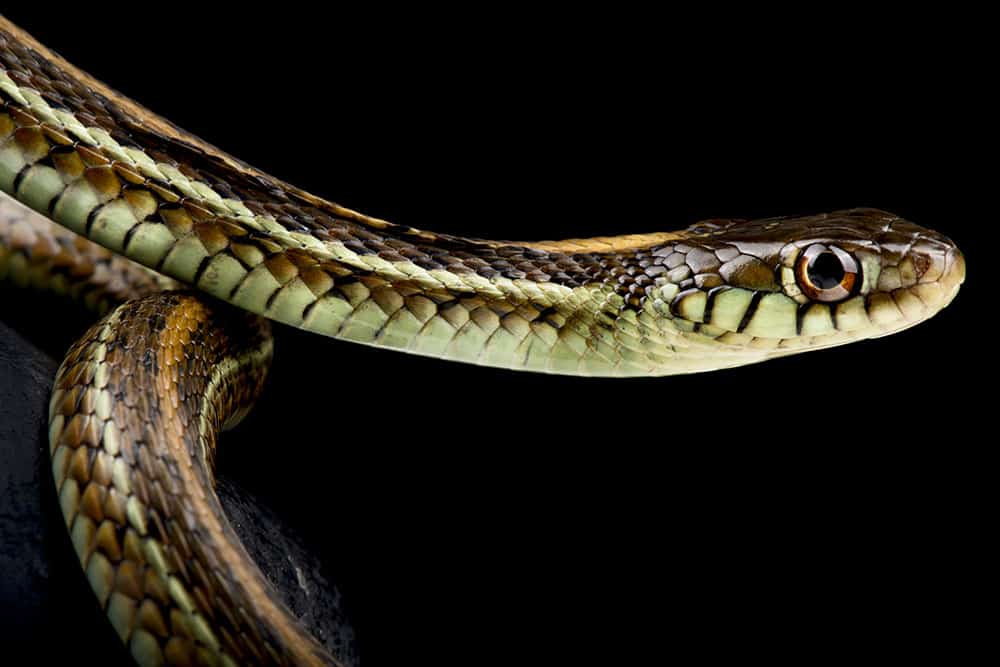
Two years into a research project, surveys haven’t found any northern Mexican gartersnakes in Tonto Creek, but there’s still good news: the ecological ingredients needed for recovery of this federally threatened species exist. A team led by Erika Nowak, an associate research professor in the School of Earth and Sustainability, determined the elusive snakes could be present in small numbers or could recover. SRP is suppressing large nonnative fish to improve habitat for native species, including lowland leopard frogs and gartersnakes. Researchers will continue targeted surveys and monitoring alongside efforts to restore habitat and prey to determine whether conditions are improving.
Identifying sediment buildup without draining canals
SRP must drain its canals to locate sediment buildup and other objects that could impede the reliable delivery of water to the Valley. NAU researchers have developed a prototype to inspect canals without draining them; the results will be verified during SRP’s scheduled canal maintenance in November. Led by Reza Sharif Razavian, an assistant professor of mechanical engineering, and Ben Dymond, an associate professor of civil engineering, the ongoing project includes nine NAU students. The team used sonar scans and developed a machine learning algorithm to automatically detect sediment and foreign objects, though detection accuracy remains relatively low and additional work is needed.
How forest thinning may help prevent forest fires

Non-thinned dense forests are drier than thinned forests, putting them at greater risk of severe wildfires. Temuulen “Teki” Sankey, a professor in the School of Informatics, Computing, and Cyber Systems, is monitoring the effects of forest thinning in areas affected by the 1990 Dude Fire near Payson. Her team uses ground-based sensors as well as the ECOSTRESS satellite images to measure weather, streamflow, soil moisture, tree water use and evapotranspiration—the movement of water into the air through soil evaporation and plant water uptake.

Heidi Toth | NAU Communications
(928) 523-8737 | heidi.toth@nau.edu