RCN Workshops
“RCN Synthesis: g2p2pop in the Amazon”
March 13th – 20th, 2023 – Amazonas, Brazil
The application period has closed — Thank you to all that applied!
Our final g2p2pop workshop will be held in the Brazilian state of Amazonas from 13-20 March. We have elected to hold this workshop in Amazonas due to the global importance and vulnerability of this vast and biodiverse system. The workshop will be comprised of 48 international participants and will initiate in the city of Manaus. The first day of presentations and activities will take place at the National Institute of Amazonian Research (INPA) and will be followed by a one-week boat tour up the Rio Negro to the small city of Novo Airão. Days will consist of talks by invited speakers, collaborative interaction among speakers and participants, and excursions into the flooded forest.
Recommended Packing List (PDF)
Eligibility: Anyone from undergraduate to senior researcher rank can apply to participate in this workshop. Our goal is to generate a diverse group of scientists with respect to rank (undergraduate through senior faculty level), nationality, gender, and area of research expertise/interest.
Travel Details: Passport and Visa (International travelers only): If you are selected to participate, it will be up to you to ensure that you have all the needed travel documents. Please inspect your home country’s Consulate and the Brazilian Consulate for the most up-to-date travel document requirements. If coming from the US, our suggestion is that you travel as a “tourist.” This option is free of charge and does not require a visa. Your stay is limited to 180 days. Your passport needs to have at least 6 months of validity and one blank page available. It will be your responsibility to obtain any medical/travel insurance, vaccinations, etc. required for this travel.
Airfare: The RCN will cover the airfare of the selected participants to Manaus. If you are selected to participate, you will not need to book or pay for your travel. We have a travel agent on contract that will work with you to make your reservations (Balitur). He will reach out to each of you individually to organize your flights.
By agreeing to participate in this workshop, you are also agreeing to refund g2p2pop for purchased airfare if for any reason you need to cancel your trip. Any other incidental travel expenses (ground transportation, luggage fees, etc.) are the traveler’s responsibility and will not be reimbursed by the RCN.
It is imperative that all selected participants arrive in Manaus at about the same time (between Sunday, March 12th and Monday the 13th ) since we have only a short period of time between arrival in country and departure by boat. You will be picked up at the airport by chartered bus or car and transported to the boats. Your transportation in Manaus and the boat trip are paid for by the RCN. You will have a night on the boats in the harbor (12th to 13th of March) before our first full day of workshop activities (Tuesday 14th) at the INPA campus. Once the boats depart Manaus (night of Tuesday the 14th), you are committed for the duration of the trip. At the end of the boat trip, all participants will be transported to the Manaus airport by chartered vehicle. One additional aspect for travelers to be aware of is that internet and cell service will be mostly unavailable for the duration, except when docked in Manaus or Novo Airão.
All berths will be shared (2 persons per room).
Whilst traversing the Rio Negro, there are a couple of stops that offer unique activity experiences (e.g., swimming with pink river dolphins, visiting indigenous communities). These excursions will not be covered by the grant-funded RCN. Participants will need to bring cash for these leisure activities (approximately BRL$50 or USD$10, per activity). Further, there will be opportunities to purchase art and other souvenirs in some locations where card payment will likely be unavailable. Excursion details can be found below.
All meals will be provided for the selected participants from arrival in Manaus until the end of the Workshop. Three daily meals (breakfast, lunch, and dinner) will be offered on the boats, as well as coffee and tea and snacks throughout the day. Drinks, alcoholic or not, are sold at the bar on the boats and charged separately. The RCN will not cover drinks; you will settle your individual drink account at the end of the trip.
If you have dietary restrictions or allergies, please let us know in advance so we can accommodate as needed. Additionally, be sure to bring any special provisions you require, but note that the berths do not have refrigerators. Meals before and after the Workshop period are not covered by the RCN, and per-diem is not being provided to any travelers. If you elect to stay in Brazil for longer than the workshop period you will be responsible for any cost disparity between your “preferred” itinerary and the “workshop only” itinerary.
If you have any questions or concerns do not hesitate to reach out to us.
Loren Buck (PI of the g2p2pop RCN) can provide general details of the workshop.
Erika Hingst-Zaher (Local Steering Committee Lead) can provide information about Brazil travel and general details of the workshop.
Ramiro Melinski (Local Steering Committee and Naturalist Guide) can provide details of the boat trip on the Rio Negro, things to do in Manaus, and the planned excursions.
RCN g2p2pop Admin for any administrative questions.
The workshop “RCN synthesis: g2p2pop in the Amazon” will be held in Manaus, Amazonas, and on a boat that will navigate the Amazon River and Negro River. Below are descriptions of the main places that will be visited, introducing participants to Amazonian ecosystems, biodiversity, and socio-economic, and conservation issues. This is a planned itinerary and, due to logistical and unforeseen issues, changes in the schedule may occur, slightly altering the places to be visited.
Manaus
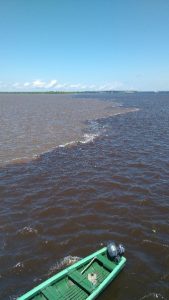
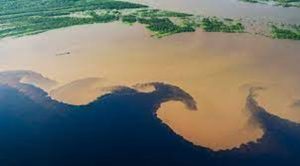
Manaus is the capital and largest city of the vast state of Amazonas. It is the seventh-largest city in Brazil, with an estimated population of over two million people distributed over a land area of about 11,000 km2. Located in the center of the Amazon Basin, Manaus is situated on the banks of the Negro River where it flows into the Amazon River, forming the famous “meeting of the waters.”. This striking visual phenomenon is caused by the resistance to mixing over dozens of kilometers of the dark, tea-colored water of the Negro River with the pale, muddy water of the Amazon itself, in Brazil called the “Solimões” above this confluence.
The Amazon region comprises the largest and most species-rich expanse of tropical rainforest in the world. Wet tropical forests are the most species-rich biome, and tropical forests in the Americas are consistently more species rich than the wet forests in Africa and Asia. As the largest tract of tropical rainforest in the Americas, the Amazonian rainforest has unparalleled biodiversity, harboring more than one-third of all species in the world.
The city of Manaus is located amidst the rainforest, and home to the National Institute of Amazonian Research (INPA), being the most important center for scientific studies in the Amazon region and for international sustainability issues. The primary economic engine if the city of Manus is the Industrial Park of Manaus, a Free Economic Zone. The city has a free port and an international airport. Its manufactures include electronics, chemical products, and soap; there are distilling and ship construction industries. Manaus also exports Brazil nuts, rubber, jute, and rosewood oil. It has a cathedral, opera house, zoological and botanical gardens, and regional and Native Peoples museums.
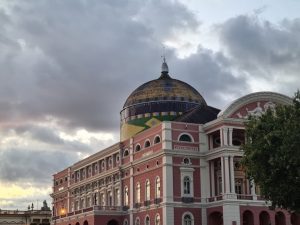
The city was at the center of the Amazon region’s rubber boom, during the late 19th century. For a time, it was “one of the gaudiest cities of the world”.Many wealthy European families settled in Manaus and brought their love for sophisticated European art, architecture, and culture with them. The city built a grand opera house, with vast domes and gilded balconies, and using marble, glass, and crystal, from around Europe. Notoriously, one performance season resulted in the deaths of half of the members of a visiting opera from yellow fever. The opera house, called Teatro Amazonas, was effectively closed for most of the 20th Century. However, it was used in scenes of the film Fitzcarraldo, by Werner Herzog, in 1982. After a gap of almost 90 years, it reopened to produce live opera in 1997 and is now again attracting performers from all over the world.
When the seeds of the rubber tree were smuggled out of the Amazon region to be cultivated on plantations in Southeast Asia, Brazil and Peru lost their monopoly on the product. The rubber boom ended abruptly, many people left its major cities, and Manaus fell into poverty. The rubber boom had made possible electrification of the city before it was installed on many European cities, but the end of the rubber boom made the generators too expensive to run. The city was not able to generate electricity again for years.
The Mercado Adolpho Lisboa, founded in 1882, is the city’s oldest marketplace, trading in fruit, vegetables, and especially fish. It is a copy of the Les Halles market of Paris. Other interesting historical sites include the customs building of mixed styles and medieval inspiration, the Rio Negro Palace cultural center, and the Justice Palace, adjacent to the Amazonas Opera House.
During the workshop, we will visit the National Institute for Amazonian Research (INPA) and the Museum of the Amazon (MUSA). We will also see the Meeting of the Waters. After the workshop, depending on departure flight times, we will have time to know Manaus’ downtown area, with its historical buildings and the market.
Downtown Manaus
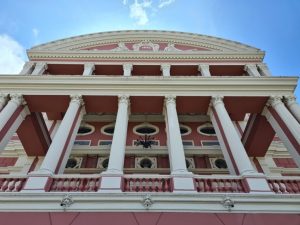
The Teatro Amazonas, or the Amazonas Theatre, was built in the 19th century during Manaus’ golden era, and locals have managed to preserve its beautiful French architecture for all these years. Take the guided tour through the opera house to learn a little bit more about the lifestyle in the 1800s in Manaus. The ticket costs BRL 10 per person, and offers visitors the chance to explore the galleries, traverse the gilded stairways and get a true taste of the Brazil of a bygone era. Around the Opera House, the square offers many cafes, restaurants, and handcraft shops.
The Mercado Adolpho Lisboa, on the bank of the Negro River, is protected as a national monument. Modeled on the old Halles in Paris, it features stained-glass windows, as well as iron framework that was made in Gustave Eiffel’s Paris workshop.
INPA
The National Institute of Amazonian Research (Instituto Nacional de Pesquisas da Amazônia or INPA) is a public educational and research institution headquartered in Manaus. It was founded in 1952, with the purpose of furthering scientific knowledge of the Brazilian Amazon region. Most of INPA’s research focuses on tropical forest management, ecology, molecular ecology, zoology, botany, tropical agriculture and pisciculture. The institution also maintains important research collections of vertebrates, invertebrates, and vascular plants.
Science Grove
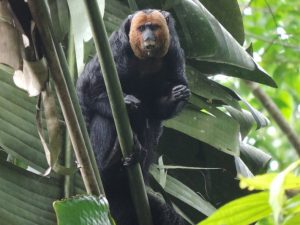
The Science Grove Park is at the campus of INPA and covers about 32,000 acres. A visit to the grove, walking through its trails and paths, provides better knowledge of the Amazonas environment. The main attractions are monkeys, sloths and other rainforest animals that can be found living in the park, and also an otter vivarium, manatee hatchery, beehives, the Science House (an interactive museum), educational trails, alligator vivarium, botanical garden, and elevated trail.
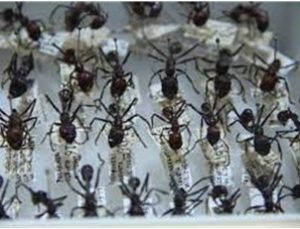
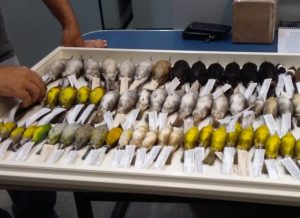
INPA’s Scientific collections
Biological collections are an important tool for obtaining information on the composition and distribution of the biodiversity of a given location in time. Such information is essential for the development of scientific research, for environmental modeling to support decision-making on issues of land use, and for the development of strategies for the conservation and utilization of this national resource base.
INPA has several collections with a large number of species and specimens of the fauna and flora of the Amazon region, which were gathered over more than 50 years of inventories and research developed in the Amazon. The INPA herbarium has the largest collection of plants in the Amazon and is the fifth largest Brazilian herbarium.
MUSA – Museum of the Amazon
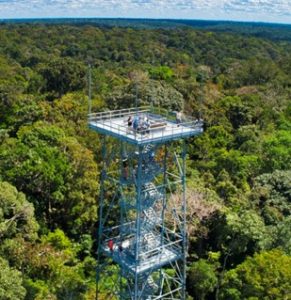
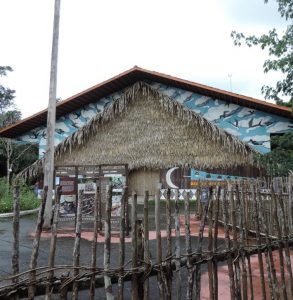
The Museum of the Amazon is a space dedicated entirely to the observation of nature and its biological diversity. The museum occupies an area of 100 hectares of the Forest Reserve Adolpho Ducke. It is a living museum, whose proposal integrates the forest, animals, and human beings into a journey of knowledge, respect and admiration for “living together”, an ideal that has inspired the creation of MUSA. The forest trails allow unique experiences for contact with diversity and the view of the forest, sunrise and sunset. Views from the 42m high tower installed in the museum guarantees inspiring moments. Entrance fee: US$ 10.00
Meeting of the waters
The meeting of the waters is the confluence between the dark (blackwater) Negro River and the pale sandy colored (whitewater) Amazon River, referred to as the Solimões River upstream of this confluence. The waters of the two rivers run side by side without mixing for about 100 km. This phenomenon is due to the differences in temperature, velocity, and sediment load of the two rivers. The white Solimões River is rich with sediments from the Andes, whereas the black water Negro River, running from the Colombian mountains and jungles, is almost sediment-free and its color is due to dissolved plant matter.
Janauari Ecological Park
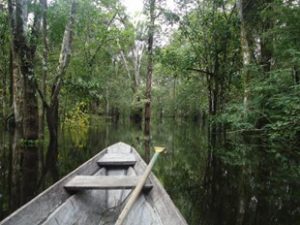
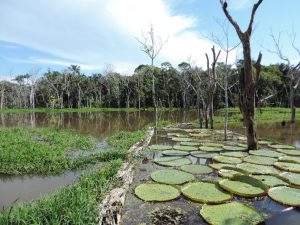
Janauari Lake is located on the Negro River, about an hour from the city of Manaus and close to the Meeting of the Waters. In a canoe, it is possible to see the flooded forest paths and the giant Amazonian water lily (Victoria amazonica; called “vitoria regia” in Portuguese). The water lily is an aquatic plant of the Nymphaeaceae family, typical of the Amazon region. It has a large circle-shaped leaf, with raised edges, which is on the surface of the water and can reach up to 2.5 meters in diameter and support up to 40 kilos. Janauari Ecological Park is a region with rich biodiversity, exuberant nature that is well-preserved despite proximity to Manaus. We will likely see birds and small groups of squirrel monkeys.
The Solimões River
Solimões is the name often given to upper stretches of the Amazon River in Brazil from its confluence with the Negro River upstream to the border of Peru. The use of the name “Solimões” for this part of the river is mostly confined to Brazilian speakers of Portuguese; the rest of the world refers to both the upper and lower portions of the river as the Amazon.
The Solimões portion of the Amazon River lies entirely in the state of Amazonas, and a portion of the state is often referred to as the “Solimões region”. The ecoregion of the Solimões River drainage basin is entirely tropical rainforest.
It is the vast quantity of sediment eroded from the Andes Mountains that gives the Solimões its tan color. By comparison, water in the Negro derives from the low jungles where reduced physical erosion of rock precludes mud entering the river. In place of sediment, organic matter from the forest floor stains the river the color of black tea.
The Solimões provides nutrient-rich mud to lakes on the floodplain. The ecology of muddy lakes differs correspondingly from that of nutrient-poor, blackwater rivers and lakes. The Solimões is much shallower than the Negro because it has filled its valley and bed with great quantities of sediment since the valleys were excavated. Widths of the rivers also differ for this reason.
Marchantaria Island
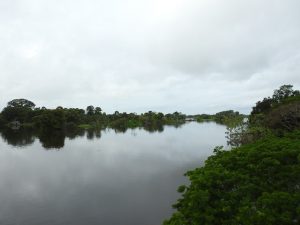
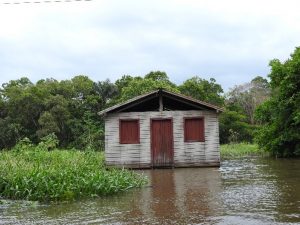
Marchantaria and adjacent islands were formed by sandbars of different ages with differing stages of colonization by terrestrial plants. The habitats formed here are highly dynamic and contain a unique set of specialized birds not found anywhere else in the world.
Enchanted Lake
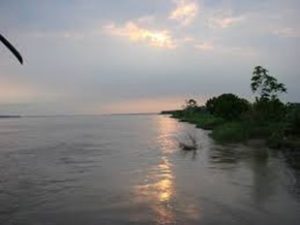
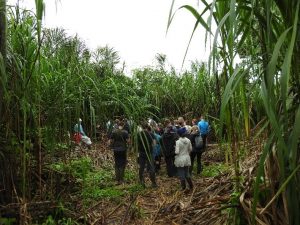
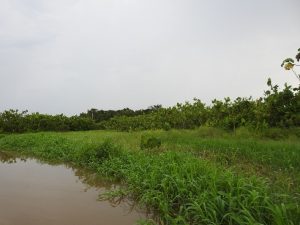
Follow a narrow stream through strange, dense aquatic vegetation to a large secret lake. This region is characterized by a vast expanse of the aroid plant, Montrichardia linifera, with important medicinal traits, and forms the favorite habitat of the giant Amazonian electric eel.
The Negro River
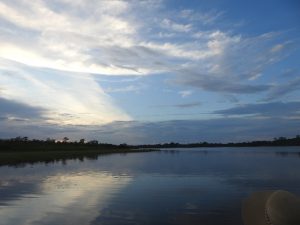
The Negro River is the largest left-bank tributary of the Amazon, the largest blackwater river in the world, and one of the world’s ten largest rivers in average discharge. It has its sources along the watershed between the Orinoco and the Amazon Basins, and also connects with canals in southern Venezuela. In Colombia, where the Negro River’s sources are located, it is called the Guainía River. The Negro River joins with the Solimões to form the Amazon River South of Manaus, Brazil.
Ilha do Cumaru
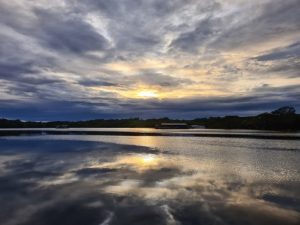
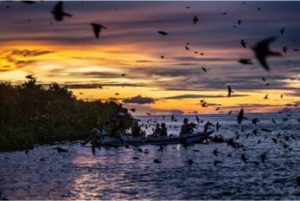
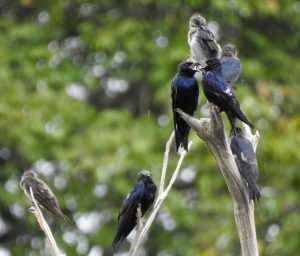
This is an island of flooded forest in the Negro River where Purple Martins (Progne subis) form an enormous, spectacular roost between late January and April, before starting their migration back to North America to reproduce. At the end of the day the birds begin to arrive, and soon there are hundreds of thousands flying together in an organized whirlwind. Suddenly they dive and disappear in the crowns of the nearly submerged trees below where they spend the night. Nearby there are other birds and reptiles that can be spotted at night.
City of Novo Airão
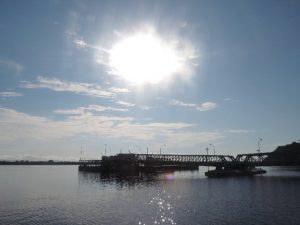
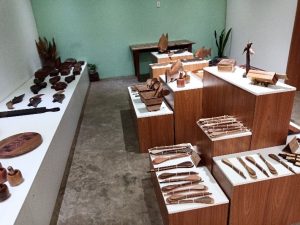
Novo Airão is located on the Negro River about 180 km upstream of Manaus. The region where Novo Airão now exists was originally inhabited by Indigenous people, including Waimiri-Atroari, Crichanã, Carabinari and Jauaperi. In 1668, Jesuits founded a settlement at the mouth of the Jaú River, believed to have been the second or third nucleus of settlement organized by the Portuguese in Amazonian lands. In 1759, this village was elevated to a town with the name Airão. Later, the district around Airão became part of Manaus and when it was dismembered in 1938, became Novo (“new”) Airão. The Vitoria Amazonica Foundation, a non-profit civil society organization that has been working for 30 years with socio-environmental innovation at different scales in the Amazon, developing projects in research, social organization, education, socioeconomic development and public policies, is situated in novo Airão. Another non-profit, the Almerinda Malaquias Foundation, seeks to educate and teach the craft of carpentry to people from Novo Airão, using wood reclaimed from shipbuilding. Novo Airão is the closest city to the National Park of Anavilhanas.
Anavilhanas National Park
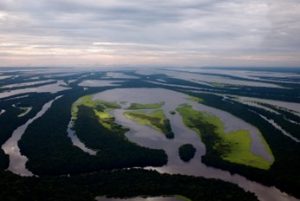
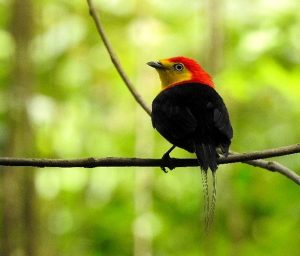
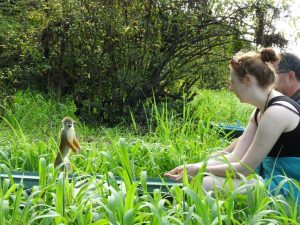
The Anavilhanas National Park encompasses a huge river archipelago, one of the largest in the world, and its forest formations in the Negro River. It is part of a World Heritage Site. The Park, in the municipalities of Manaus and Novo Airão, has a fluvial part that comprises 60% of the area and has more than 400 islands. It supports scientific research and enhances conservation of the Amazonia through environmental education and sustainable tourism. Besides the wire-tailed Manakin (Pipra filicauda), it is possible to see the pink dolphin (Inia geoffrensis), the tucuxi (Sotalia fluviatilis), the squirrel monkey (Saimiri sciureus), and listen to the bamboo rat (Dactylomys dactylinus).
Rio Cuieiras and campinas
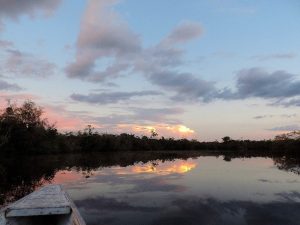
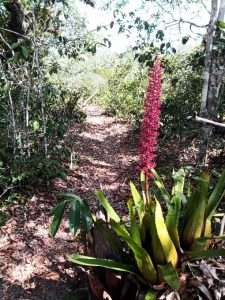
The Cuieiras River is a tributary of the left bank of the Lower Negro River, about 50 km from the city of Manaus. The basins of black water rivers, among which the Cuieiras river basin is included, are characterized by having very acidic and nutrient-poor soils. One of the environments found in the locality are the so-called campinas and campinaranas, spots of white sand ecosystems in the middle of a matrix of tropical forest. These environments have differentiated ecological aspects in relation to the forests that surround them and, therefore, a characteristic, specialized biota.
Nova Esperança Community
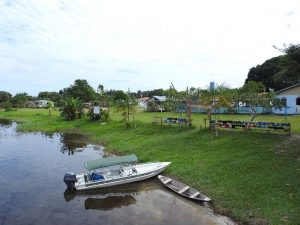
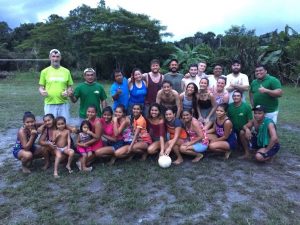
The Cuieiras river basin is inhabited by a population of more than 100 families, organized in a nuclear way in several communities. These residents, for the most part, share a similar life history, having been rural workers in the economic cycles of extractivism in the region, migrants mainly from the northeast region of Brazil or from indigenous groups from the Middle and Upper Negro River region, mainly from Santa Isabel and Sao Gabriel da Cachoeira. These families live from agriculture, hunting, fishing, and handicraft sales. One of these communities to be visited is called Nova Esperança (which means ‘New Hope’), inhabited by people of Baré origin, from the city of Santa Isabel in Upper Negro River, and today lives mainly through agriculture and tourist activities. Also, they have a great women’s soccer team.
Ariaú River
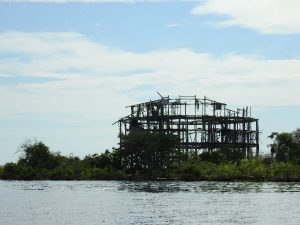
The Ariaú River is a tributary of the right bank of the Negro River, located between the municipalities of Iranduba and Manacapuru. In this location there was a gigantic jungle hotel, a pioneer in the Brazilian Amazon, made up of huge towers and kilometers of suspended walkways in the middle of the flooded forest. The hotel was glamorous and received distinguished visitors from all over the world. Due to a millionaire debt and legal disputes between the heirs of its creator, in 2015 the hotel was closed and later abandoned. Even today it is possible to observe what is left of the structures and spot wild animals, including some that are very familiar with humans, due to decades of interactions in the region.
Tatuyo indigenous Community
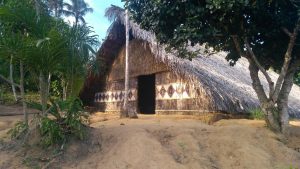
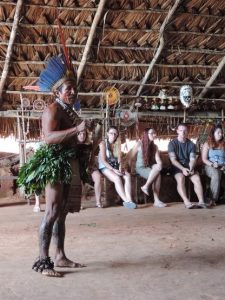
The community is home to about 40 indigenous people, all family members, and the main income revolves around the sale of handicrafts produced there. The Tatuyos maintain the culture of fishing, hunting, and planting fruit trees. They make use of manioc to produce flour and tucupi, products consumed by families in the community and also sold to visitors.
Pink Dolphins
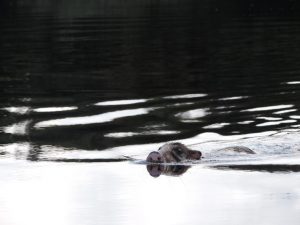
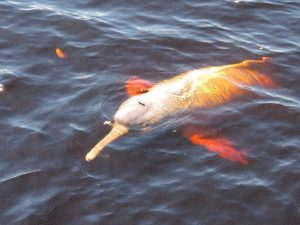
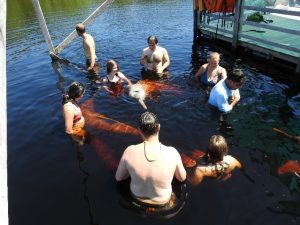
The Negro River currently has several floating houses where tourists can feed and interact with the Amazon River dolphins (Inia geoffrensis), also known as botos. Although this is a solitary animal species and in the wild are rarely seen in groups of more than four individuals, larger aggregations of botos occur around wooden floating houses that have a submerged platform where tourists, along with keepers of the establishments may interact with the animals.
C. Loren Buck: Northern Arizona University
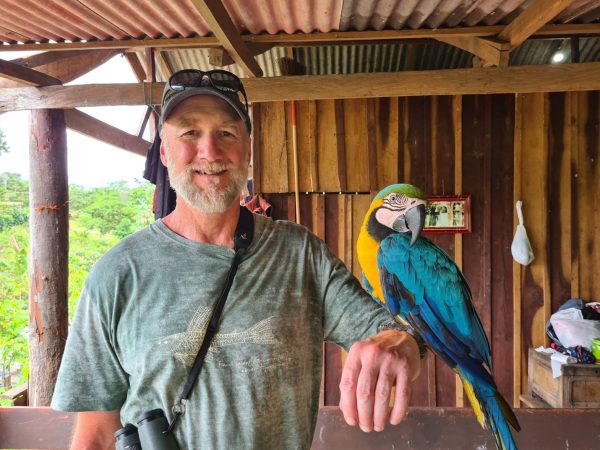
Bio: Loren Buck is a professor of biological sciences at Northern Arizona University and PI of the NSF sponsored g2p2pop research coordination network. He a broadly trained physiologist with more than 25 years’ experience conducting investigations of stress physiology, chronobiology, and endocrinology of both free-living and laboratory held vertebrates. His research has resulted in about 150 publications. His laboratory is supported by the National Institutes of Health, National Science Foundation, São Paulo Research Foundation, and The Brazilian National Council for Scientific and Technological Development, among others. He is currently a Fulbright Scholar conducting research in the Atlantic Forest and Amazon Basin of Brazil.
Dr. Erika Hingst-Zaher: Instituto Butantan
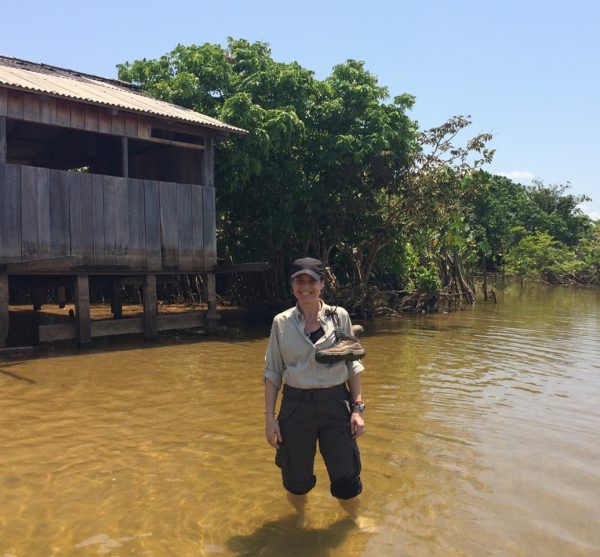
Bio: Dr Hingst-Zaher has more than 30 years of experience studying Neotropical mammals, as a field biologist, taxonomist and ecologist. Over the years she established collaboration with institutions in South America and in the US to conduct research projects in the Brazilian biomes including Amazon, Atlantic Forest, Cerrado and Caatinga, as well as in Paraguay and Guiana. She also conducts fauna inventories, environmental and social impact assessments and collaborates on management plans of protected areas. Currently she works as a scientific researcher at the Instituto Butantan, a research institute in São Paulo, Brazil, that has human health as the main focus. As a scientist trained in biodiversity assessment in South America, she has been studying biodiversity, conservation and its relationship with human well being in a One Health context. Has published more than 30 papers and book chapters, and mentored undergraduate and graduate students. Current projects are funded by Fapesp, NSF, and Disney Conservation Fund.
Dr. Philip Fearnside: National Institute of Amazonian Research (INPA)
Presentation: “Threats to environmental services in Amazonia”
Bio: Philip M. Fearnside is a Research Professor at the National Institute for Research in Amazonia (INPA) in Manaus, Amazonas, Brazil since 1978. PhD in Biological Sciences (University of Michigan) he works on environmental services, climate change and impacts of Amazonian development projects and has authored over 700 publications (http://philip.inpa.gov.br). Honors include Brazil’s National Ecology Prize, the UN Global 500 award, the Conrad Wessel, Chico Mendes and Scopus prizes and membership in the Brazilian Academy of Sciences. In 2006 Thompson-ISI identified him as the world’s second most-cited scientist on global warming. In 2011 he was identified as 7th most cited on sustainable development and in 2021 as “most influential” in Brazil on climate change.
Dr. Bill Magnusson: National Institute of Amazonian Research (INPA)
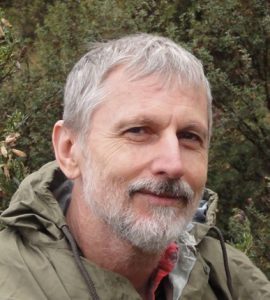
Presentation: “Biodiversity monitoring protocols and results from the Amazon”
Bio: Graduation in Biological Sciences (1974) and Ph.D. from the University of Sydney (1979). Presently Senior Researcher of the Instituto Nacional de Pesquisas da Amazônia in Manaus, Brazil. He is a member of the Brazilian Academy of Sciences, studies ecology with emphasis on integrated monitoring of biodiversity and environment. Further details can be found in https://ppbio.inpa.gov.br/cenbam.
Dr. Rita Mesquita: National Institute of Amazonian Research (INPA)
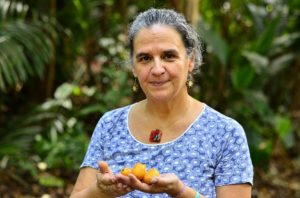
Presentation: “Protected area management as a path to sustainability of the Amazon”
Bio: Dr. Mesquita holds a degree in Biological Sciences from the Federal University of Minas Gerais, and received her PhD in Ecosystem Ecology from the Institute of Ecology – University of Georgia. She is a researcher at the National Institute for Research in the Amazon, and has experience in Management of Degraded Areas, working mainly on the following topics: dynamics of secondary vegetation, rural and urban forest fragmentation, forest regeneration and agroforestry, biodiversity conservation and environmental management. Between 2004 and 2008, she was the Assistant Secretary for Environmental Management at the Secretariat for the Environment and Sustainable Development of the State of Amazonas. There, she coordinated work on the creation and implementation of protected areas, ecological economic zoning, and the formulation of legislation on environmental management. Between 2008 and 2012, she was one of the coordinators of the Botanical Garden of Manaus and Technical Director of the Museum of the Amazon. She was coordinator of the Professional Master’s Program in Management of Protected Areas in the Amazon – MPGAP – at INPA between 2010-2016. He is currently dedicated to scientific dissemination, rural extension, and popularization of science, in the Extension Coordination of INPA.
Dr. Glenn Shepard: Museu Paraense Emilio Goeldi (MPEG)
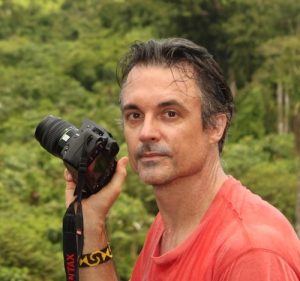
Presentation: “The house – forest continuum in indigenous Amazonia: from architecture to eco-philosophy”
Bio: Glenn H. Shepard Jr. was born in Georgia and raised in the Tidewater area of Virginia. He attended Princeton University and received his doctorate in Medical Anthropology at the University of California at Berkeley. As an ethnobotanist, medical anthropologist, and filmmaker, he has carried out fieldwork for over thirty years among diverse indigenous peoples around the world, particularly in Amazonia. He has published over a hundred research articles on topics including shamanism and traditional medicine, community-based resource management, the rights of isolated peoples and indigenous appropriations of digital media. He has participated in the production of several films, including the Emmy Award-winning documentary, Spirits of the Rainforest. His research, photography and writing has gained visibility in magazines like National Geographic, The New Yorker, Financial Times and The New York Review of Books. He is a currently a staff researcher in the Human Sciences Division at the Goeldi Museum in Belém, Brazil, and a research associate at the American Museum of Natural History in New York, where he helped curate a recent online exhibit about Kayapó filmmakers (https://archaeology.columbia.edu/kayapovideowarriors/). He blogs at Notes from the Ethnoground (http://ethnoground.blogspot.com/).
Dr. Katrin Fleischer: Max-Planck-Institute for Biogeochemistry
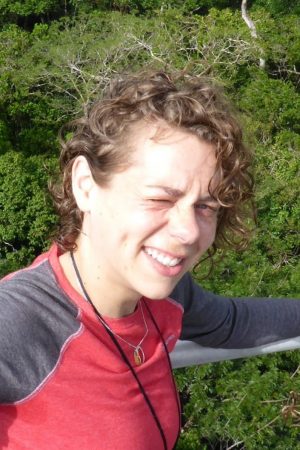
Presentation: “Amazonia, elevated CO2, and global change”
Bio: Research Scientist at the Max-Planck-Institute for Biogeochemistry, Germany, working on global change in the Amazon rainforest. She is working for the AmazonFACE project in Manaus since 2015, in the area of modeling biogeochemical cycles and impacts of elevated CO2 and climate change, with a focus on Amazonian soil nutrient cycling and carbon-nutrient feedbacks in tropical rainforests
Dr. Jeffrey Good: University of Montana
Presentation: “Using the genomic basis of local adaptation to understand evolutionary responses to climate change”
Bio: Jeffrey Good is a Professor of Evolutionary Biology at the University of Montana and the Director on the University of Montana Genomics Core. His research seeks to understand the origin of species, the genetic basis of local adaptation, and the evolution of reproduction (www.thegoodlab.org). Focusing primarily on mammalian systems, his lab combines genomic studies of natural populations with systems genetic analyses of laboratory rodent models to understanding the origin, maintenance, and conservation of biological diversity. He received his PhD from the University of Arizona working with Michael Nachman and was a postdoctoral fellow in Svante Pääbo’s lab at the Max Planck Institute for Evolutionary Anthropology in Leipzig, Germany.
Dr. Lynn ‘Marty’ Martin: University of South Florida
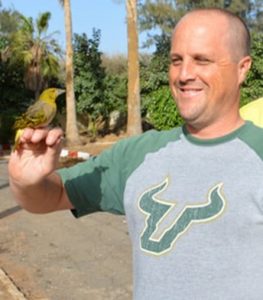
Presentation: “Epigenetic potential and range expansion in the house sparrow”
Bio: Dr. Lynn B. Martin is Professor in the Center for Global Health and Infectious Disease Research in the USF College of Public Health. He is recognized as both a pioneer and world leader in the field of ecological immunology and disease ecology. His current research focuses on one of the most broadly distributed avian species: the house sparrow. Working with colleagues and scientists from around the world, Dr. Martin is studying the endocrine and immune systems of native and introduced populations of the house sparrow. He and collaborators have also been studying how stress affects dynamics of zoonotic diseases, such as West Nile virus, and how body size affects the architecture of mammalian species immune systems. His most recent grant will see him and colleagues investigating how natural environmental variation affects the immune systems of the small mammals that carry the bacteria that causes Lyme disease. He earned his B.S. and M.S. in Biology from Virginia Commonwealth University, and his M.A. and Ph.D. in Ecology and Evolutionary Biology from Princeton University. He also completed post-doctoral training in Neuroscience at The Ohio State University.
Dr. Leonardo Trevelin: Instituto Tecnológico Vale
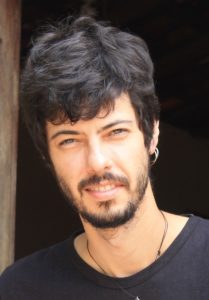
Presentation: “An integrative approach to the conservation of subterranean biodiversity in southeastern Amazonia”
Bio: Leonardo Trevelin is an assistant researcher at Instituto Tecnológico Vale (ITV) in Belém, Brazil. He graduated in Ecology and received a master’s degree in Zoology at Universidade Estadual Paulista before moving to Belém, Pará and completing a doctorate in Zoology at the Museu Paraense Emílio Goeldi. Leonardo has been exploring Amazonian biodiversity since 2009, and his research focuses on community and landscape ecology, especially with mammals as biological models. Currently, as a researcher in ITV, he coordinates projects within the Subterranean Ecosystems research program in southeastern Amazonia and unravels the science endeavor in Brazil from the private sector perspective.
Dr. Michael Romero: Tufts University
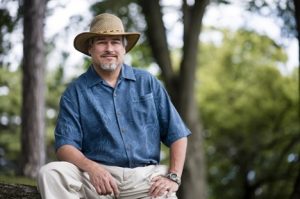
Presentation: “Using Stress Responses to Integrate Molecular, Organismal, and Population-Level Changes”
Bio: Michael Romero, Professor of Biology at Tufts University, has studied stress for over 40 years. He combines laboratory and field work to discover what causes stress in wild animals, what physiological and endocrinological responses are elicited, and how those responses help wild animals survive in their native habitats.
Dr. Anna Forsman: University of Central Florida
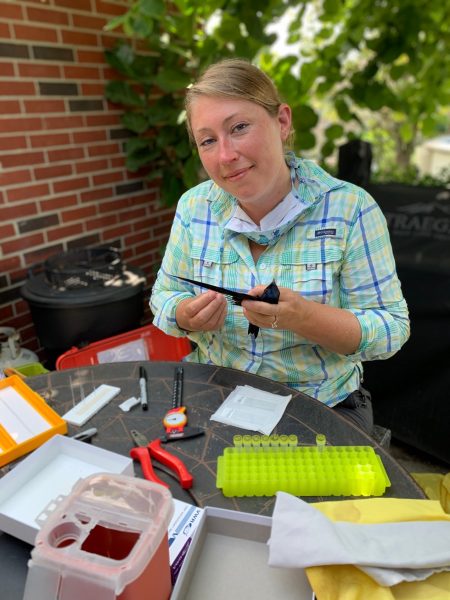
Presentation: “Probing the hologenome with DNA metabarcoding for clues about the phenome”
Bio: Dr. Anna Forsman is a research scientist in the Department of Biology and the Genomics & Bioinformatics Cluster at the University of Central Florida (UCF). In Fall 2023, she will be joining the Biology Department at Colby College as Assistant Professor. Prior to joining UCF in 2016, Dr. Forsman completed her Ph.D. work in the Department of Ecology & Evolutionary Biology and the Lab or Ornithology at Cornell University. Dr. Forsman is broadly interested in the relationships between vertebrate hosts and the microorganisms that live in, on, and around them. She is particularly interested in how microbes and parasites interact with the avian immune system and how these interactions influence immune system development and function, disease susceptibility, and overall host health. The primary study systems used by Dr. Forsman’s Wild Symbioses research group include wild populations of purple martins and Florida scrub jays. Together with her students, she established the UCF Purple Martin Project, which facilitates ongoing collaborations with Disney Conservation, the Purple Martin Conservation Association, and the International Purple Martin Working Group. Dr. Forsman uses multiple genomics approaches in her work including DNA metabarcoding, RNAseq, and whole genome sequencing.
Dr. Mario de Pinna: University of Sao Paulo
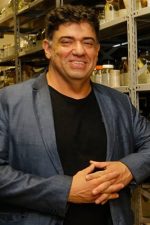
Presentation: “Distribution patterns of Amazonian fishes: diversity and biotic dispersal”
Bio: A graduate in Biology from Universidade Federal do Rio de Janeiro (1988), Ph.D. in Evolutionary Biology from City University of New York/American Museum of Natural History (1993) and Free Docent from Universidade de São Paulo (2000). Presently Full Professor of the Museu de Zoologia, Universidade de São Paulo. His research activities are focused on ichthyology, systematics, biogeography and evolutionary biology. Acted as visiting Professor/Researcher at various universities and museums in Brazil and other countries. Currently a Research Associate at the American Museum of Natural History (New York) and Smithsonian Institution (Washington, DC). Recipient of the Gibbs Prize (American Society of Ichthyologists and Herpetologists) and Warwick Kerr Medal (Instituto Nacional de Pesquisas da Amazônia). Formerly Director of the Museum of Zoology, University of Sao Paulo.
Luciano Lima: Jardim Botânico do Rio de Janeiro
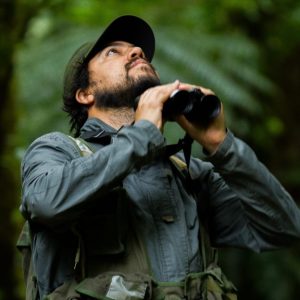
Presentation: “From scientific papers to memes: achieving Nirvana in science outreach”
Bio: With a Bachelor’s degree in Biology from Universidade Estadual do Norte Fluminense and a Master’s degree in Zoology from the University of São Paulo, Luciano is currently a Ph.D. candidate at Jardim Botânico do Rio de Janeiro. He’s an ornithologist and naturalist at heart, with a passion for biogeography, natural history, conservation, long-term biodiversity monitoring, relationship between nature and health, history of science, and citizen science. For the past 20 years Luciano has been working on various projects, and as a biodiversity consultant for government, non-government, and private institutions. He’s a true advocate for connecting people with nature and promoting science outreach, leading regular outdoor activities such as birdwalks and natural history walks and creating content for websites, podcasts, radios, and TV.
Xavier Glaudas: University of São Paulo
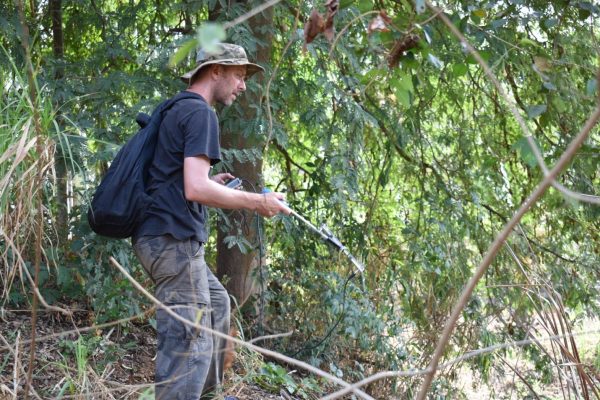
Presentation: “A review of the impact of climate change on the natural and life histories of snakes”
Bio: Xavier Glaudas is a French organismal biologist whose primary research interests lie in behavioral and evolutionary ecology. For the last 20 years, Xavier has travelled the world to study snakes, one of his favorite group of animals. Xavier conducted his graduate studies in the USA, his first postdoc in South Africa, and he currently holds a postdoctoral position at the University of São Paulo. His research revolves around monitoring the behavior of animals, identifying patterns of variation, and understanding how this variation ultimately affects fitness, with a particular focus on space use, predator-prey relationships, and mating systems. Although his research essentially addresses ‘pure’ or ‘fundamental’ questions in snake ecology, Xavier has recently applied his knowledge of venomous snake ecology—and the methods to study them—to help better understand the human-venomous snake conflict. Xavier is the author of ca. 30 scientific articles, and the recipient of two research grants from the National Geographic Society in the last decade.
Dr. Mario Cohn-Haft: National Institute of Amazonian Research (INPA)
Presentation: “What’s so special about the Amazon? An ornithologist’s perspective”
Bio: Mario is research faculty and curator of birds at the Brazilian National Institute for Research in the Amazon (INPA). Active in the Amazon since 1987, he is an ornithologist and naturalist with broad interests, including distribution, habitat, bioacoustics, and taxonomy, often involving expeditions to remote and poorly known destinations. Actively promotes birdwatching and science popularization on behalf of nature conservation (https://www.youtube.com/cantosdaamazonia)
Dr. Chris Doughty: Northern Arizona University
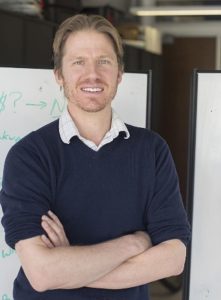
Presentation: “How animals impact nutrient dynamics and structure in tropical forests” and “Understanding the impact of drought and high temperature thresholds on tropical forests”
Bio: Dr. Chris Doughty is currently an associate professor at Northern Arizona University, Flagstaff, Arizona, USA. Working on tropical forest structure and ecology, he is interested in understanding the role of tropical forest structure on biomass and animal ecology using field, remote sensing and modelling approaches.
Dr. Beto Vicentini: National Institute of Amazonian Research (INPA)
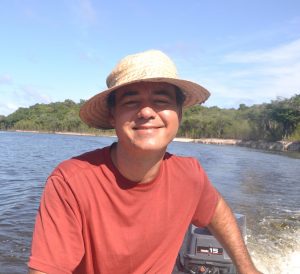
Presentation: “Taxonomic challenges of high diversity Amazonian forests – lessons from the Biological Dynamics of Forest Fragments Project (BDFFP)”
Bio: Alberto (Beto) Vicentini is a tropical botanist at Instituto Nacional de Pesquisas da Amazônia (INPA) in Manaus, Brazil. He coordinates the forest monitoring program of the Biological Dynamics of Forest Fragments Project (BDFPP) and is a professor at the Botany Graduate Program of INPA. His research focuses on Amazonian plant taxonomy, biogeography and forest ecology. The high diversity and long-term data of BDFFP forest plots imposed challenges in plant identification and data management that directed his research also into software development and the application of new tools for plant identification.
Dr. Fernanda Werneck: National Institute of Amazonian Research (INPA)
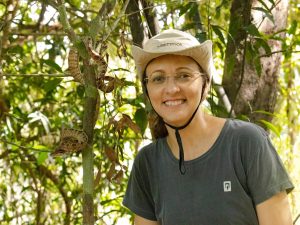
Presentation: “Integrating traits and genes to infer local adaptation and vulnerability of the Amazonian herpetofauna to changing climates”
Bio: Dr. Fernanda Werneck is a Titular Researcher at the National Institute of Amazonian Research(INPA, Manaus, Brazil), where she is also the curator in Herpetology and is currently the Head of the Biological Collections Program. She received her PhD in Integrative Biology at Brigham Young University, Utah in 2012, and was a Visiting Professor at Harvard Museum of Comparative Zoology in 2019. She is a very active biodiversity scientist in Brazil (#1 megadiverse country),with a career awarded nationally and internationally (L’Oréal-UNESCO For Women In ScienceBrazil-2016 and International Rising Talents-2017) and an affiliated member of the Global Young Academy (GYA) and the Brazilian Academy of Sciences (ABC). Dr. Werneck actively trains qualified human resources in Brazil (undergraduate, graduate students, and research assistants)concerned with biotic evolution and the effects of climate change on biodiversity. The Werneck lab (https://wernecklab.weebly.com/) work integrates field-based ecological, functional and population genomics approaches to characterize how biodiversity has responded to past environmental change, to better forecast how it might respond to changing climates in the future.
Fabiano Silva
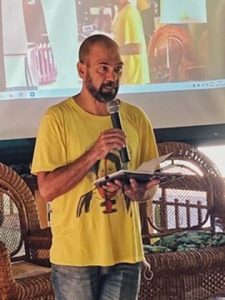
Presentation: “Social and environmental conservation in Rio Negro – innovation for sustainability in the Brazilian Amazon rainforest”
Bio: Business administration graduate from Escola Superior de Propaganda e Marketing (ESPM) in São Paulo, specialist in Environmental Management from the Centro Universitário do Serviço Nacional de Aprendizagem Comercial in São Paulo (SENAC), and Master in International Relations from Columbia University in New York. He has experience in the private sector in the areas of strategic consulting, marketing and environmental management. His primary focus is supporting inter-institutional articulation processes, formulation, evaluation, and monitoring of socioeconomic policies and development of community-based enterprises.
Dr. John DeLong: University of Nebraska Lincoln
Presentation: “Top-down modeling to balance mechanism and prediction of climate effects on populations
Bio: “Associate Professor of Biology at the University of Nebraska-Lincoln and the Director of Cedar Point Biological Station. Dr. DeLong is an evolutionary ecologist whose work focuses on the integration of theoretical and empirical approaches to the study of thermal niches, predator-prey interactions, virus ecology, and eco-evolutionary dynamics. He got his start in ecology working with migratory raptors and has since expanded his focus to include predatory protists, copepods, spiders, humans, and viruses. Dr. DeLong’s approach to theoretical ecology focuses on realistic parameterization of traditional models and the development of novel eco-evolutionary simulation approaches.”
Past Workshops
2022 g2p2pop Workshop
Accessing Approaches to Study Epigenetic Regulation
University of Nevada Las Vegas
June 6th & 7th, 2022
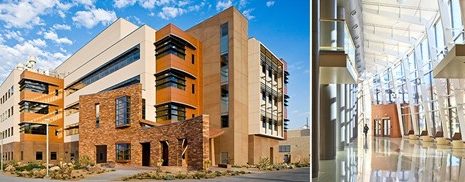
This two-day workshop will feature talks from experts who are studying epigenetic regulation in the context of physiology, ecology, and evolution. We will also have a series of breakout sessions. We hope you will be able to join us!
The 2022 g2p2pop workshop will introduce participants to:
1. What is epigenetic regulation- going beyond methylation.
2. Software packages and approaches for epigenetic regulation analysis.
3. Methods for inferring epigenetic control processes.
4. Genomic-level study designs that can address questions across biological scales.
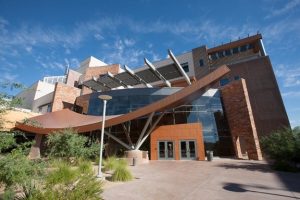
Our 2022 workshop will be held at the University of Nevada, Las Vegas. Since its establishment in 1957, UNLV has made tremendous strides in its quest to become a premier research university. These strides are reflected by its attainment of Carnegie R1 status in 2018 (top 3% of all universities for research). UNLV is also recognized as the most diverse university in the USA.
At the g2p2pop workshop, experts working in epigenetic regulation will discuss the basics of epigenetics, their work, and how we can harness newer approaches and technologies to understand how processes above the level of the genome influence genomes to phenomes. Speakers will describe key considerations in choosing among various analyses tools and integration of these tools with others.
Guest Speakers Include:
Jason Podrabsky, Portland State
Title: Epigenetic regulation of development, dormancy, and stress tolerance in a vertebrate extremophile
Abstract: It has been long appreciated that the diversity of form and function observed in the natural world cannot be explained by differences in genomic sequences alone. Large portions of the genome are highly conserved, in sequence and organization, across incredibly diverse and divergent species. It is differences in the timing and location of genomic expression, during development and otherwise, that generates a great deal of the observed diversity in form and function. Epigenetics is the study of heritable changes in gene expression without an underlying change in DNA sequence. These changes can be mediated by a variety of factors including DNA methylation, histone modifications, changes in chromatin architecture, small noncoding RNAs, and provisioning of small molecules such as hormones or morphogens. The annual killifish Austrofundulus limnaeus is a vertebrate extremophile that produces embryos that can survive for months without oxygen and years without access to liquid water. Survival in their ephemeral and often unpredictable habitat is dependent on epigenetic mechanisms that regulate development, entrance into dormancy and induce tolerance to environmental stress. In this talk we will review some of the major mechanisms for epigenetic regulation in the context of annual killifish development.
Title: Genome evolution over multiple timescales and dimensions
Abstract: The majority of the vertebrate genome is noncoding, however, unlike in genes where we can predict which sequences will generate which amino acids, functional characterization of the noncoding genome remains elusive. Characterizing functionality of the noncoding genome is important because that is where many of the most interesting features are located, including variants linked to disease via GWAS, and Human Accelerated Regions (HARs), regions conserved in vertebrates that evolved fast specifically in humans. Epigenomics help us functionally characterize the noncoding genome, identifying regulatory features such as enhancers which control gene expression. The genome also folds in organized patterns in 3D, bringing elements separated by millions of nucleotides in close proximity. In this talk I will discuss how 3D genome organization may have contributed to the human-specific evolutionary patterns of HARs. I will then discuss how Fauna Bio is translating extraordinary genomics in animals to human therapeutics, with a focus on how we’re leveraging epigenomic data.
Title: Learning the effect of 3D genome organization on gene expression
Abstract: The development of the Hi-C technology that can identify long range chromatin interactions in a high throughput, genome-wide manner brought us new insights on how the genome is organized in the nucleus. Hi-C data showed us that there are defined regions in the genome that interact more frequently than others that we now call Topological Associating Domains (TADs). In this talk, I will summarize the literature that supports the prevailing idea that these TADs affect gene expression, and also review some puzzling observations that seem to be inconsistent with the idea. After reviewing the literature on TADs, I will introduce our work that utilizes published massively parallel enhancer perturbation data to learn the factors that affect gene expression. One of the questions we aim to answer with our machine learning approach is whether the long-range chromatin interactions between the enhancers and the target gene affects the outcome of the enhancer perturbation on the target gene.
Title: Relating enhancer genetic variation across mammals to complex phenotypes using machine learning
Abstract: Advances in the genome sequencing have provided a comprehensive view of cross-species conservation across small segments of nucleotides. These conservation measures have proven invaluable for associating phenotypic variation, both within and across species, to variation in genotype at protein-coding genes or very highly conserved enhancers. However, these approaches cannot be applied to the vast majority of enhancers, where the conservation levels of individual nucleotides are often low even when enhancer function is conserved and where activity is tissue- or cell type-specific. To overcome these limitations, we developed the Tissue-Aware Conservation Inference Toolkit (TACIT), in which convolutional neural network models learn the regulatory code connecting genome sequence to open chromatin in a tissue of interest, allowing us to accurately predict cases where differences in genotype are associated with differences in open chromatin in that tissue at enhancer regions. We established a new set of evaluation criteria for machine learning models developed for this task and used these criteria to compare our models to models trained using different negative sets and to conservation scores. We then developed a framework for connecting these predictions to phenotypes in a way that accounts for the phylogenetic tree. When applying our framework to motor cortex, we identified dozens of new enhancers associated with the evolution of brain size and vocal learning.
2021 g2p2pop Workshop
Accessing High-Throughput Genomic Approaches
Broad Institute in Cambridge, Massachusetts
November 8th and 9th, 2021
This two-day workshop will feature talks from experts who are using genomics to address questions in physiology, ecology, and evolution, a tour of the Broad sequencing facilities, lightning talks by workshop participants, and a series of breakout sessions. We hope you will be able to join us!
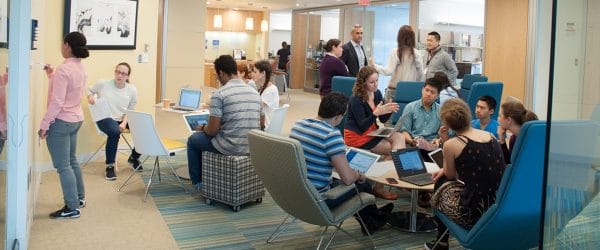
The 2021 g2p2pop workshop will introduce participants to
- Next-generation sequencing technologies.
- Software packages for genomic data analysis.
- Methods for inferring microevolutionary processes and mapping of organismal phenotypes to genomic locations.
- Genomics-based study designs that can address questions across biological scales.
Our 2021 workshop will be held at the Broad Institute of MIT and Harvard in Cambridge, Massachusetts. The Broad Institute is a world leader in sequencing, bioinformatics, and other genomics technologies. Through a focus on integrative, multidisciplinary collaborations, Broad researchers are producing key insights into evolutionary processes and the biological basis of organismal phenotypes.
At the g2p2pop workshop, experts from Broad and nearby academic centers will discuss their work, highlighting the power of genomic data and analyses to address questions at biological scales ranging from individual to population. Speakers will describe key considerations in choosing among various next-generation sequencing options. Participants will learn about genomics- and modeling-based based approaches to study microevolutionary processes through both presentations by invited speakers and active discussions of their own research. There will be particular attention to strategies for mapping phenotypes to specific genomic locations, identifying evidence of positive and purifying selection, and understanding how genetic drift interfaces with biogeography to shape an evolutionary landscape.
Location: Bruininks Hall, University of Minnesota, Minneapolis, MN
Specific workshop goals:
- Mechanistic modeling of biological systems – from theory to prediction.
- Getting acquainted with existing approaches to model biological systems – model types and complexities.
- Translating biological challenges into models – learning how to speak the same language.
- Generate/discuss goals for research exchanges.
The aims of the modeling workshop will be to familiarize participants with the field of biological modeling for basic and applied research. Mathematical modeling has been a major part of ecology where it propelled the development of theory on population and community dynamics. With the increase in computing power and speed, simulation modeling has become an important tool in biology. Modeling for management and decision-making benefits immensely from following the rules of good modeling practice and the modeling cycle. Participants in this workshop will become familiar with simple and more complex approaches to model biological systems, from genomes to populations. As they are built for specific purposes, model complexities can vary immensely, and part of the workshop will be dedicated to understanding how to balance the need for simplicity with required detail for system-specific models. This workshop will also address the rules of good modeling practice and focus on documenting each step of the modeling cycle to further increase information flow and transparency of the modeling process. Participants in this workshop will have the opportunity to directly interact with experts in modeling biological systems at different scales. This will allow for focused discussions on available data sets, questions, hypotheses, and potential modeling efforts.
We are happy to introduce three confirmed keynote speakers at the workshop:
Valery Forbes, Dean of College of Biological Sciences, University of Minnesota
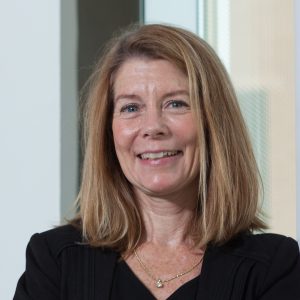
Keynote Title: “Extrapolating across levels of biological organization and how mechanistic models can help”
Prof. Forbes’ research focuses on understanding how responses to environmental stress links across levels of biological organization – from molecular to ecosystem level. Her group is developing and applying ecological modeling approaches to look at stressor impacts on terrestrial plants, aquatic invertebrates, and fish.
For more information: https://cbs.umn.edu/forbes-lab/
Jonathan Karr, Assistant professor in Genetics and Genomics Sciences, Icahn School of Medicine at Mount Sinai

Keynote Title: “Systemizing and scaling whole-cell computational models of individual cells”
Prof. Karr’s research in computational systems biology focuses on developing “whole-cell” dynamical models that predict the phenotype of individual cells from their genotype by representing all of the biochemical activity inside cells. To enable comprehensive whole-cell models, his group is also developing the computational methods and software tools needed to build, simulate, and apply whole-cell models to medicine and bioengineering.
For more information: https://www.karrlab.org/
John DeLong, Associate professor in Ecology, Evolution, and Behavior, University of Nebraska-Lincoln
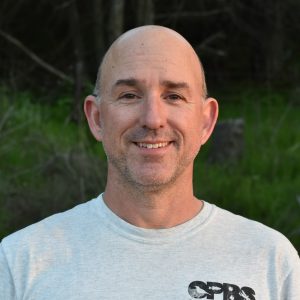
Keynote Title: “Climate change and scaling up across levels with evolution”
Prof. DeLong’s research focuses on ecological and evolutionary energetics, specifically on the role of energy use and how it facilitates evolution and ecological processes. Active areas of research include integrating classic ecological modeling approaches with macroecology, evolution of body size, and the role of metabolic energy use on the evolution of human life histories.
For more information: http://johnpauldelong.weebly.com/
View videos of our featured speakers’ presentations here!
Day 1 of the workshop will include lectures from Featured Speakers such as Dr. Scott Goetz, Dr. Andrew Richardson, Dr. Tom Whitham, Dr. Stephen Jackson, and more! Panel discussions, question and answer sessions, and networking make this a great event for faculty, postdoctoral scholars, undergrad and grad students, and those interested in climate change.
Specific workshop goals:
- Identify climate change resources that biologists and modelers can access.
- Synthesize predictions for abiotic drivers in global climate change models.
- Identify predictions for abiotic drivers in specific regions in climate change models.
- Discuss how abiotic drivers impact different levels in the genome-population hierarchy.
- Generate strategies, priorities and substantive goals for RCN research exchanges.
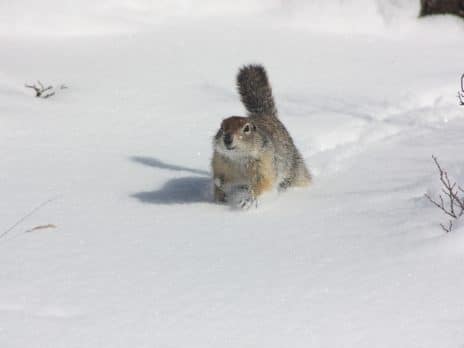
The first workshop will be foundational and will function to educate RCN members in what to expect of the abiotic drivers under various climate change scenarios and by region. It is evident that the results of climate change induced by anthropogenic greenhouse gases is far more complicated than an increase in average global temperature. Often, climate change manifests in ways that were not initially intuitive. For example, under current climate change, much of the planet is experiencing an advancement of spring-like conditions, whereas the Arctic is experiencing a delayed spring due to increased precipitation that comes in the form of late spring snowfall events. Similarly, winters in the Northern Hemisphere mid-latitudes have, since the late 1980’s, grown more severe due to ‘Arctic amplification’ despite a strong trend in global climate warming over the same time-period. And globally, increased atmospheric CO2, precipitation (regionally), and changes in land cover (e.g., retreat of icefields and glaciers) have resulted in ‘global greening.’ Thus, understanding the vulnerability and resilience of species requires knowledge of environmental drivers and processes and dynamics across space and time; many biologists and modelers lack this foundational knowledge of climate change.