To approach ecological questions regarding persistence of species, understanding constraints imposed by the current physiology of a species is an important piece to the evolutionary puzzle, and, being an ecologist by training, my molecular skills to investigate physiological mechanisms were limited. It was under this premise that I applied for support from the g2p2pop RCN to support a Laboratory Exchange in Prof. Takashi Yoshimura’s lab in the Institute for Transformative Biomolecules at Nagoya University, Japan. My objective for the laboratory exchange was to learn innovative molecular techniques, obtain proof-of-concept data, and strengthen international collaboration among my PI, Prof. Yoshimura, and myself.
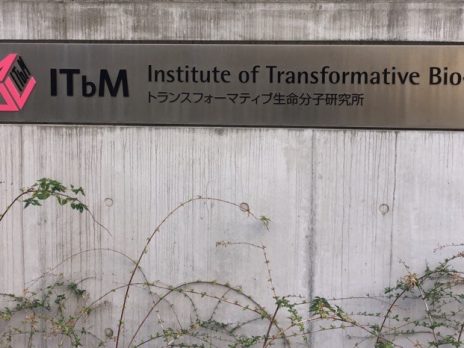
Traveling from Aarhus University in Denmark was easier than expected; I flew to Helsinki, where I met up with Prof. Barbara Helm- my supervising PI for the project. From Helsinki, it was a simple flight to Nagoya, Japan. Prof. Yoshimura picked us up from the airport, and because we arrived on a Friday, we had the weekend to overcome our jetlag. But on Monday, the work began in earnest.
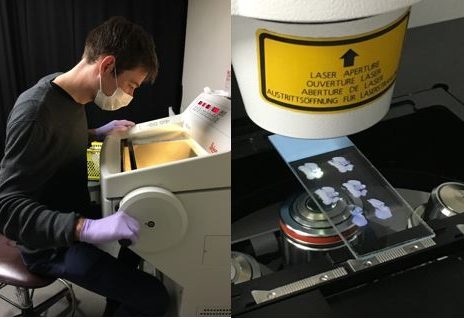
During our stay, I went through the steps to learn how to quantify RNA expression from neurological tissues, along with Prof. Helm. Each day was a new task, we started with tissue dissection and then cut very thin slices of tissue for histological staining. The subsequent violet color of the nuclei made navigating the tissue easier for the next step of obtaining miniscule and precise subsamples using laser micro-dissection. Thereafter, we extracted RNA and quantified the amount of RNA using qPCR. During this process, we had guidance from two of Prof. Yoshimura’s students Okimura and Toyama. They had tremendous amounts of patience and were knowledgeable of the methods. Prof. Yoshimura has three labs and is the head of his department, but this did not stop him from making our stay productive and interesting. He was able to come help when he could.
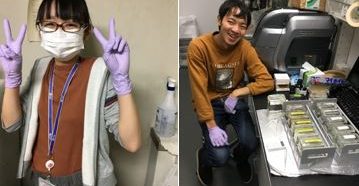
Prof. Helm left after the first week, and I continued to hone my skills the second week. I also had the privilege to visit one of Prof. Yoshimura’s other labs at the National Institute for Basic Biology in Okazaki where he studies seasonal phenomena using medaka fish.
On the plane back to Europe, I reflected on my experience. For this ecologist, the trip was a success. I was able to learn new molecular techniques that I will use in a future project and to further my career. The trip helped build an international network of scientists that are bridging physiology and ecology, and the RCN was instrumental in making all of this happen. I owe the RCN a huge thank you for their support in this learning experience, Prof. Helm for encouraging me, and Prof. Yoshimura for his generous hospitality.