I had the privilege of spending two days at the University of Texas Southwestern Medical Center (https://www.utsouthwestern.edu/research/) in Dallas with Dr. Will Israelsen in April 2021. Dr. Israelsen studies the meadow jumping mouse, a small hibernating rodent, to understand how metabolic enzymes and pathways are regulated during hibernation. This lab exchange provided me the opportunity to discuss details of hibernation behavior and physiology; learn successful husbandry techniques and methods to similarly care for, create conditions conducive to hibernation and eventually breed jumping mice. I was able to observe jumping mice and their housing in the lab; practice techniques; meet collaborators; and ask questions along the way. This lab exchange was a “jumping mouse blitz” of all things related to the topic crammed into 2 spell-binding days.
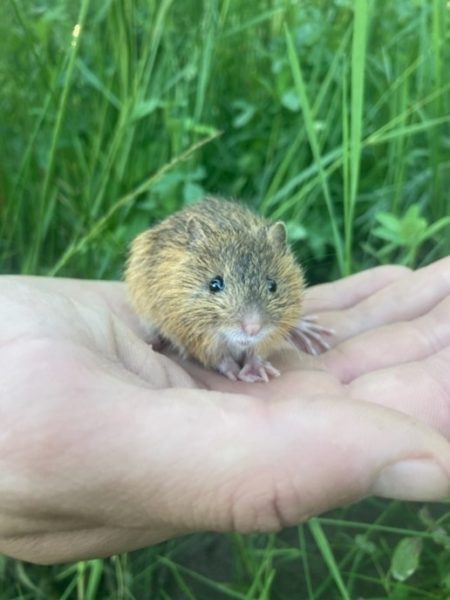
I will use what I learned from my lab exchange in a few important and very different ways. First, I am interested in understanding the physiological complexities of hibernation in the jumping mouse – an 18-g hibernating small mammal that is among the smallest obligate hibernators around the globe. This little jumping mouse has the ability to conserve energy during hibernation by reducing body temperature and metabolic rate to survive only on fat stores for up to 8 months in the wild. Insight into the mechanisms that drive these processes may lead to biomedical benefits to humans and contribute to human space travel. For example, if we can induce lowered body temperature and metabolism in human stroke patients, like hibernating mammals, doctors may be able to minimize neurological damage. Similarly, we could advance the potential for longer bouts of space travel in humans if we can control metabolic processes.
Second, I have been working with the New Mexico meadow jumping mouse – an imperiled species endemic to the southwestern United States – since 2012. Without management intervention, this species of jumping mouse will likely go extinct in the next 10 years. Learning more about jumping mice, specifically about its hibernation phenology and the endogenous, circannual rhythms that drive these physiological processes, may serve as a tool to develop meaningful conservation measures that promote the recovery of the species.
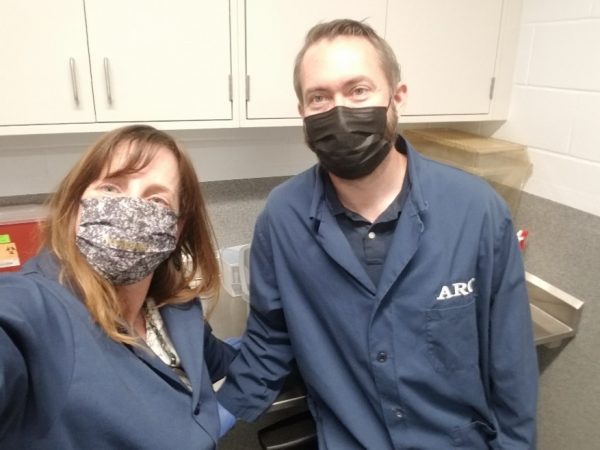
Third, back at NAU, the culmination of my lab exchange and collaboration led to NAU acquiring this colony of jumping mice from Dr. Israelsen upon his departure from UTSW. In May 2021, under strict guidelines, regulations, and Institutional Animal Care and Use Committee protocols, the colony of jumping mice arrived successfully at NAU and are adjusting well to their new environment. We are now preparing to provide conditions to support their natural life cycle to enter hibernation for the next six to eight months. This was a multi-collaborative effort between dozens of people at UTSW and NAU that all came together to provide these animals a new home and support this important research into the future.