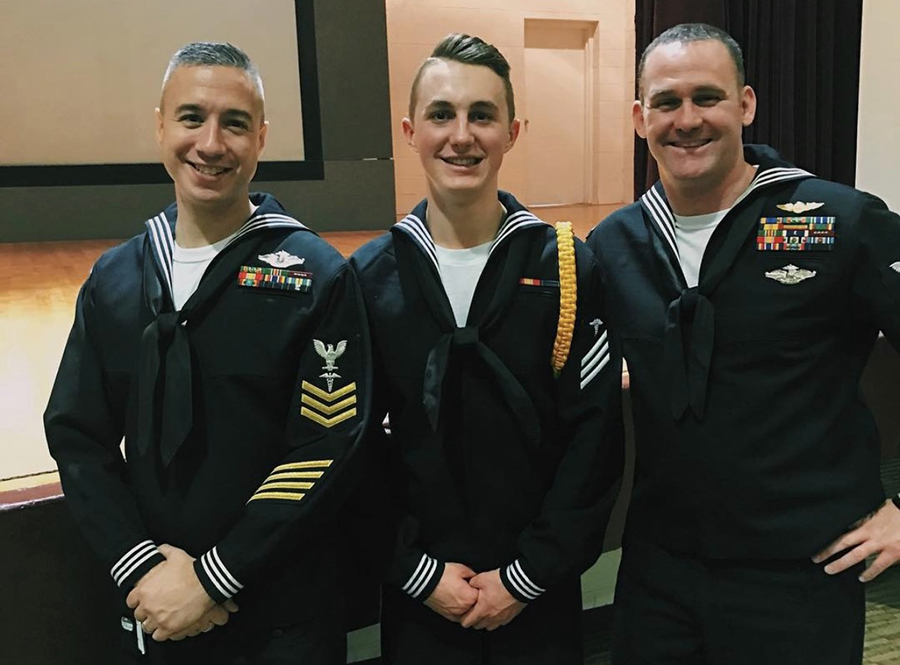


When he joined the Navy at 18, Skylar Wilcoxson became a corpsman, focusing on surgical technician training with a specialty in complex neurosurgery. He was fascinated by the brain. But during a nine-month deployment in Kandahar, Afghanistan, he was in the operating room for all types of surgery and all types of physical injuries.

Wilcoxson knew he wanted to continue this work when he got out of the military. Instead of being in the OR fixing bodies, however, he is earning a degree in psychological sciences, focusing on helping veterans who suffer from PTSD, anxiety and depression—the trauma that followed them home from war.
“Being in war is abnormal, and coming back to normal life is a really hard transition,” he said. “When I left Afghanistan, I was really responding normally to an abnormal situation.”
He’s now responding by helping other veterans heal. Wilcoxson is a master’s student studying neurofeedback, a process that helps the brain relearn self-regulation. His thesis research is in hemispheric asymmetry, but he runs a business offering neurofeedback to veterans dealing with trauma. Where trauma causes the brain to be in a state of constant hypervigilance, always expecting danger, neurofeedback therapy helps to calm the brain’s fight-or-flight response and settle those constant feelings of danger. The calmer someone is, the more they can think rationally about the causes of stress and cope.
“Skylar is someone who demonstrates his core value of service every day,” said Pete Yanka, director of Veteran and Military Services at NAU. “It is a part of who he is. Having veterans help other veterans is huge because they are able to connect on a level most can’t. When individuals such as Skylar are helping veterans, it ensures that the veteran community has the appropriate level of commitment and is well taken care of.”
Deep diving into the brain

Wilcoxson, who is from Phoenix, came to NAU as an undergrad in 2022 after finishing his military contract at the Navy Medical Center in San Diego. He wanted to work with professor Larry Stevens, who specializes in biofeedback. Stevens and a team of students conducted a novel study on arachnophobia, using live spiders and mapping the brains of people who had the phobia.
That research tracked a person’s brain activity while they were experiencing panic about the nearby spider, mapping where and how much of the brain was activated. The goal was to help participants recognize their anxiety symptoms and find ways to self-manage. The early results were positive.
Neurotherapy, unlike many other forms of therapy, offers a faster, less invasive way to make the symptoms of trauma go away without forcing the person to relive the trauma. It’s not a silver bullet, Wilcoxson said; it’s just one tool of many. But it’s one he found personally helpful and that he’s seen help other vets with PTSD as well.

He’s offering veterans five free sessions through his business with the goal of helping them rebuild the resilience that trauma destroyed. This isn’t just for combat veterans either, he said; people experience trauma differently, and many people who leave the military aren’t OK, but they don’t feel they can say that, or don’t feel they need therapy or that they should be strong enough without help. It’s especially true for men leaving the military—many redeploy because they don’t feel “normal” outside of the traumatic, hypervigilant state that military life can mean.
“As a veteran to a veteran, I want to say, ‘It’s OK for you to not feel good about the things you witnessed. It’s not a character flaw to not feel OK about that,’” Wilcoxson said.

Heidi Toth | NAU Communications
(928) 523-8737 | heidi.toth@nau.edu