


A program that started in 2023 will continue to give NAU students hands-on experience in addressing the homelessness crisis while they earn graduate degrees. The Garcia Family Foundation renewed its grant for the NAU Community Impact Fellowship Program (CIFP), which will support four graduate students by funding their education as they earn their MA in psychological sciences.
“The purpose of the program is to support high-impact graduate training in evidence-based program evaluation,” said Laura Noll, co-director of the Interdisciplinary Health Ph.D. program and associate professor in the Department of Psychological Sciences. “It helps students use the science and the education they are getting at NAU to solve real-world problems, such as homelessness, in collaboration with community partners using innovative program development and evaluation strategies.”
The grant provides students with 20 paid hours a week while they receive training in collaboration with organizations in either the Flagstaff area or elsewhere in the state. In Flagstaff, they work with Northland Family Health Center and Catholic Charities of Northern Arizona, while at the state level, they train with associate professor Robert Wickham at the Arizona Housing Analytics Collaborative (AzHAC). Their work centers on trying to solve the housing crisis by using data-driven strategies to help prevent people from becoming homeless and helping these organizations use data more efficiently with limited funding.
“Each fellow has an individual training plan,” Noll said. “Depending on their training and career goals, and because this is a workforce pipeline development, fellows might have a local emphasis, a statewide emphasis or both. This program helps students be ready for the workforce by providing them not only with scientific training, but also with a lot of skill development opportunities. Students develop effective professional communication skills, working to establish trust and sustainability with people outside of academia, in the community and to really understand the nonprofit ecology so they can collaborate more meaningfully.”
Joseph Parker, a first-year master’s student who graduated with a bachelor’s degree in psychological science last spring, said he applied to the program for both its academic rigor and its welcoming nature.
“I look forward to all the things I can learn and accomplish as part of this program,” Parker said. “I still don’t know what organization I will be working with, but I think my work in the program will be important because it will support local organizations in the Flagstaff community.”
Noll said the students also receive training in establishing partnerships, creating agendas and leading meetings, as well as program evaluation, data collection and analysis implementation. By working with nonprofit organizations, those who are interested in careers in science can determine what job categories fit them best while helping solve homelessness.
“My neighbor’s needs are my needs; we are all interconnected,” Noll said. “Our community is only strong and healthy when everyone is taken care of. As a publicly funded institution that has a mission to train the next generation of leaders and public service workers and people who are going to help Arizona remain healthy and economically vibrant, it is so important that we are playing a role in addressing urgent social issues like the housing crisis, which is dire in the state of Arizona, like elsewhere.”
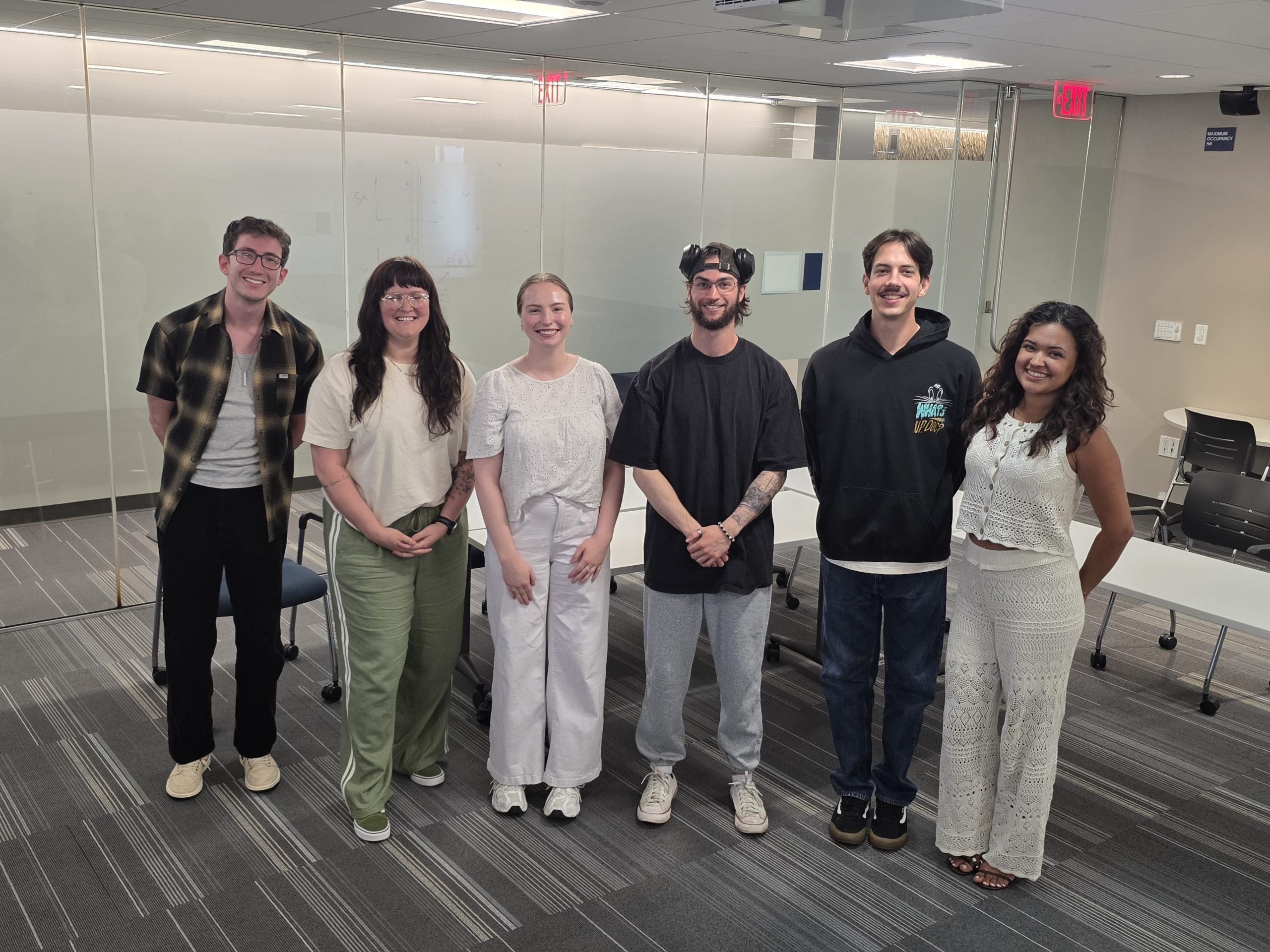
This fall, the program will welcome its fourth cohort of CIFP Fellows: current fellows Olivia Tobias and Collin Kracht and incoming MA students Caden Stevenson and Parker. NAU Honors College student Bella Rios will return as an undergraduate team member, as will interdisciplinary health Ph.D. student Aubrie Patterson, who provides leadership and supervision to all CIFP fellows. For information on how to apply, email Laura Noll.
 Mariana Laas | NAU Communications
(928) 523-5050 | mariana.laas@nau.edu