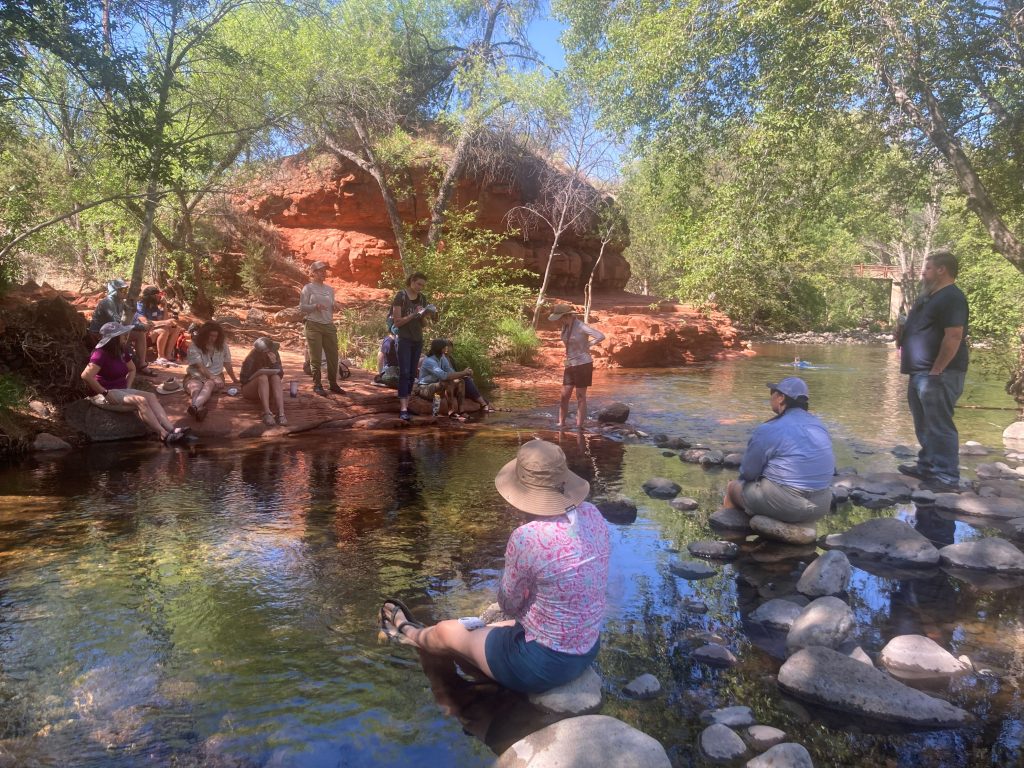


Water shapes every aspect of our lives, yet communities around the world are facing growing challenges in securing this vital resource. Climate change, population growth and rising demand are placing unprecedented pressure on water systems, creating complex problems that require fresh thinking and collaborative solutions.
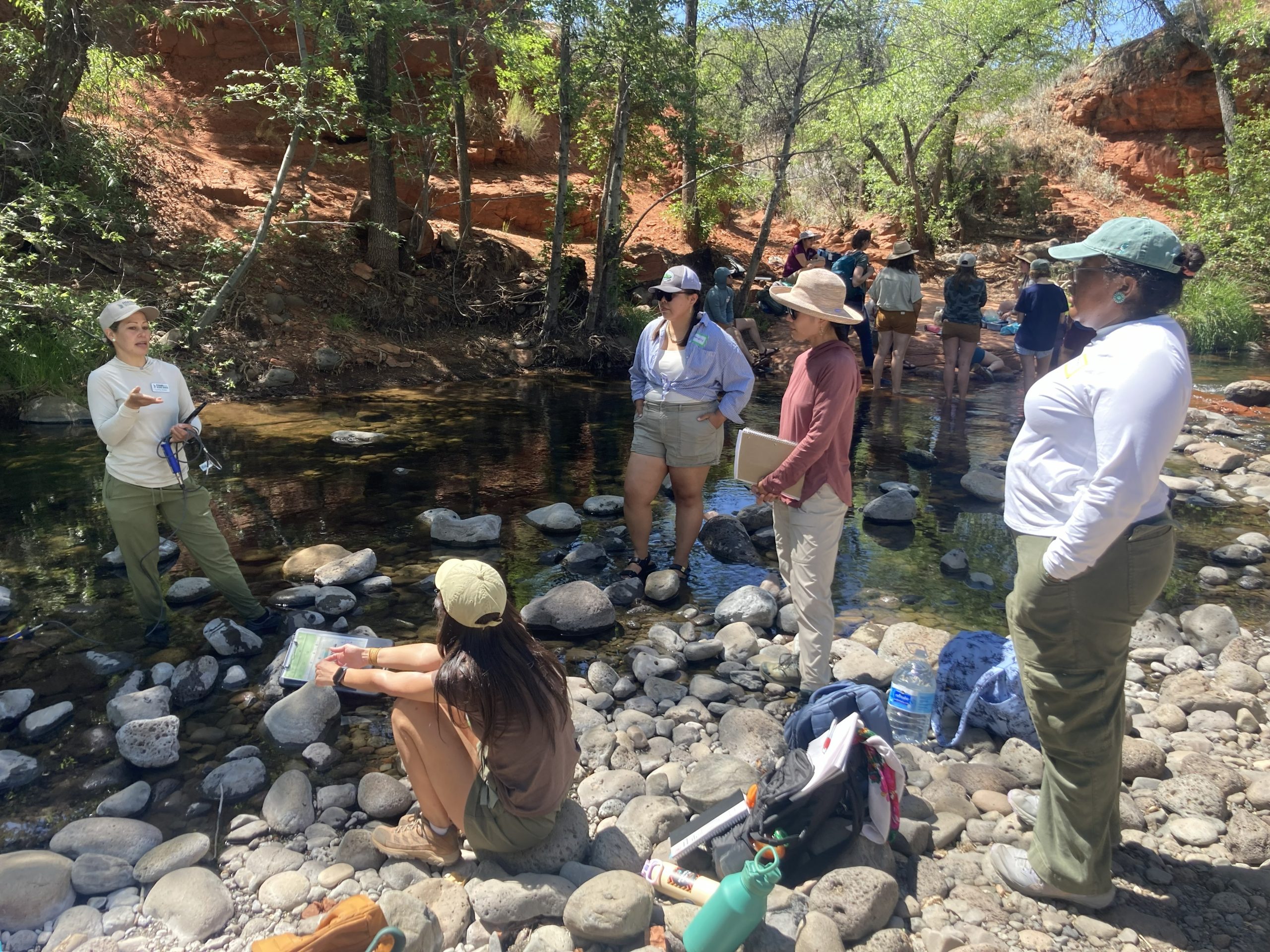
In northern Arizona, severe drought, over-pumped aquifers, a lack of groundwater regulation and deep historical inequities in infrastructure have created a unique mismatch between supply and demand. Recognizing these challenges, a group of professionals has come together with a shared vision: to create a space where emerging water leaders can connect and learn.
The Water Leadership Institute in northern Arizona (WLI) is an initiative in partnership with three organizations: the Water Society and Policy Lab at NAU, the Environmental Defense Fund (EDF) and the Arizona Water for All (AW4A) initiative at Arizona State University. Lucero Radonic, professor in the Department of Anthropology and head of the Water, Society and Policy Research Lab, said the WLI started in California in 2013 and was later adapted for southern Arizona in 2024, where it is coordinated by EDF and local partners. Building on the success and momentum of that inaugural Arizona cohort, they began exploring the possibility of piloting a WLI for the Colorado Plateau, a unique ecological region spanning northern Arizona, southern Utah, southwestern Colorado and northwestern New Mexico.
“The idea was to create a learning space for emerging water leaders to develop the type of skills that they need to address the challenges of water security in their region,” Radonic said. “EDF had worked on a couple of these Water Leadership Institutes in southern Arizona, in Tucson and Nogales, but at some point, we all came together with the idea of creating a pilot program for the Water Leadership Institute in northern Arizona. Since the beginning, our core understanding was that whatever we created needed to address the needs and interests of this region since the Colorado Plateau is very different from the Sonoran Desert, both in terms of the eco-hydrology and in terms of the actors that we have in this area.”
To start, Radonic said her lab interviewed 45 people in the region, from municipal water operators to tribal environmental professionals, ranchers and people who work at environmental organizations, to identify what attributes and skills they saw in effective water leaders today and what they believed was needed to grow leadership moving forward.
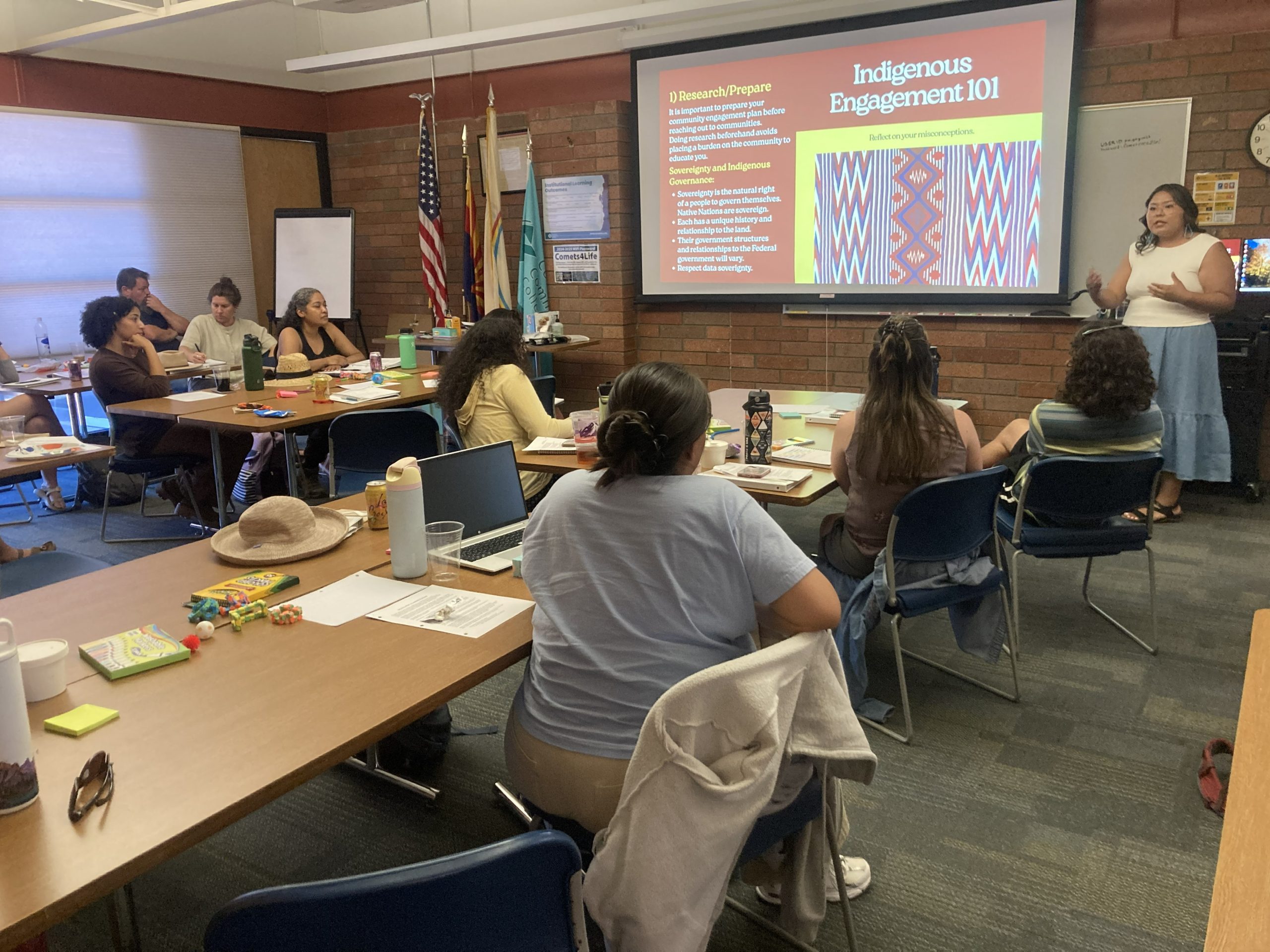
Radonic has been working closely with Kait Bieber, senior specialist for EDF’s Resilient Water Systems team; Miriam Nelson, program coordinator for AW4A; and Mariessa Fowler, consultant from AW4A. She said all three have been instrumental in coordinating a diverse lineup of speakers for the four-day Water Leadership Institute. Bieber, Fowler and Nelson are all NAU alumnae.
The Water Leadership Institute launched on May 30 in Flagstaff, where 15 early- and mid-career water professionals participated in workshops and discussions with three goals in mind: increasing awareness of cross-sector perspectives, improving communication confidence among those who attended and improving confidence in dealing with uncertainty.
“The future of water is uncertain, so the long-term goal is to create a cohort of water professionals who in the future can work collaboratively to bring water security across the Colorado Plateau,” Radonic said. “We have created an awesome space where people from different water sectors are coming together and having conversations about the future of water, while learning different skills, from how to facilitate a meeting to how to communicate complex legal concepts to a general audience.”
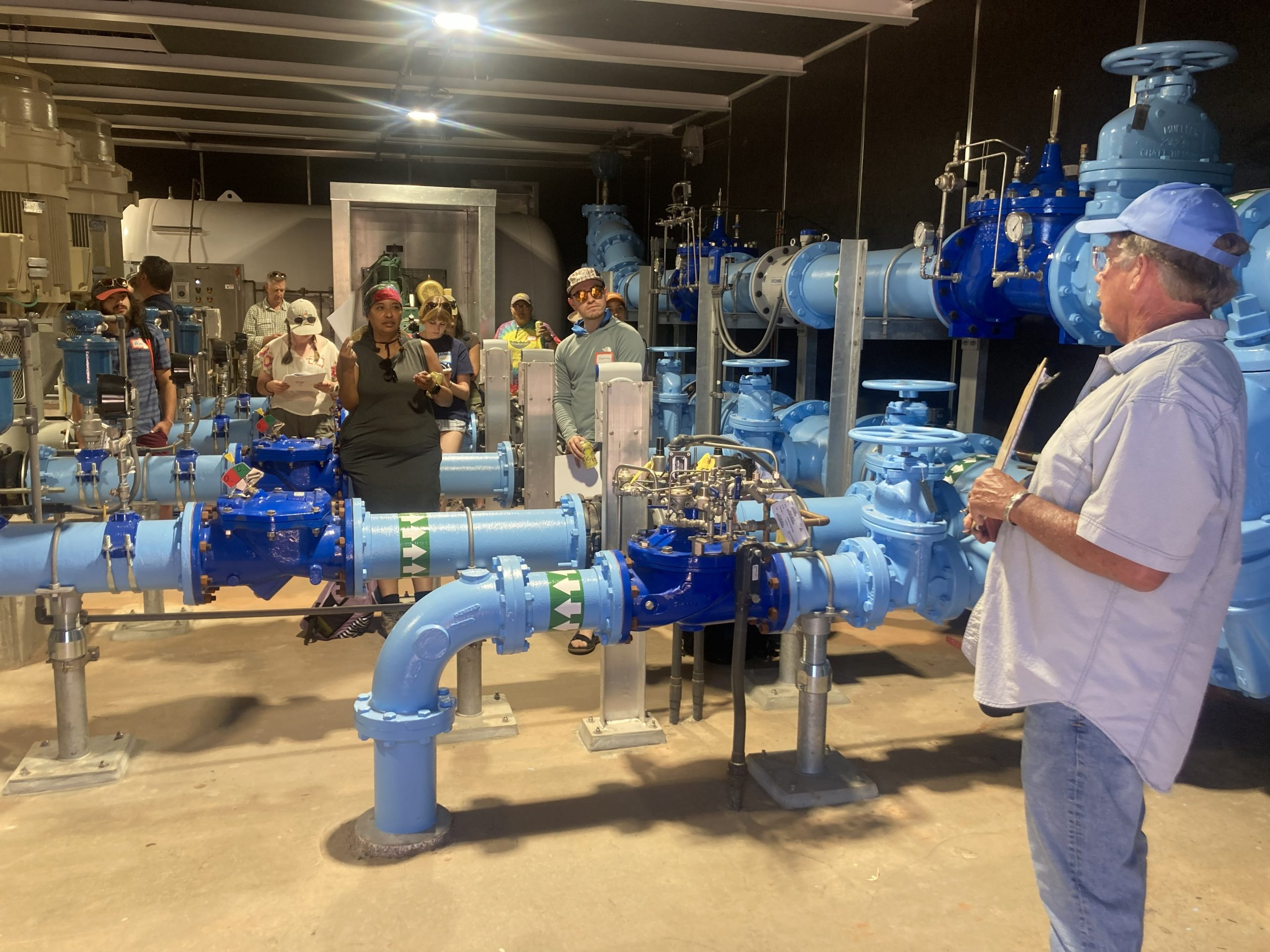
The WLI’s second session was held in the Sedona area, where participants learned how the Arizona Department of Environmental Quality is working with Friends of the Verde River to monitor and restore water systems in the Verde River Watershed. Following the hands-on workshop on Beaver Creek, participants visited the East Sedona Storage Tank, where they learned from the Arizona Water Company about the decades-long process to build this underground tank for potable water provisioning.
Their next session was an overnight trip to Page, the Glen Canyon Dam and Lake Powell.
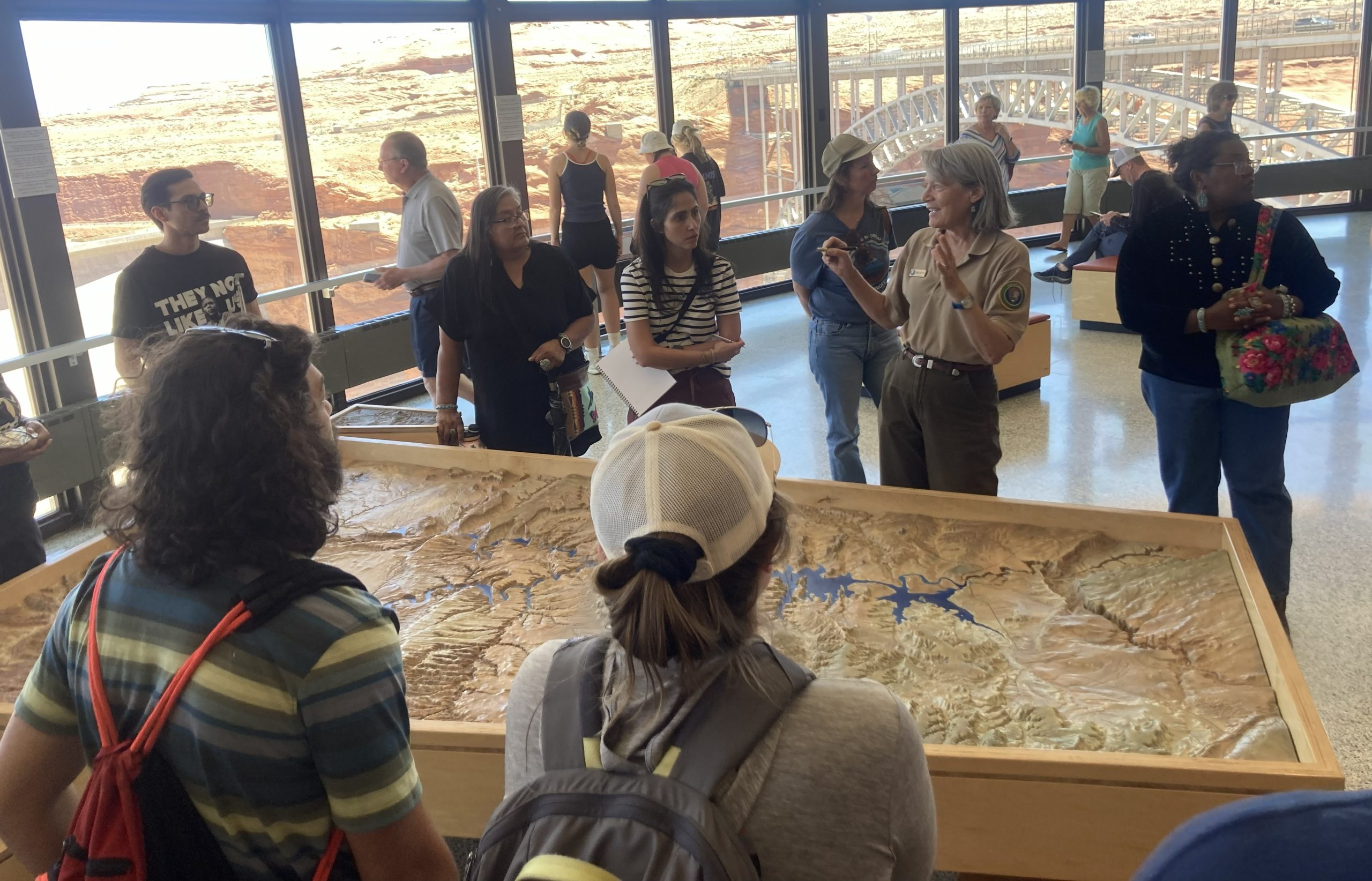
“We talked about water security from a systemic perspective and visited Glen Canyon Dam and Lake Powell. We covered the impacts of the drought and how the high demand on Lake Powell is lowering the water to critical levels,” Radonic said. “Eric Stanfield, who works for the Navajo Nation, joined us and gave a talk about the Glen Canyon Adaptive Management Program, which is a program that involves tribes in decision-making for the management of the Glen Canyon Dam, which is a big shift toward a more inclusive form of water management in our region.”
The conversations and feedback gathered during the four-day gathering of the Water Leadership Institute will be evaluated by Radonic and Grace Horner, an undergraduate student in the School of Earth and Sustainability, who works at the lab.
Radonic said the future of WLI is full of possibilities.
“We are hoping to be able to build new partnerships and fundraise to continue this program,” Radonic said. “There are some amazing leadership programs in this region, and we hope we can supplement those programs. There is a lot of excitement from organizations in this region who see the importance of fostering stronger leadership that focuses on cross-sectoral collaboration for water issues. To ensure water security in our complex, multicultural, multi-jurisdictional region, we need to be able to listen and understand other perspectives and communicate across sectors.”
 Mariana Laas | NAU Communications
(928) 523-5050 | mariana.laas@nau.edu