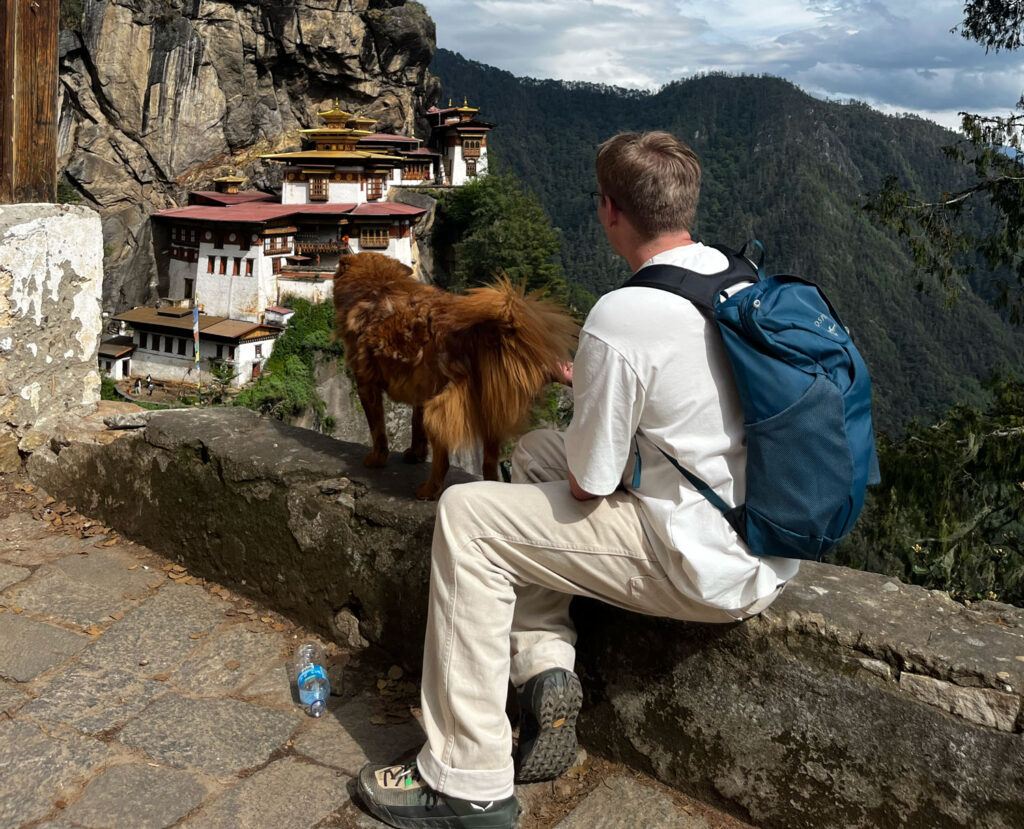


Think your study abroad dreams are too far-flung? Think again. Honors College student Kyle Hall’s 2025 experience in Bhutan proves NAU can accommodate just about any academic adventure. Hall traveled to this small Asian kingdom for a month to teach astronomy and help schoolchildren build a telescope. His experience wasn’t part of an organized program, yet Hall found a way to fund the educational adventure through an NAU scholarship. Read about Kyle’s month in Bhutan and get inspired for your DIY journey!
 Where did you study, and why did you choose that location for your study abroad program?
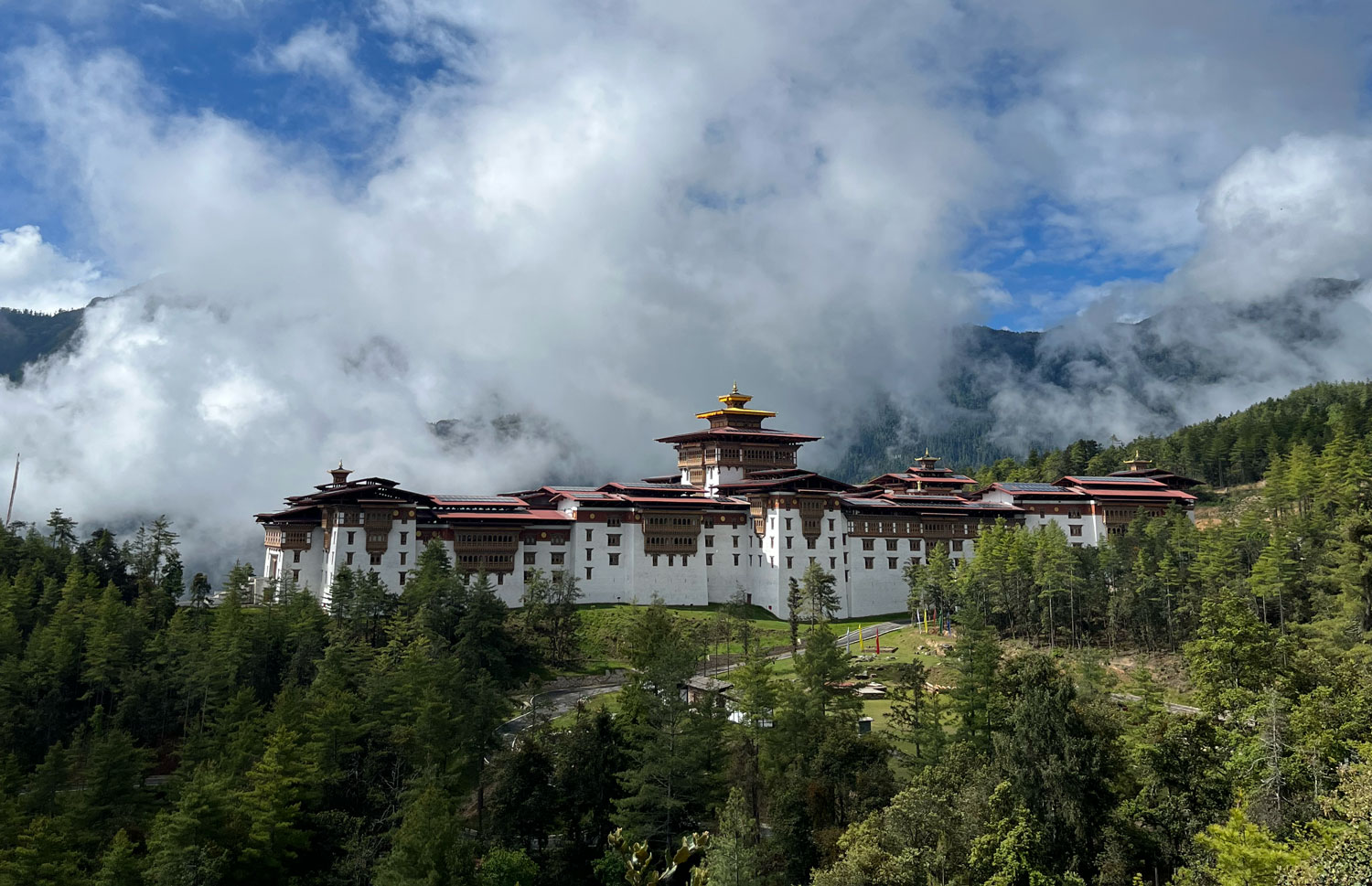
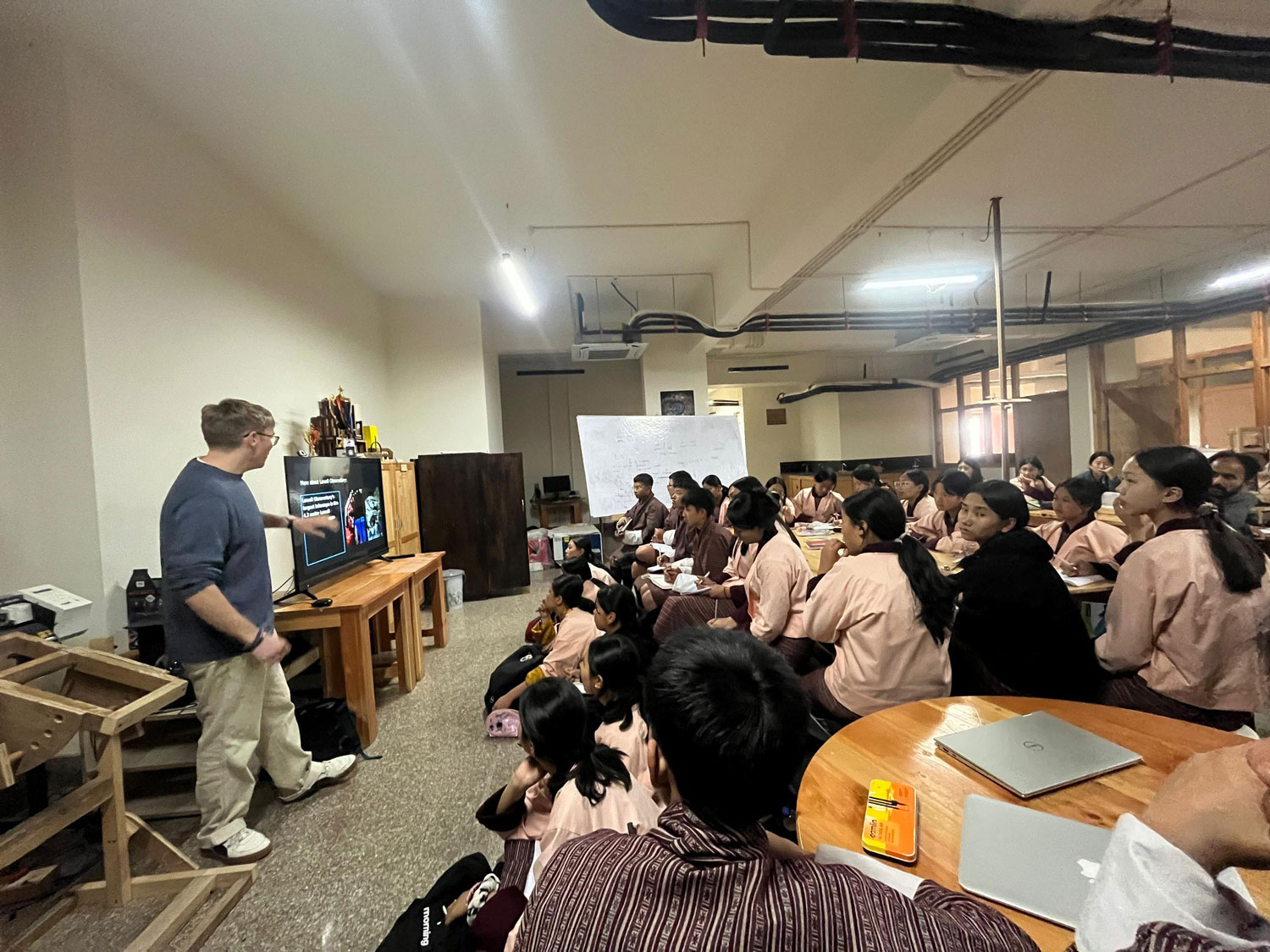
My “program” was at the Druk Gyalpo’s Institute (The Royal Academy) in Paro, Bhutan, where I taught astronomy for a month to middle and high school students. My experience abroad is unique in that there was no application or even advertisements about it. I learned about the opportunity entirely through word of mouth through a citizen science project I was working on and was put into contact with faculty at the Royal Academy to build this “program” from the ground up.
What classes or research did you complete while abroad and for how long?
Most of my time in Bhutan was spent teaching students about astronomy, though I also spent a good amount of time working with students on the citizen science project that originally brought me there in the first place. That project involved building an autonomous telescope that, once deployed, will search for planets outside of our solar system. I was only able to be in Bhutan for one month due to restrictive government visa issues, but after my time in Bhutan, I solo traveled through Thailand and Japan for one month.
How did you fund your study abroad experience?
My study abroad was funded via the Jacob C. Dottle Summer Research Award for astronomy students. This award covered my flights to Bhutan and cost of living. What was left afterward was my “salary” working at the school. I am grateful to the NAU astronomy program and the Dottle family for this scholarship.
 What aspects of your host country did you find the most different from your home country, and why?
I remember being laughed at after I landed in Bhutan for putting on my seatbelt, because I was told that in Bhutan, “cars usually go off cliffs, and when that happens…your seatbelt won’t help.” There were plenty of similar moments, but by the end of my time in Bhutan, they had decreased significantly. What started as culture shock became my normal life. When I returned from Bhutan, I was reprimanded by my father for not putting on my seatbelt when he picked me up from the airport.
What local traditions or customs did you experience?
Nearly the entire time I was in Bhutan, I experienced various traditions and customs, from prostrating (a spiritual gesture involving full-body bowing) at monasteries, to sitting around a campfire singing “Take Me Home, Country Roads” by John Denver (a modern tradition there, but shockingly common), all the way to late-night karaoke.
How did you deal with homesickness and maintain connections with loved ones?
The people of Bhutan were so welcoming and neighborly that I felt right at home soon after I landed, though there were still times I missed home, especially my friends and loved ones. I called home a few times a week to mitigate this homesickness just to chat and update them on what I was doing. Oftentimes I wouldn’t call for more than 10 minutes, but it was still enough to make me feel connected to home!
 Tell us about your favorite and/or least favorite dish abroad.
My favorite dish: Bhutanese-style pakoras—crispy vegetable fritters. My least favorite dish: Dahi (curd)—I originally thought it was milk and drank it as such, which resulted in me nearly spitting it out due to the unexpected bitter flavor.
What expectations or preconceived notions did you have about your chosen country, and how did your experience compare to those perceptions?
To be honest, I did not have too many preconceived notions. Bhutan is a small country that is often overlooked, and I have never had it come up in conversation prior to booking my plane tickets. I had previously heard that Bhutanese people are friendly, but I soon realized they were more than friendly, and I was welcomed like family.
How did this study abroad experience influence your personal, academic and career goals? Did it open up new possibilities or change your direction?
This journey absolutely changed my academic goals. In fact, a year later (summer 2026), I departed on a similar journey to Taiwan to intern at National Taiwan Normal University. This experience and my recent experience in Taiwan have inspired me to apply to graduate school abroad.

Jill Kimball | NAU Communications
(928) 523-2282 | jill.kimball@nau.edu