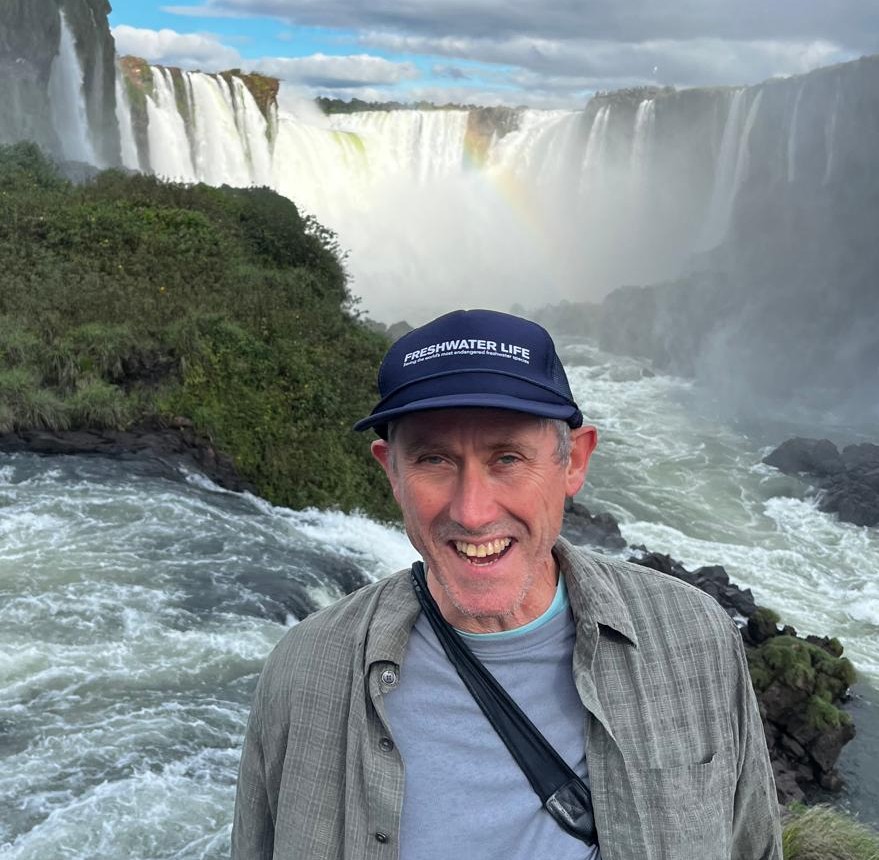


Springs are critically important habitats, and experts like Ian Harrison want to spread the word. An adjunct professor in the School of Earth and Sustainability and associate director of the Free-Flowing Rivers Lab, Harrison just worked with international colleagues to establish a Global Springs Alliance, which aims to protect, restore and sustainably steward the 178,000 known—and the many thousands of unknown—springs across the globe. He also has a hand in the International Union for Conservation of Nature’s new Global Springs Task Force.
We asked Harrison a few quick Qs about his work protecting springs and what he hopes to accomplish with the Global Springs Alliance and IUCN task force.
What drew you to the field of freshwater ecology?
As a student I was interested in the taxonomy of fishes—how you identified different species based on their anatomy, where they are found and their evolutionary relationships. Very soon I realized that many of them were found in highly threatened habitats, but little was known about the extent of some of these threats or how to address them practically through conservation action.
Why are spring ecosystems so important to protect?
Springs, although small, can have relatively large numbers of species that are found only in those springs. Also, they may be critically important habitats used by other terrestrial species within a large area surrounding the spring. Despite their often small size, their roles in the ecology of the landscape around them are very important. They are critical microhabitats for biodiversity in times of dramatic climate change, and they are critically important as water sources for large numbers of people, as well as often having high cultural value.
With the creation of the Global Springs Alliance and IUCN Global Springs Task Force, what do you and your colleagues hope to accomplish?
With the Global Springs Alliance and IUCN Global Springs Task Force, we hope to build a world where springs are recognized, valued, conserved and restored as vital ecosystems that sustain water, biodiversity, culture and communities. Together, these efforts will mobilize people, knowledge and resources to strengthen stewardship of springs for global biodiversity and human well-being.

Jill Kimball | NAU Communications
(928) 523-2282 | jill.kimball@nau.edu