

They say success is nothing without someone to share it with. That’s certainly true in Tuba City, an 8,600-person town in the Navajo Nation.
“Members of the Navajo Nation love celebrating,” said Anne Hamlin, a research associate at NAU’s Center for STEM Teaching and Learning (CSTL). “They turn out to basketball games, parades, flea markets and fairs in droves. I once tabled at the Navajo Nation Fair and interacted with 3,000 people.”
That’s why, armed with $50,000 in National Science Foundation grant money, Hamlin and her colleagues aren’t just aiming to improve STEM education opportunities for schoolchildren in Tuba City. They’re also aiming to ensure the whole town has opportunities to celebrate the kids’ science success.
Hamlin and CSTL colleague Sean Ryan are partnering with educators, parents and other Diné leaders on a project titled Intergenerational, Grounded, and Networked Innovation for Technology Education in STEM, or IGNITE-STEM. The project, funded by NSF’s FINDERS Foundry program, will bring together teachers, families, students and researchers to co-design a STEM learning model that reflects Tuba City’s unique community priorities while also creating pathways to promising careers in science, technology, engineering and math.
The IGNITE-STEM project begins this fall with two community planning workshops in Tuba City on Oct. 3 and Oct. 17, where paid participants will weigh in on the opportunities for learning and celebration they’d like to see.
Hamlin said that rather than asking researchers to create an education program and bring it to communities, the FINDERS Foundry program does things a bit differently: It asks communities to identify their needs, then solicits research proposals that meet those needs while also advancing education research.
“We want what we do here to come from the community, not the university,” Hamlin said. “We’re asking families, students and educators what they want to celebrate, how they want to use AI, how they want community members involved and even what research questions they think are most important. We want them helping shape both the program and the research.”
The planning phase will bring together educators, caregivers, students and community stakeholders to design a STEM and AI engagement model centered on activities the community values. Participants will explore ways to connect hands-on STEM experiences with community celebrations, fairs, showcases and other local events that highlight student achievement.
The project grew out of a need expressed by parents in Tuba City Unified School District, where access to STEM and AI learning opportunities can be limited due to the community’s rural location and resource constraints. Marisa Soto-Harrison, an educator there, also expressed interest in helping students learn how to use emerging AI technologies responsibly and critically.
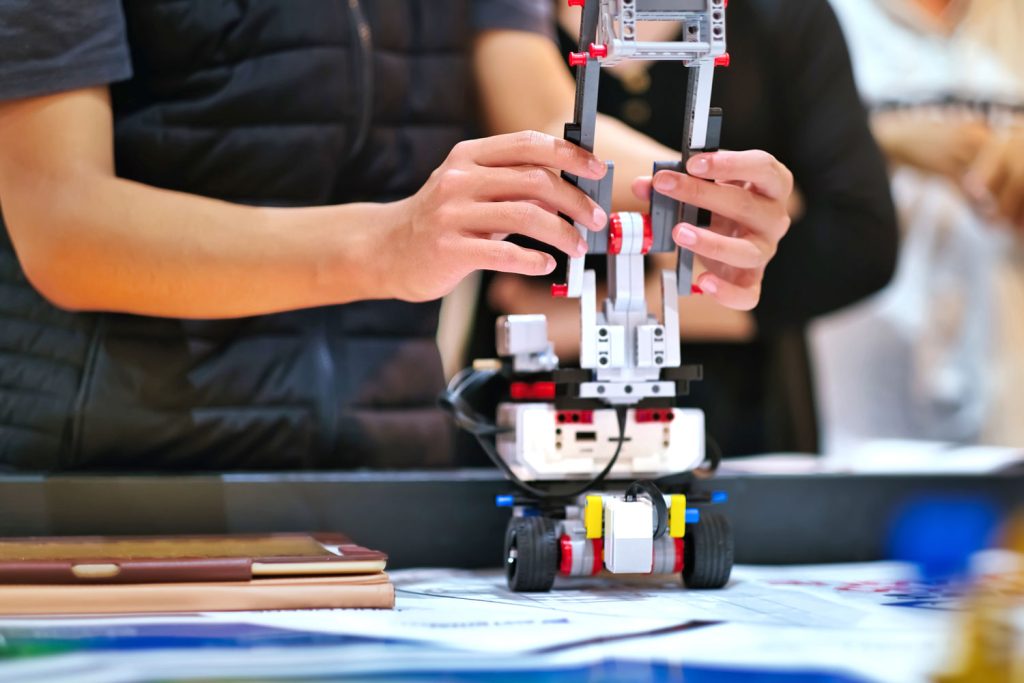
The initiative builds on NASA-funded STEM programs already underway through CSTL. Students in the Tuba City district’s gifted education program participate in national STEM and robotics challenges that encourage teamwork, problem-solving and engineering design. IGNITE-STEM will explore how to expand the visibility and community impact of those experiences while helping students develop AI literacy and critical-thinking skills.
According to Ryan, the project is about more than teaching technical skills.
“The real inspiration is to spark curiosity and provide opportunities for students to access learning experiences and resources they may not otherwise have,” Ryan said. “We want students to see not only that STEM careers exist, but that people who look like them can succeed in those roles. This work has the potential to strengthen the community and create new opportunities for future generations.”
Hamlin and Ryan said a key feature of the project is that students will be treated as partners throughout the planning process. Students participating in the workshops will be compensated for their time as they help shape future research questions, determine what outcomes matter most to them and explore involvement in later research activities.
After the workshops, if a second NSF proposal is funded, the team would receive $300,000 to implement and study the community-designed STEM education model during the 2027-28 school year. Researchers hope the project will generate insights that can benefit not only Tuba City but also other rural and economically disadvantaged communities across the country.
Ultimately, the project’s goal aligns with NSF’s broader workforce development mission: helping more young people see STEM as a pathway to meaningful, high-demand careers.
“Students, families and educators all have valuable knowledge to contribute,” Hamlin said. “By building something together, we hope to create STEM experiences that are meaningful, sustainable and truly rooted in the community’s vision for its future.”
Additional project partners include six additional Tuba City Unified School District educators; six Tuba City students; NAU researcher Nena Bloom, AI literacy expert and NAU Ph.D. student Nesma Nasr; and Tuba City parent Janeen Phillips, who will help ensure family and community perspectives remain central to the project’s development.

Jill Kimball | NAU Communications
(928) 523-2282 | jill.kimball@nau.edu