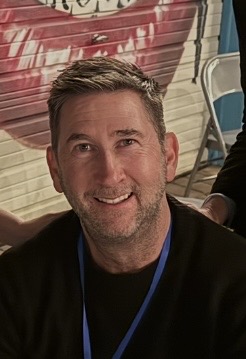


Dr. Mark Pico first came to NAU as a visitor. He appreciated the campus environment, so when the opportunity to become the medical director at Campus Health Services came up, he took the opportunity to return. Find out what drew Pico to medicine and a coincidental partnership that changed his trajectory.
What brought you to NAU?
It was the environment here on campus that I experienced when visiting my wife, who at the time was a doctoral student. This, combined with some leadership opportunities, confirmed my transition from a hospital role to the medical director position at Campus Health Services.
Why did you decide to become a doctor?
As a first-generation student, my path to medicine meandered a bit. My father, who naturalized from Mexico to work in copper mines near Tucson, died from leukemia two weeks before I entered high school. Subsequently, I joined the workforce at 13, leaving me plenty of time to consider career types as well as my father’s care.
By my early 20s, I had taken up competitive cycling as an Olympic hopeful and dabbled in sports medicine classes at the University of Arizona. Gaining an understanding of human physiology in the context of cycling and reflecting on my father’s care team eventually sealed my commitment to get a degree in exercise science and enter medical school. In a full-circle moment, during my required pre-med volunteer duties, I eventually mentored under my father’s oncologist, who by then was the head of the cancer center at UA. He later wrote me a letter of recommendation. The rest is history.
What challenges did you face throughout your education as a first-gen student, and what resources did you find to help you succeed?
My challenges as a first-gen student had many layers. First, there was no one in my family to offer guidance during high school, let alone post-secondary education—only encouragement. Secondly, at the time, there were no first-gen-specific resources, or an agency at UA that I recall, in contrast to robust resources I see now at NAU. Thirdly, a gift as well as a challenge is that first-gen students tend to be scrappers and trailblazers, so we figure things out our own way. The downside cost is that we often go without help when needed or when it becomes available. Cycling taught me humility and vulnerability, which cultivated help-seeking from first-gen senior students as a resource back then.
Presently, it’s exciting to see support services for first-gen students. NAU has great resources for these students, who are agents of change and fighting for their college education.
What’s the most rewarding aspect of your career?
The most rewarding aspect of my career is being able to help a diverse population with a variety of needs as it relates to their health. In spite of the long path to get here, I’ve never had any regrets entering the medical field, and clearly, my father’s care was an impactful influence. It’s that opportunity that often goes unnoticed in medicine that can be its greatest reward.
What did you want to be when you grew up?
I had no idea what I wanted to be when I grew up. Terms like structural engineer, communications specialist or CEO were bland, lifeless terms to me. However, I did know what doctors, nurses and physical therapists did from my time as a passive observer at the university hospital.
What’s your favorite way to spend a day off?
My favorite way to spend time is with my family, whereas my favorite hobby is pretty much anything on two wheels.
What advice would you give students who may be struggling and aren’t sure where to turn?
My advice to students who struggle is to give yourself grace, remind yourself of the successes and supports that got you to college, find mentorship, whether official or unofficial, and take advantage of the services at NAU. Remember that life is a marathon, not a sprint; time is on your side, so seek help if you’re struggling. Always being a scrapper can take its toll, but it also can be a superpower if you know your limits, support systems and practice self-care.
What do you want every student to know about Campus Health?
While you are at NAU, Campus Health is inclusive and here for your unique needs physically and mentally, whether you are ill, injured or healthy. The literature shows first-gen students are at higher risk of adverse health outcomes over their lifespan. To address your needs, not only do we have great providers, but also a lab, a physical therapist, a nutritionist and an urgent care clinic. As adults, the world of healthcare awaits all of us in some form or shape—it’s better to engage and manage your health early, rather than something else later managing you.