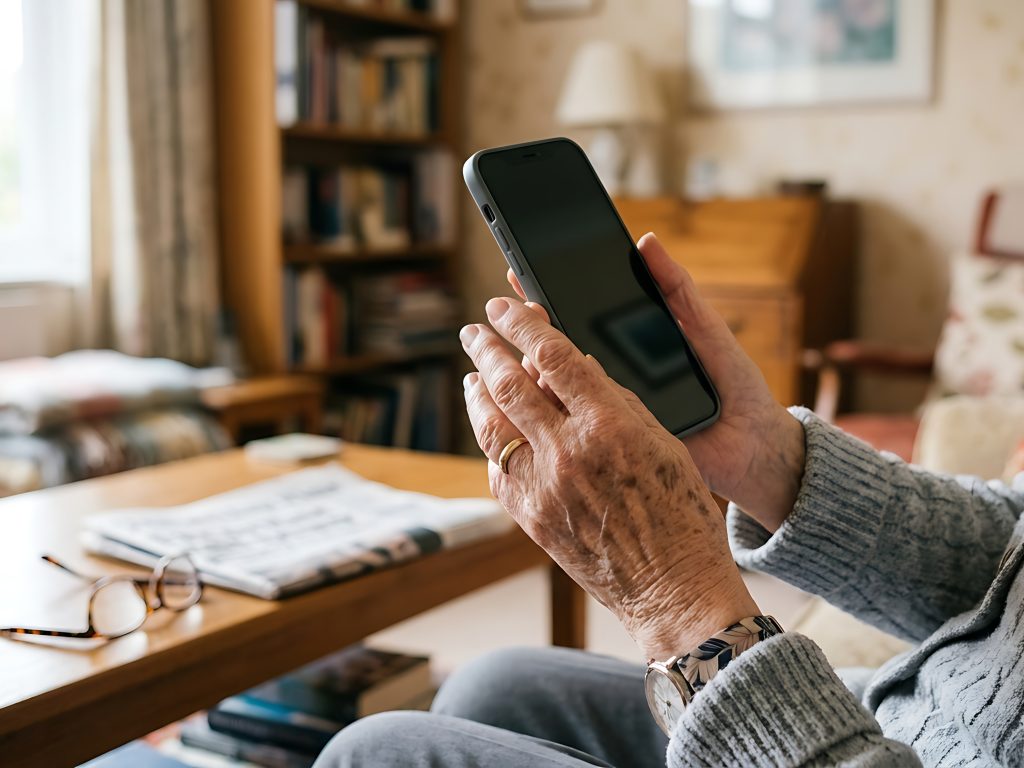


For people with intellectual and developmental disabilities (I/DD), technology can play an important role in making everyday life more accessible and independent. NAU’s Institute for Human Development is looking for participants for a study that could help improve their quality of life and support their independence.
The retrospective study called Living Independently Via Enabling Technology (LIVE) is supported by a grant from the Arizona Developmental Disabilities Planning Council and will gather data from adults aged 40 and older about their use of technology.
“We are looking for individuals who will share real-world experiences,” said John Robert McDermott, outreach and technical training professional at IHD. “We want to know what technologies they are using, what has worked for them, what has been difficult and how we can learn from those experiences.”
The idea behind LIVE is to study how adults with I/DD experience both assistive technology (AT) and enabling technology (ET) and the roles these tools play in their lives as they age. AT is typically designed or adapted to help a person perform a specific task, ranging from a pencil grip to a communication device, while ET often uses everyday or smart technology to support greater independence, such as medication reminders, voice assistants and smart-home devices that help with routines and daily activities. While the two can overlap, both help people communicate, complete everyday tasks, make choices and live more independently. The hope is to use these experiences to inform efforts across Arizona to better support aging adults with I/DD and the people who support them.
“The data collected in the retrospective study will be used to help with the intervention piece, which will be headed by the Arizona Technology Access Program,” said IHD executive director Kelly Roberts . “They will provide consultation, assessment, training and support for identified individuals in the study.”
Information collected during this phase of the study will be used to develop and pilot an AT/ET intervention for aging adults with I/DD who have not previously used technology to assess its impact on their independence.
“Our hope is that through increasing independence among aging adults with I/DD, caregiver burden decreases, allowing individuals with I/DD to remain in their preferred home settings longer,” said AJ Catalano, a graduate research assistant for IHD.
Participants will be interviewed in person or remotely for 60-90 minutes. IHD is hoping to capture videos of how they use AT and ET to better understand how these technologies help them stay independent. Results from both studies will be used to help inform the Arizona Tech 1st State initiative to increase awareness about how technology can help people age in place.
Adults 40 and older interested in participating in the study can email Kelly Roberts, John Robert McDermott or AJ Catalano for more information.
 Mariana Laas | NAU Communications
(928) 523-5050 | mariana.laas@nau.edu