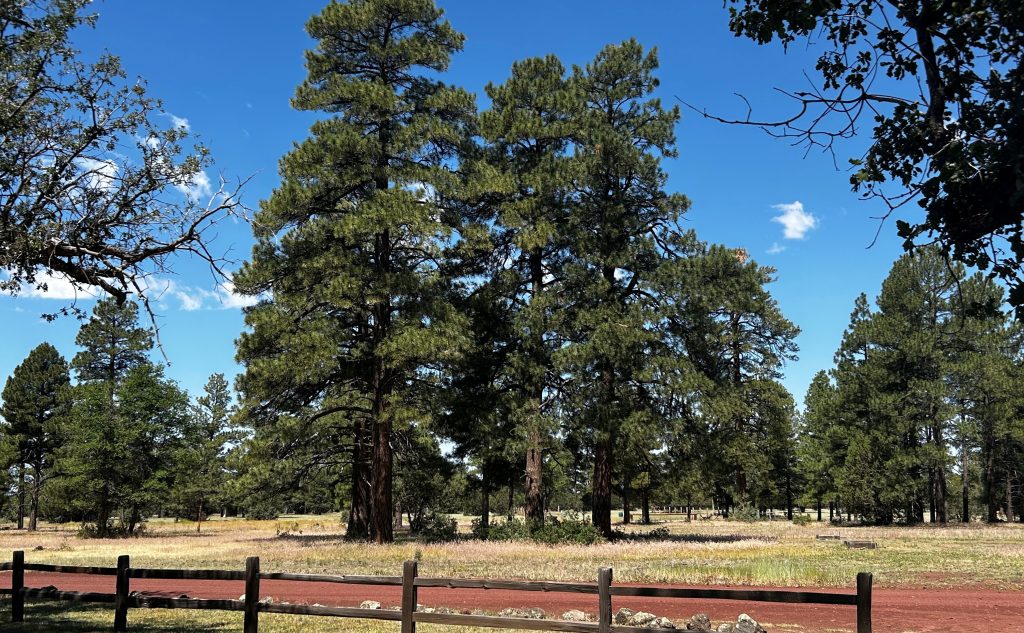


A group of undergraduate students spent four weeks this summer at historic Hat Ranch. The CEFNS 240 field course on interdisciplinary field methods invites students to design and conduct studies to better understand the Colorado Plateau as they learn practical skills in field research methodologies.
Mark Salvatore, associate professor in the Department of Astronomy and Planetary Sciences, said the course was developed in 2024 and is designed to give students a unique place-based learning experience within Coconino National Forest.
“The landscape, the weather, the climate, the dirt, the grass, the bugs, everything in between—this experience is unique,” Salvatore said. “It’s not a typical classroom experience; students have this great opportunity to learn in a different setting, in a more professional and natural setting. Students really learn the value of things like statistics here; they see that the distribution of the trees is not random; they develop a great understanding of these interdisciplinary and interconnected systems.”
The course is designed for up to 24 students and is open to any major. Salvatore said the class is focused more on the natural sciences, but students with majors such as art and English bring different perspectives and tools relevant to their disciplines, which helps everyone see the big picture.
“I want them to see that every discipline or field is connected to the next,” Salvatore said. “I want them to build lifelong partnerships and friendships with the students, teachers and instructors here as they learn valuable skills that will allow them to see the world in a different way. This place provides students with openness and freedom. The ability to wake up and go for an hour-long walk and observe the things that they just learned about in class yesterday is unique, something the traditional classroom experience just doesn’t provide.”
The NAU Review talked to three students about their research at Hat Ranch.
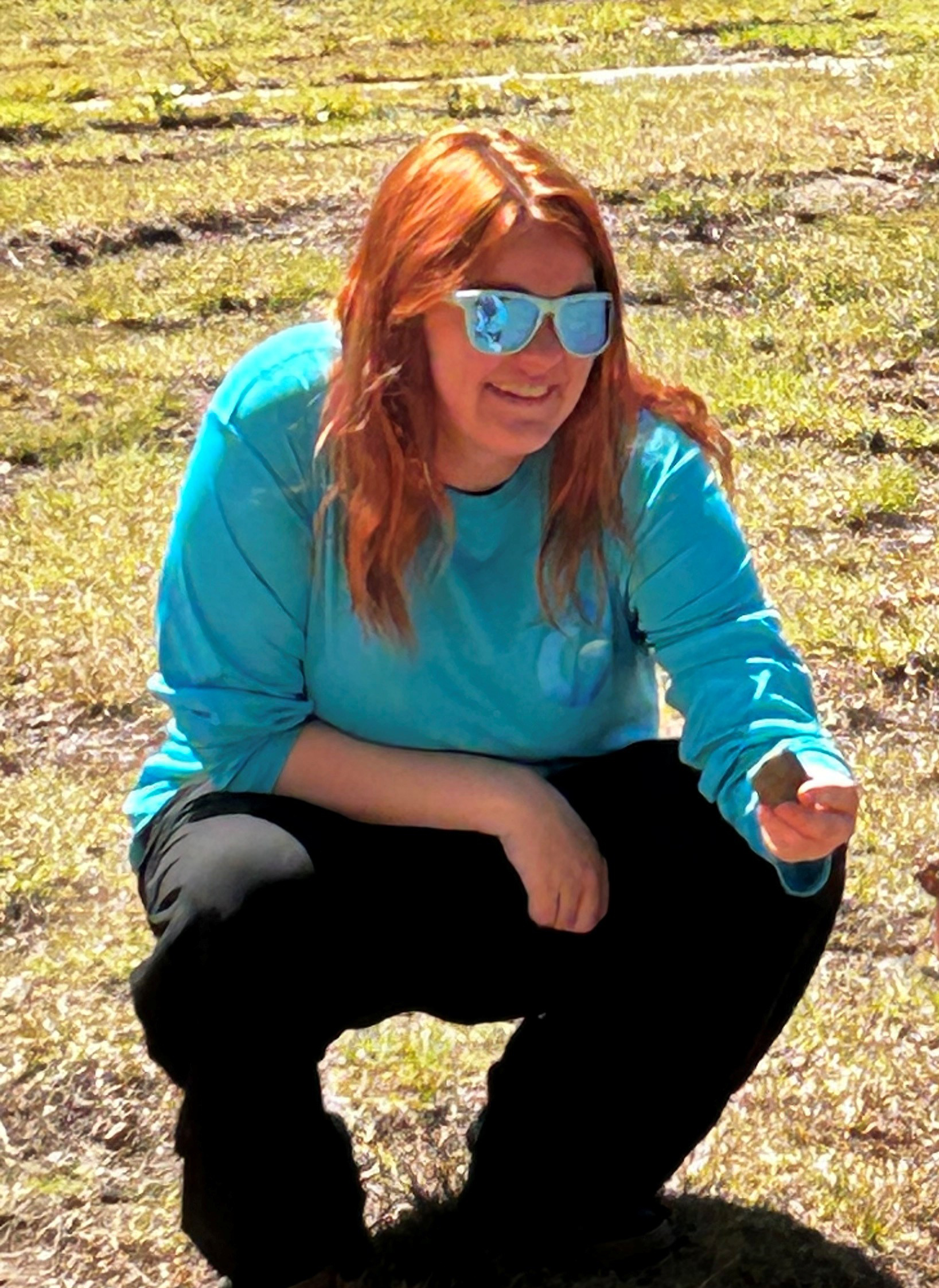 Elizabeth Lonsway
Senior
Ecology and evolutionary biology
“I’m looking at the composition of pollinator species that can be observed around the Hat Ranch house. I’m making these bee baths to attract the pollinators to one place so that I can observe them. I have been doing a lot of labs in Flagstaff, and it has been nice to see a different area and live with the students, professors and TAs. It is a great networking environment.”
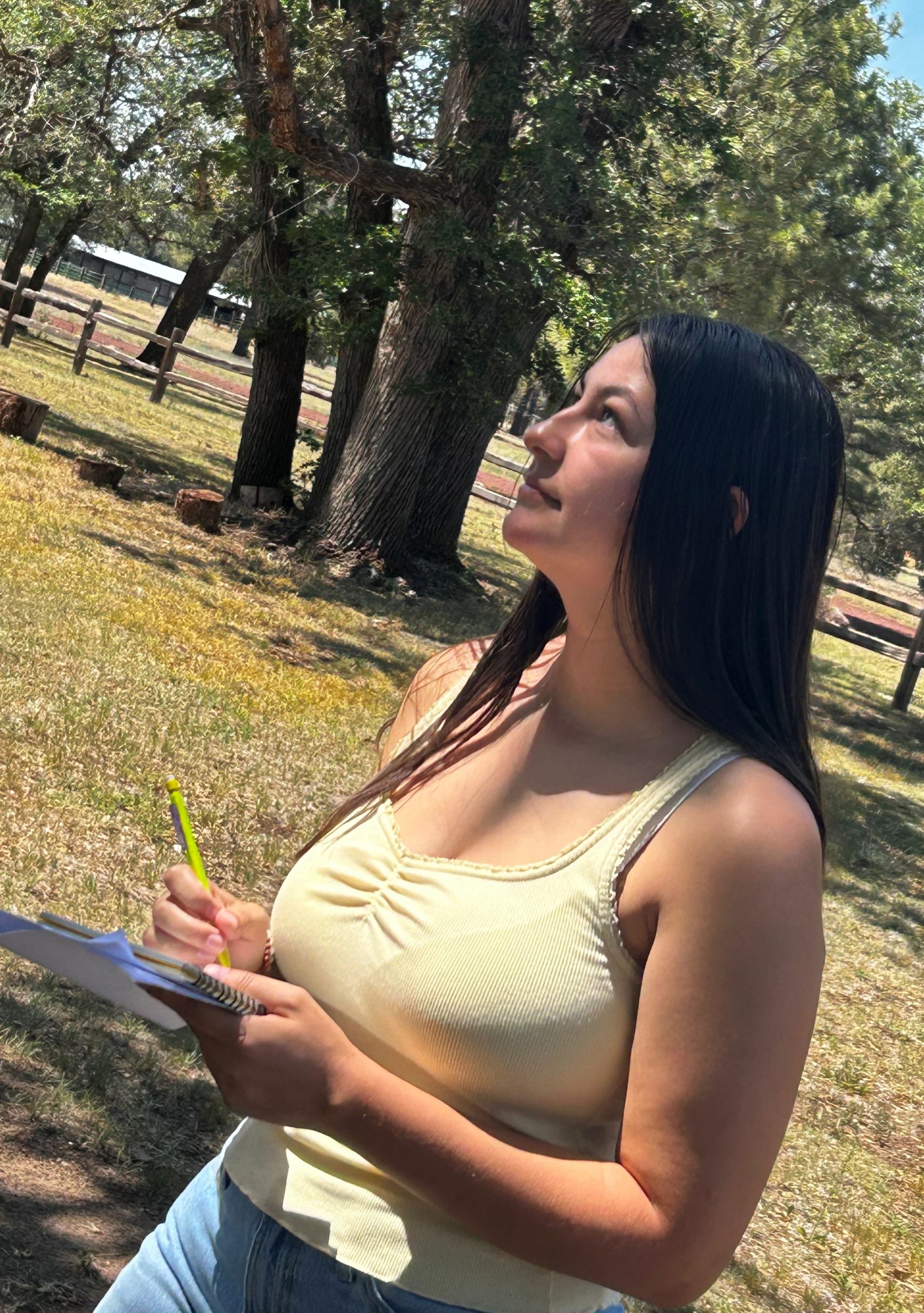
Sookie Saccone
Sophomore
Biology
“I am cataloging birds in two different sites at the ranch, by the cattle tank and areas where you can see different types of birds. I am using this app called Merlin that identifies them by sound, and then I am doing a visual identification and taking pictures of all the types of seeds in the area. I have never done anything like this course before. It has been great to learn about what is in front of you instead of being in a classroom and learning about it by seeing pictures.”
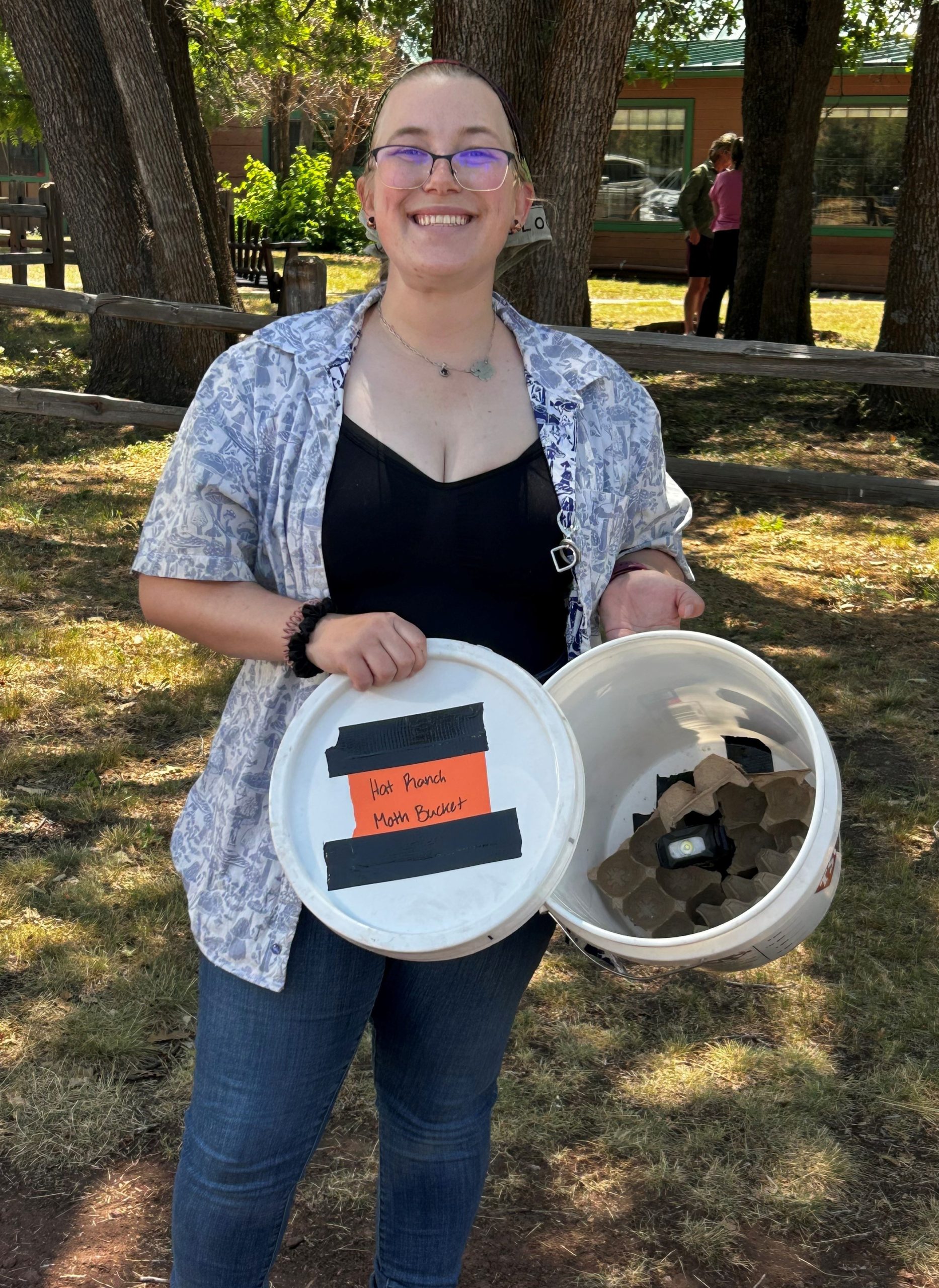 Meaghan Dugas
Senior
Forestry
“I am trying to see what moth species are out here. I have designed a bucket with ponderosa pine, Gambel oak and alligator juniper to catch the moths and see what species they are. The bucket has egg cartons and a light to attract them. They climb into the cartons for safety. I leave the buckets out for about an hour and come back to check them out. I am neurodivergent, so it is hard for me to visualize things without touching them. This type of class helps me learn with hands-on experiences.”
If you are interested in supporting field-based learning opportunities at Hat Ranch and helping more students experience transformative programs like CEFNS 240, email Jill Stillwagon.
 Mariana Laas | NAU Communications
(928) 523-5050 | mariana.laas@nau.edu