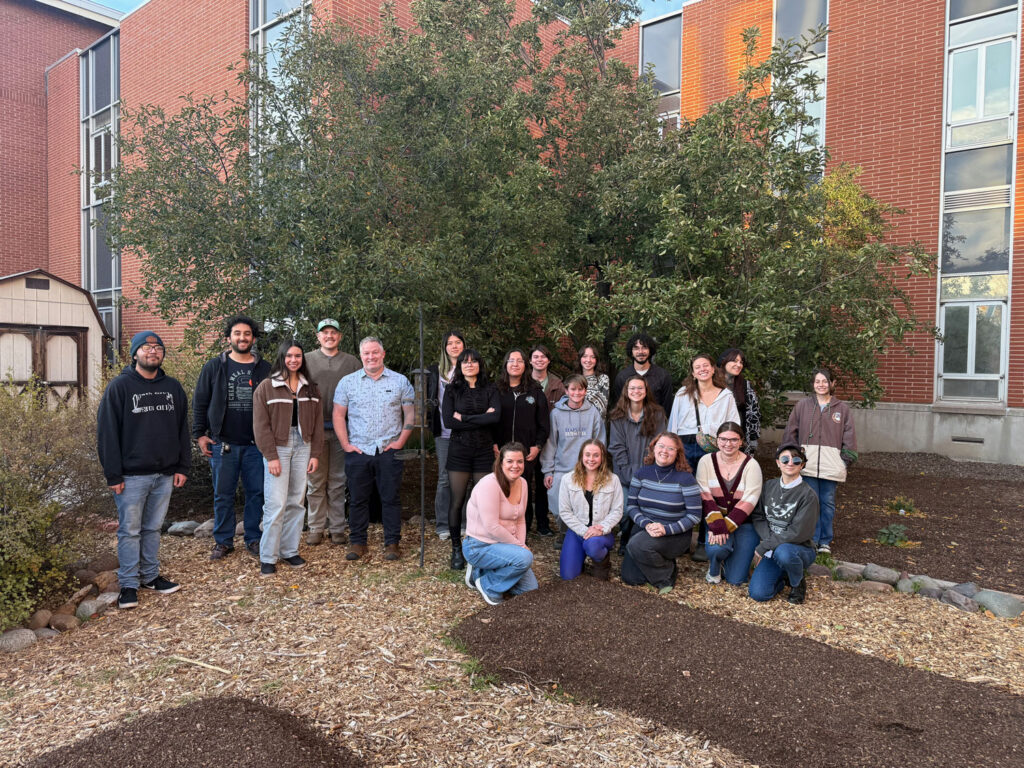


This semester, students in an NAU biology course are tackling a project that many professional scientists spend years completing: sequencing and assembling an entire plant genome.
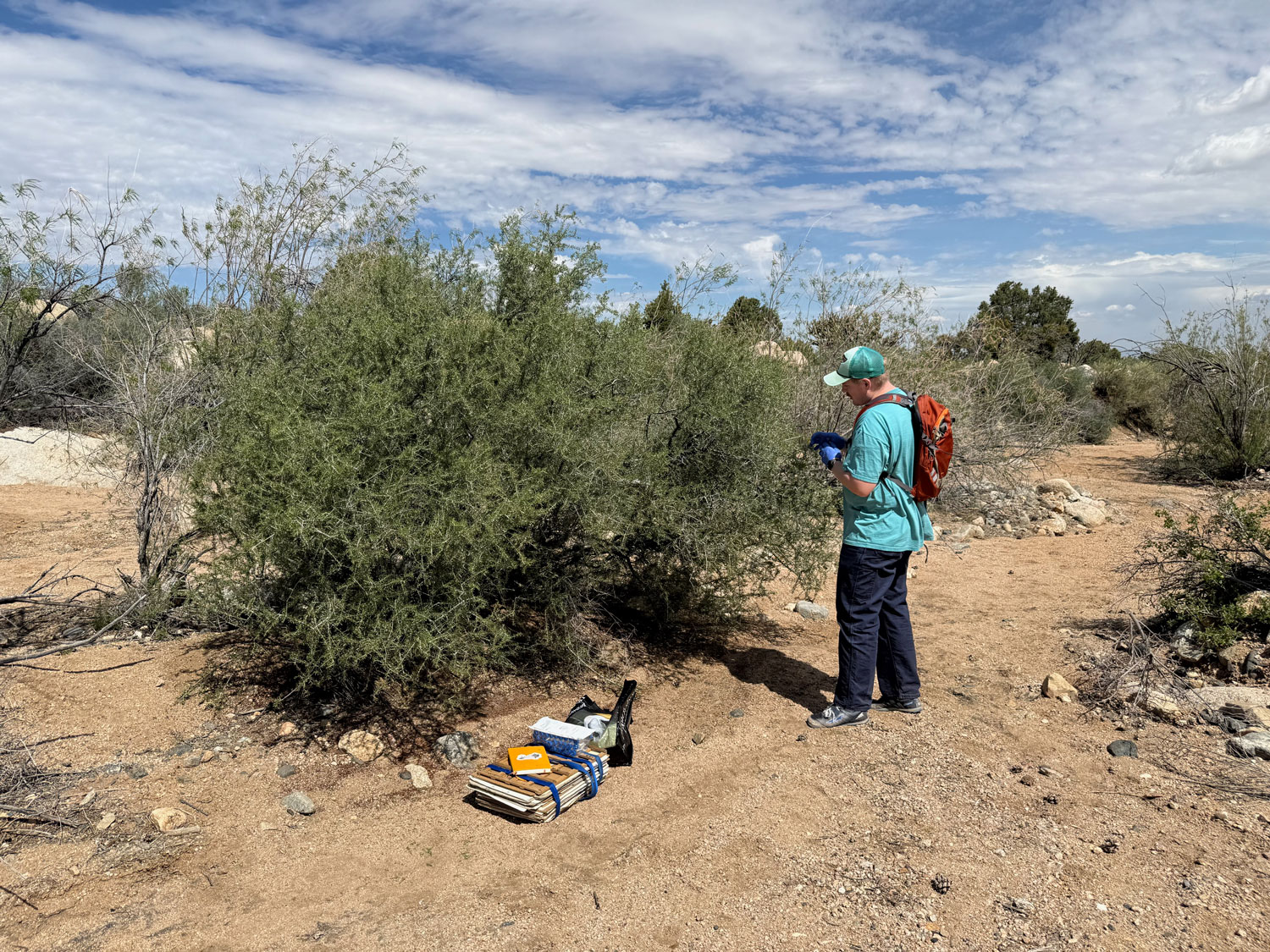
In assistant professor Richard Hodel‘s Sequence a Plant Genome course, students are generating DNA sequence data, analyzing genetic information and assembling the complete genome of the shrub Prunus fasciculata, commonly known as desert almond. Lots of NAU students might recognize this plant from home, as it grows in deserts across Arizona and the rest of the West.
By the end of the semester, students won’t just have a completely sequenced genome for the desert almond—they’ll also have a written manuscript ready for publication, giving them experience with every stage of the research process.
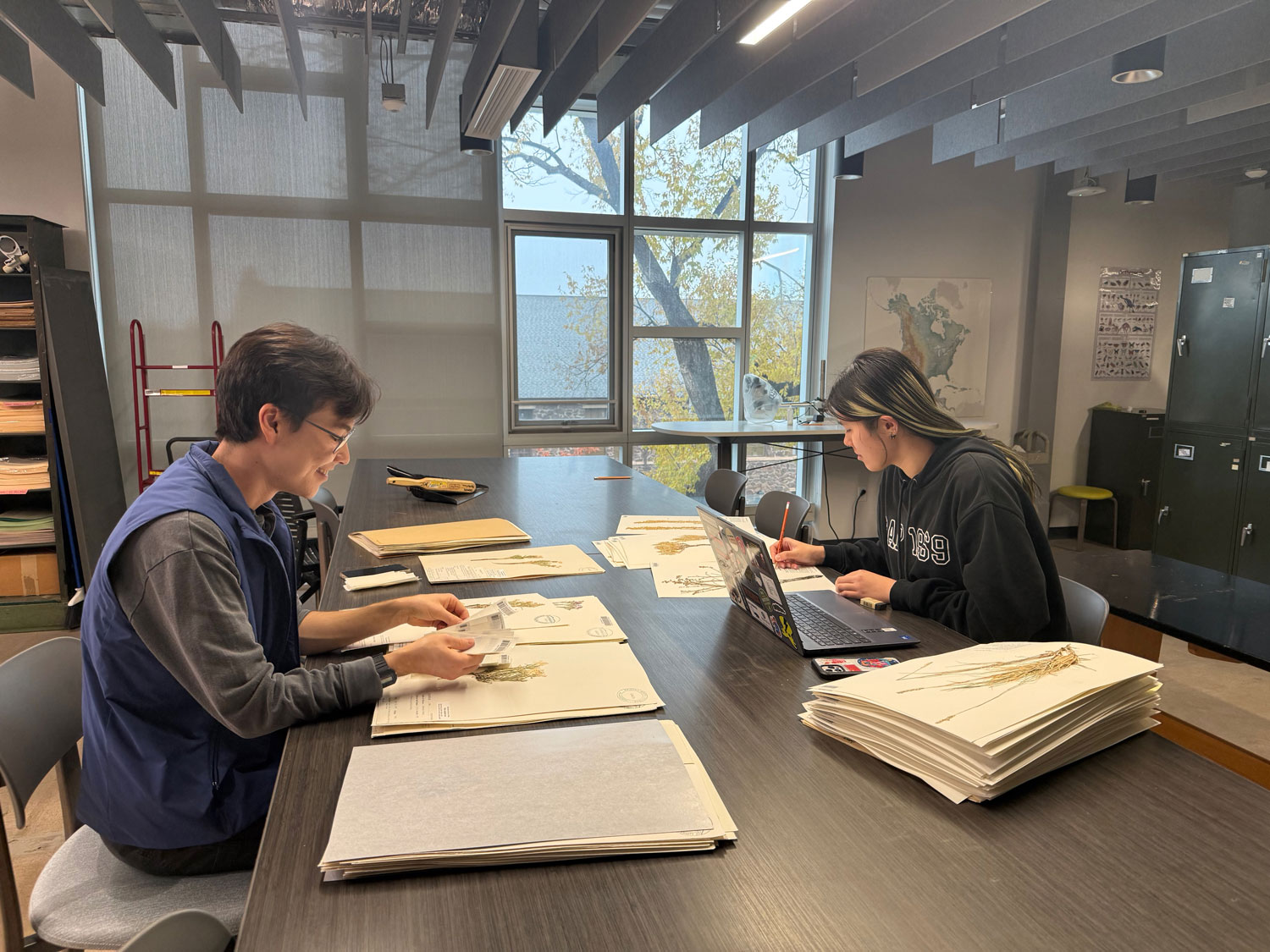
Their project is part of the American Campus Tree Genomes initiative, a national effort that introduces students to bioinformatics and genomics through hands-on research. Rather than working through hypothetical exercises, students are contributing new scientific knowledge about a plant species that hasn’t been studied extensively.
“The desert almond is a wild relative of economically important stone fruits such as apricots and plums,” said graduate student Riley Jackson, who serves as a teaching assistant for the course. “By studying its genome, we hope to identify the genetic basis of what makes desert-adapted plants successful.”
As climate change brings hotter and drier conditions to the Southwest, scientists are increasingly interested in understanding how plants survive in harsh desert environments. Hodel and the student researchers hope the desert almond’s genome will reveal genetic traits associated with drought tolerance and adaptation to saline soils, knowledge that could eventually help improve agricultural crops.
The species is also unusual because it has separate male and female plants, a reproductive strategy known as dioecy. Plant sex systems aren’t well understood in desert environments, making the genome a valuable resource for a myriad of future research.
Already, students and researchers have made a surprising discovery.
“This species appears to have four copies of all of its chromosomes, as opposed to the standard two,” Hodel said.
The condition, known as polyploidy, is common in some plants, but has not previously been documented in the desert almond’s closest relatives. The class is now investigating whether the extra chromosome sets may have helped the species adapt to extreme desert conditions.
Discoveries like that are part of what makes the class unique. Rather than repeating experiments with known answers, students are participating in authentic scientific research where results are unknown.
This semester’s work requires students to collect plant material, extract DNA, sequence genetic material and assemble millions of pieces of data into a complete genome. It’s complicated work that can only happen when everyone contributes.
“Sequencing and assembling a whole plant genome is an ambitious task, especially in one semester,” Jackson said. “From collecting the plant material and extracting its DNA, to sequencing and assembling the genetic data, teamwork is essential.”
The experience provides students with practical skills that are increasingly valuable in biological sciences, agriculture and biotechnology careers. It also exposes them to bioinformatics, a rapidly growing field that combines biology and data science to study genetic information.
Liz Mott always planned to study plants. The biology and Spanish double major previously spent time in labs, in community gardens and in an herbarium, but never in bioinformatics.
“Learning how to sequence a plant genome further underlined to me how vast the world of biology and botanical work can be,” Mott said. “There are so many new skills and deeper understandings I have gained from this class. I feel as though I can now fully comprehend the ‘life cycle’ of a plant collected from the field, all the way to visualizing its final genome.”

Jill Kimball | NAU Communications
(928) 523-2282 | jill.kimball@nau.edu