

What to know
- Who can participate: any NAU undergraduates, graduates and employees
- Meeting days: Wednesdays
- Meeting time: 5:30-7:30 p.m.
- Meeting location: College of Education – Room 200
About the club
The members of Collar Scholars are not just hosting meetings, attending events and going for walks in the park; they are raising puppies to become future service dogs. Collar Scholars at NAU is a branch of Canine Companions, the largest service dog organization in the United States. The organization provides service dogs to people with disabilities free of charge through volunteer puppy raisers. Participants are also welcome to get involved through puppy sitting, advocacy and community engagement.
Q&A
Zoe Cornelius is an NAU alumna who works for the College of Education. She co-founded the Collar Scholars with her faculty mentor, Karen Sealander, in spring 2026. Learn more about the club, its events and how to get involved below.
Tell us about the club’s history. How was it formed? What is its mission statement?
The idea came from my involvement with Canine Companions during my honors capstone project. I wanted it to involve service dog training, and Karen Sealander suggested puppy raising. After my capstone, I wanted to continue the momentum since so many people had shown interest. After several months of working, planning and hosting events, NAU officially recognized the club in spring 2026.
Our club’s purpose statement is as follows: “We aim to increase awareness and respect for service dog teams both on campus and in the world beyond, and we take great pride in knowing that our canines will go on to serve an important role in our community.”
What is puppy raising?
Puppy raiser is Canine Companions’ term for a volunteer who raises and socializes with one of their Future Service Dogs anywhere from eight weeks and 18 months old. When they are between 15-18 months old, puppy raisers return the dogs to Regional Canine Companions Training Centers. At these locations, the dogs work with professional service dog trainers to learn how to assist with a specific disability. They are then matched with a service dog applicant and go on to their forever homes!
Tell us more about your puppy raising experience.
Over the course of my capstone, I raised service dog candidate Lorrey with advice and mentorship from Dr. Sealander. Lorrey came with me to work, classes and everywhere else I went. Afterward, I turned Lorrey back into the organization for professional training.
Who can raise a puppy?
Puppy-raising with Collar Scholars at NAU is available to students living off-campus in pet-friendly housing, although we hope to get permission for students to puppy-raise on campus and in dorms in the future!
How and why did you get involved?
I got involved because it felt like a meaningful way to make a positive difference in my community. There are so few service dogs in the world relative to the number of people with disabilities, so raising a future service dog is a very quantifiable way to help someone in need. I saw the way the NAU community around me loved having Lorrey in their spaces and the faces she brightened. I wanted to continue that work to benefit not only people with disabilities, but also the communities that help raise these pups in preparation for their future careers.
Tell us about a favorite memory you have from Collar Scholars.
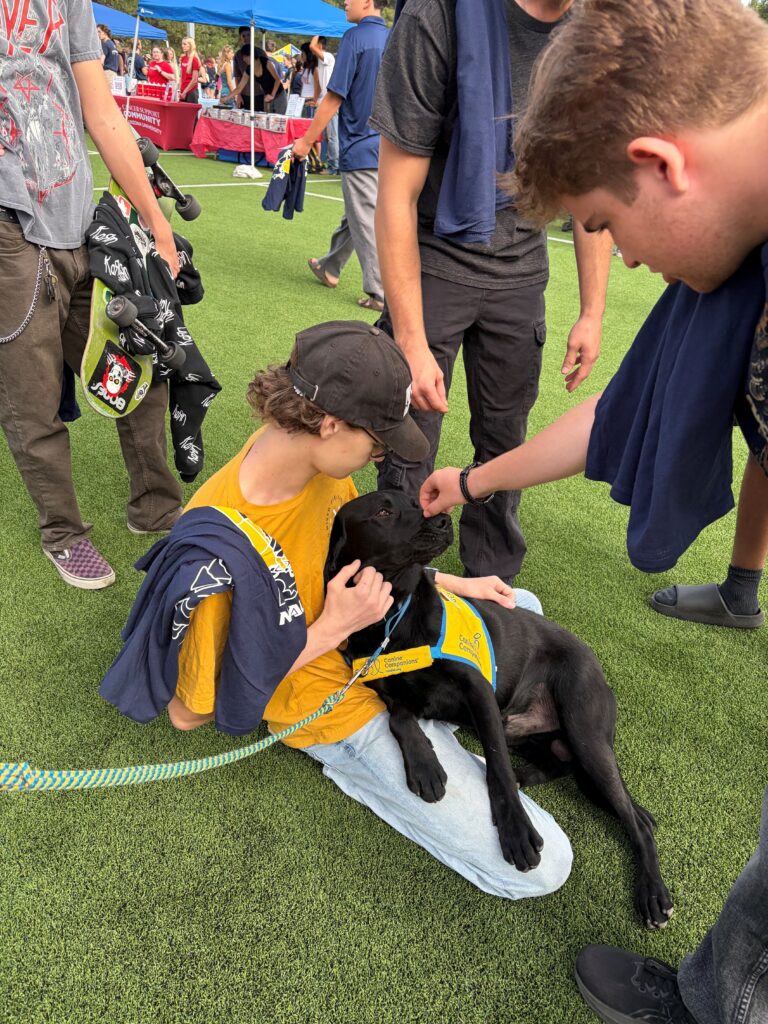
I loved participating in Dogs with the Dean this year. It is an annual event that the NAU Honors College hosts during move-in. We bring a bunch of Canine Companions dogs and hang out with those passing by while the Honors dean grills hot dogs for everyone. It’s my absolute favorite to see how happy these dogs make people, and how much the dogs enjoy getting extra attention.
We also just finished working with the Flagstaff City Council on a proclamation to recognize September as National Service Dog Month. Because of our advocacy, the mayor issued the proclamation in support of service dog teams everywhere, and we had the opportunity to speak in front of the council and the city about these phenomenal canines and the life-changing work they do.
What advice do you have for someone looking to join?
We want to work with you! Whether you want to puppy raise, puppy sit or just hang out with some cool people and dogs while learning more about disability advocacy, we welcome everyone.
What are some things the Collar Scholar Club has coming up that you’re looking forward to and people should be excited about?
The vice president of Collar Scholars is about to receive a new puppy. She is an adorable baby, and we are so excited to welcome her into our community.
Find out more about Collar Scholars and its upcoming events by following @collar_scholars_nau on Instagram.