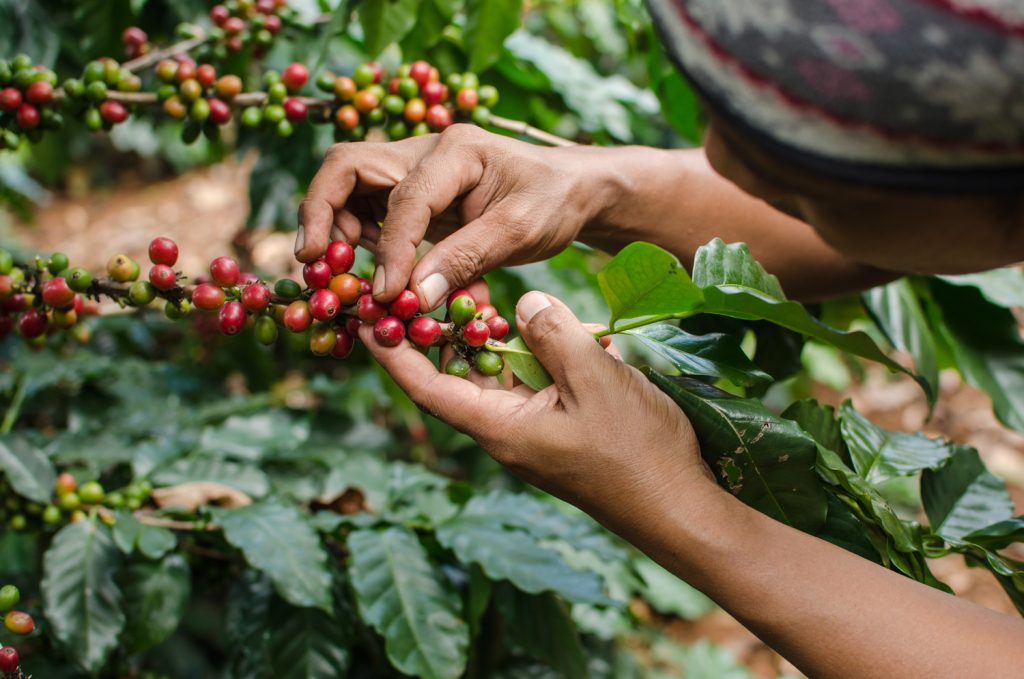


Think your caffeine tolerance is high? Think again. While the average person drinks about three cups of coffee a day, that’s nothing compared to what the coffee berry borer can handle.
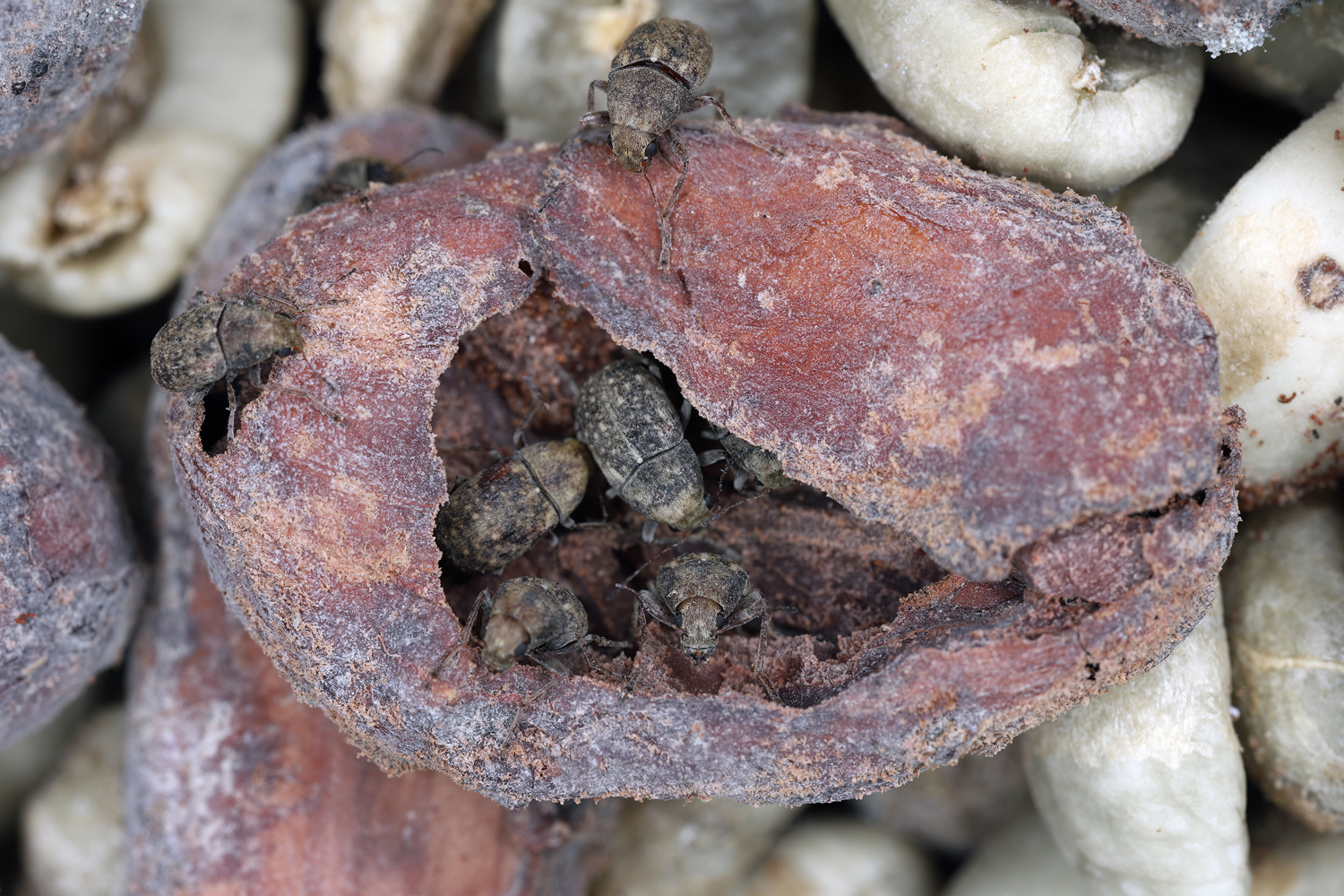
These 1- to 2-millimeter-long beetles, which drill into growing coffee beans and eat them from the inside out, are able to ingest about 100 times more caffeine than a human relative to their body weight.
 “For an average human, it’s considered too much to have more than 400 milligrams of caffeine a day—that’s about four cups of coffee or two of those Celsius energy drinks,” said NAU Ph.D. student Lynn Bonomo. “If we had the same tolerance as a coffee berry borer, we could have 400 cups of coffee a day.”
This invasive animal’s freakishly high caffeine tolerance is bad news for coffee lovers everywhere. Originally found only in central and western Africa, the coffee berry borer has now spread to every coffee-growing area of the world, causing losses of an estimated 30% of crops and more than $500 million. The beetles are especially destructive to arabica coffee plants, which represent about 60-70% of the coffee we drink.
What can be done to recover all that lost coffee? Bonomo is on a mission to find out.
Within associate professor Javier Ceja-Navarro’s lab in the Center for Ecosystem Science and Society at NAU, Bonomo is studying the coffee berry borer’s gut microbiome in hopes of finding ways to degrade its caffeine tolerance.
“We know it’s able to withstand these toxic levels of caffeine because its gut microbiome can break it down really effectively,” Bonomo said. “So we’re looking at using biological controls to target the gut microbiome in hopes that it changes their ability to break down caffeine.”
Working from the inside out
Farmers have already learned that the coffee berry borer isn’t deterred by other pest management strategies. Some have tried regularly inspecting plants for bore holes and then burning any affected plants to save the rest of their crops, but they’ve found they can’t work fast enough to stop the beetles’ spread. Others have released parasitoid wasps, a natural predator to the beetle, into their fields—but the wasps can only eradicate the beetles when they’re crawling outside the coffee berry, not once they’ve bored their way inside the fruit. Still others have tried using insect traps, but those tend to also trap insects that are beneficial for coffee plants. The same goes for pesticide use—those sprays are toxic not only to the borers but also to pollinators and other insects that help coffee plants grow and thrive.
“Some farms use what’s called an integrated pest management system, where they combine factors together, accounting for things like weather, time of year and population levels of the beetles,” Bonomo said. “That works better, but unless you have a ton of workers and a lot of money and scientific knowledge to implement that, it’s hard to do. Most farmers around the world do not have the means, knowledge and money for that.”
That’s why Bonomo is looking for a solution that works from the inside out, rather than the outside in.
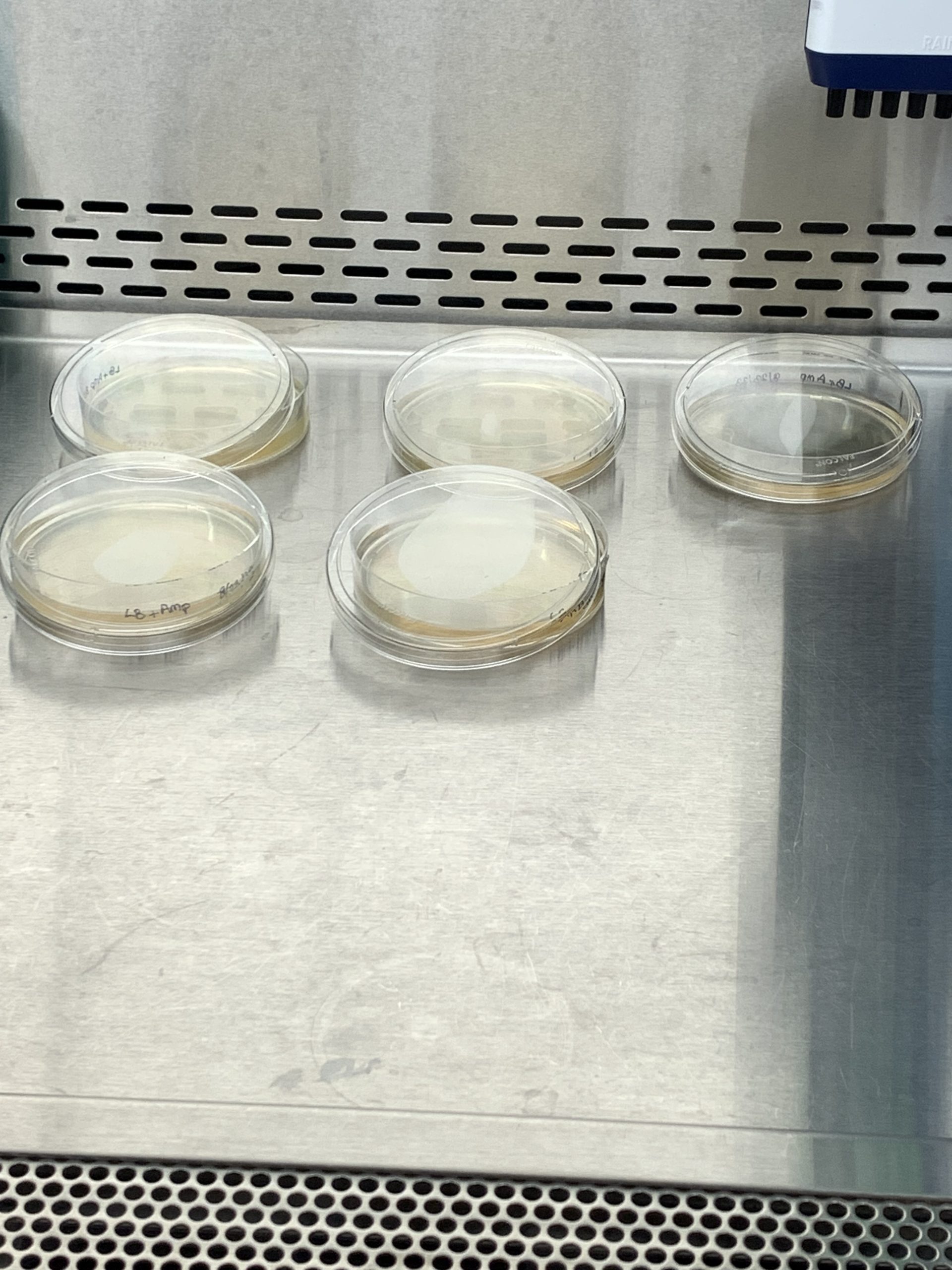
In the Navarro lab, Bonomo flexes her beetle barista skills, feeding the coffee berry borers a few different custom diets to understand the insects’ caffeine tolerance. As the beetles feed on those diets and reproduce, Bonomo uses genomic sequencing to find out how the microbiota of each generation of beetles respond to caffeine. Ultimately, Bonomo will use this pattern to understand how future biological controls targeting the caffeine-degrading bacteria can influence the beetles and their microbiome. Her goal is to find biological controls that prevent the beetles from tolerating their usual high levels of caffeine.
“That means they’re no longer able to consume the levels of caffeine needed to get them inside the bean, which means they’d stay on the outside of the plant and be exposed to other pesticide controls that work,” Bonomo said.
Next steps
If Bonomo succeeds, the next step is to develop a strategy that can change the coffee borer beetle’s gut bacteria outside of a lab setting.
“Maybe it could be a fertilizer powder or a pesticide-like spray,” Bonomo said, “something that’s super easy for the coffee farmers to apply because it wouldn’t require any new or different equipment. That’s my hope, but it’s a ways away; we’re near the beginning of the process.”
Bonomo hopes her research makes an impact beyond the world of coffee. The findings may apply to other invasive pests, like the potato beetle and mountain pine beetle. They might even prove beneficial to human health, she said.
“If someone has bacteria that shouldn’t be in their gut at such high levels or that is causing an issue in their gut microbiome, there could be a way to target that more effectively than our current antibiotics, which also kill good bacteria,” Bonomo said.

Jill Kimball | NAU Communications
(928) 523-2282 | jill.kimball@nau.edu