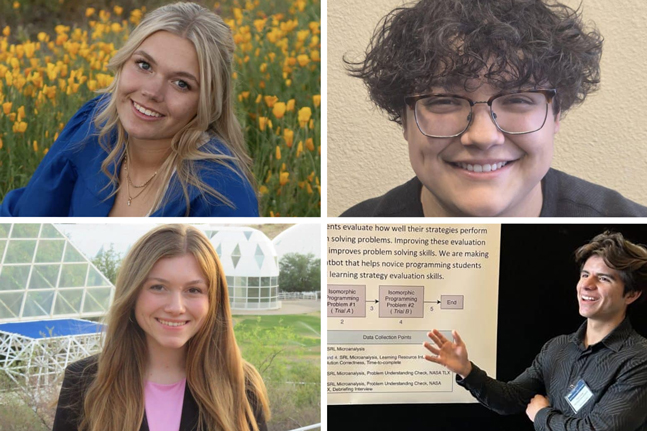


There’s nothing better than learning how to make a difference while on the job. This summer, four NAU students will be doing exactly that.
The undergraduate scholars were selected for 10-week internships at the Barrow Neurological Institute, where they will work alongside neurological disorder, speech pathology and occupational therapy professionals in real-world medical environments. The Phoenix-based institution’s programs are open to undergraduate students from all colleges and universities throughout the world, which makes acceptance an exceptional achievement.
To get there, these Lumberjacks submitted letters of intent—penning three or more drafts to get them just right—collected letters of recommendation and made it through an intense interview process.
Proving they were internship material was only the beginning. Now, the students are preparing for a summer filled with rewarding, hands-on training opportunities and a glimpse of what their futures may hold.
The data in the diagnosis

As a data science major, Mandi Bluth has dabbled in all forms of statistical analysis. Routine coursework and participation in the American Statistical Association’s DataFest helped her refine her knowledge of statistical modeling, database system management, time series analysis and even machine learning.
Now, she’s looking to take her studies to the next level by applying data science to practical scenarios, preferably through methods that spark positive change. She found the perfect opportunity in an internship with Barrow, to which she already had a personal connection.
“Barrow is a place that means a lot to my family since my sister was treated there,” Bluth said. “Being selected to contribute to their work felt personal. I hope to gain real-world exposure to data analytics in a setting where the work truly makes a difference, grow as a data scientist and walk away knowing I contributed to a facility that means so much to my family.”
Noah Verdugo, also an undergrad studying data science, fosters his love of programming at NAU’s RESHAPE Lab, where he works studying large language model (LLM) chatbot use in introductory computer science education.
Verdugo uses statistics to sort the program’s data and make it useful for drawing conclusions. This experience, alongside coursework exploring series analysis, deep learning and data structures, has prepared him for a greater challenge—the opportunity he “always dreamed of.”
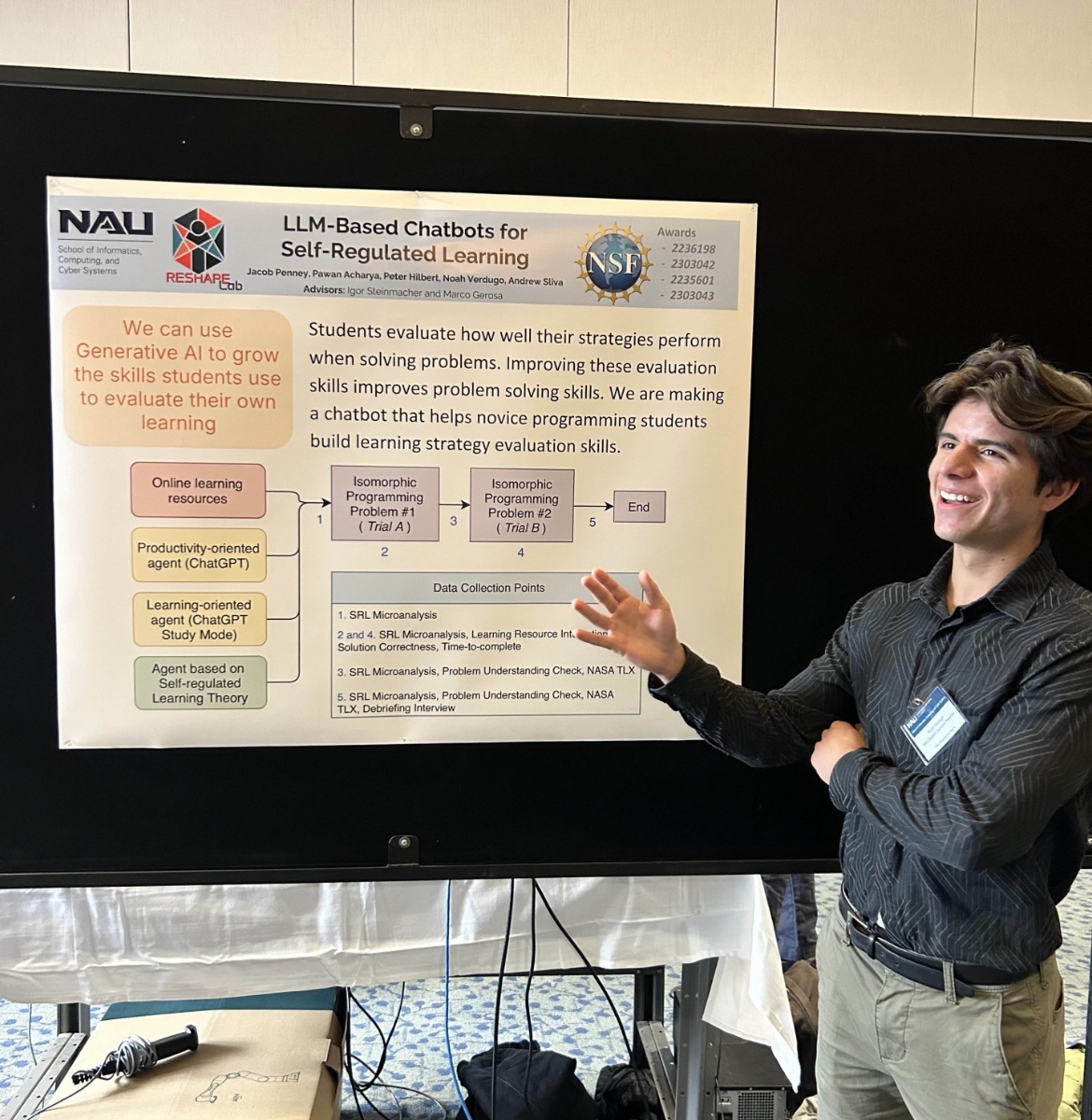
“Interning here has been such an amazing learning experience, and it’s allowed me to practice the skills I’ve learned from my classes,” Verdugo said. “Now, I hope to help better understand how data science and mathematics can be applied to the world of healthcare, especially neuroscience, and I am excited to learn from these doctors and their incredible research.”
Bluth and Verdugo were selected for an internship at the Barrow Neurological Analytics Center. Working in the Racette Lab, which specializes in studies that illuminate risk factors for neurodegenerative diseases, they will be responsible for building predictive models using clinical datasets.
The patterns they will unveil in the process will ultimately help medical professionals further understand and predict cases of neurological conditions like Parkinson’s disease. These discoveries could, in turn, lead to quality-of-life improvements for individuals diagnosed with these illnesses.
The project will culminate in a research presentation at Barrow’s end-of-the-summer symposium.
“Neurodegenerative diseases affect millions of people and their families, and there is so much we still don’t understand about them,” Bluth said. “Barrow uses data to find answers, including searching for an earlier diagnosis and underlying causes. This work has the potential to improve how patients are diagnosed and the quality of treatment.”
Bluth plans to follow the internship and her undergraduate studies with a graduate degree in statistics. From there, she wants to build a career around applying data science to fields she believes can make tangible impacts, whether it’s in healthcare, like this internship will help her explore, or something she hasn’t discovered yet.
Verdugo, conversely, is sold on pursuing healthcare, describing working to improve the medical field as something he has always wanted to do.
“There are a lot of benefits in applying data science to healthcare, and it really can allow for more effective decisions in this field,” he said.
Restoring patient independence
Stefan Muñoz spent weeks watching videos on how to nail an internship interview before he stepped into the one he feared he’d fumble. When notice of his acceptance into a Barrow program finally came, he was filled with relief.
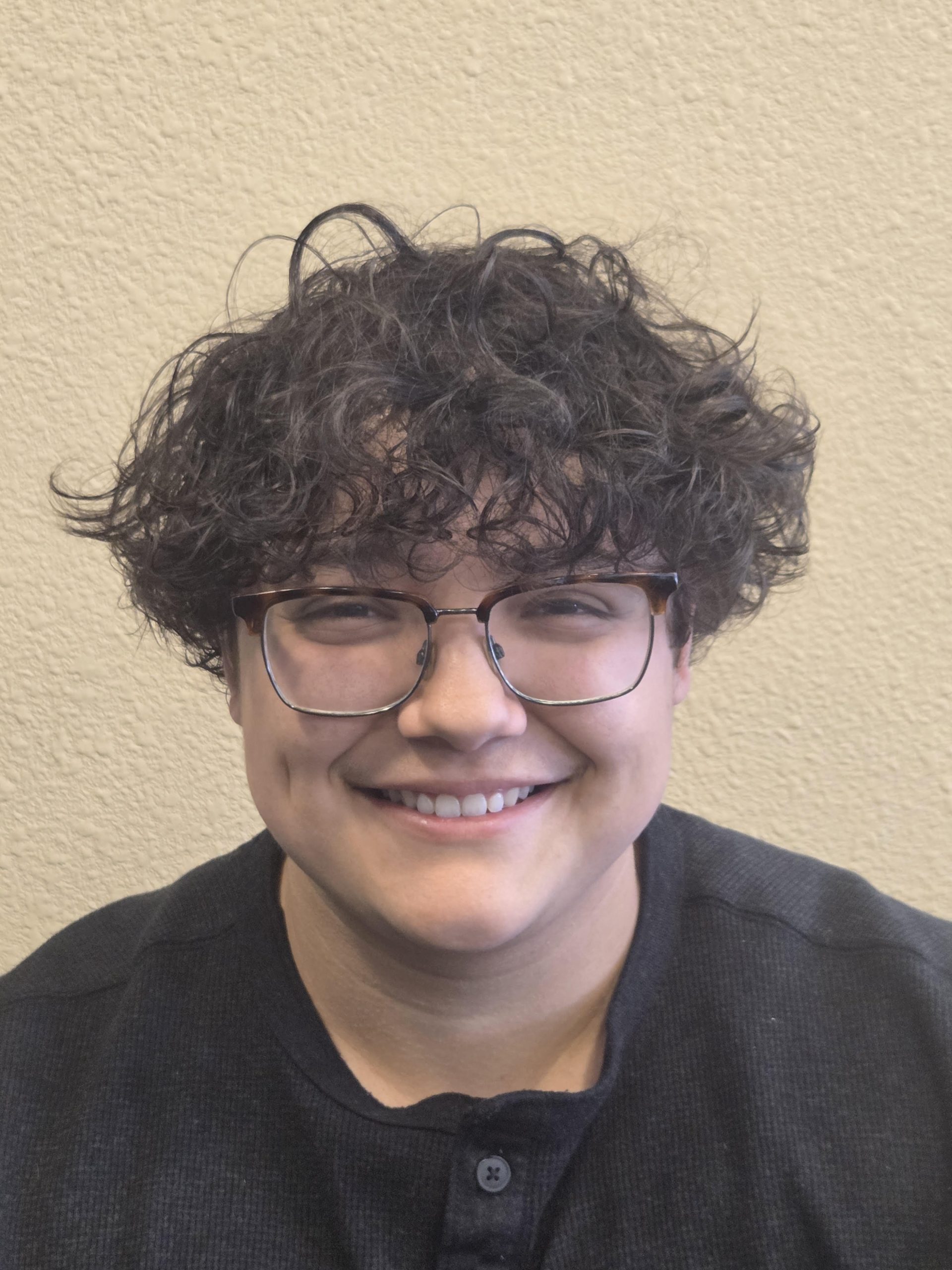
The exercise physiology major will step into his inpatient occupational therapy internship in early June. His role will center on supporting therapists working with hospitalized patients by cleaning equipment, fetching supplies and otherwise assisting wherever needed.
“That day was the proudest I’ve ever felt of myself to date,” Muñoz said. “I hope that, with this internship, I really get to see the inner workings of what it means to be an occupational therapist and walk out with knowledge I can later apply to my schooling.”
While he remains committed to his long‑term goal of becoming a physical therapist, he said he views the internship as a chance to explore a parallel career path while gathering practical, patient-centric experiences he can carry into graduate school and beyond.
“Many people take for granted what it means to be able to do things for yourself,” Muñoz said. “Simple tasks are just that: simple. However, there are people who have difficulty with some movements or certain tasks, and that’s what an occupational therapist is there to help with. It’s allowing a person to have a greater hold on their independence.”
Looking ahead, Muñoz plans to specialize in pediatric physical therapy or use his studies to assist patients with acute disabilities. In five years, he hopes to be working as a physical therapist in a hospital or children’s clinic. In 10, he dreams of opening a community‑focused clinic with flexible hours designed for families with rigid, busy schedules.
No matter the avenue, he sees himself as someone working with patients one-on-one to change their lives for the better.
“Maybe I’m too much of a dreamer,” he said, “but even the workers deserve to have their schedules worked with.”
Treating with care
There’s a lot to celebrate when you’re a college student on spring break, but for Wyatt Peterson, the high point of the week came when she opened the acceptance message in her inbox.

The communication sciences and disorders major was chosen for the Barrow Neurological Institute’s speech‑language pathology internship at St. Joseph’s Hospital, an opportunity she’d been quietly hoping for since first hearing about it a year earlier.
This summer, Peterson will spend two and a half months observing speech‑language pathologists as they treat patients in acute care, providing assistance whenever possible.
“I haven’t been able to observe much of the medical side of speech pathology, so I am very excited to see and learn from it,” Peterson said. “I will be learning from experienced speech-language pathologists and observing and aiding patients from all walks of life with a variety of conditions. It will also give me experience that I may not have received until a few more years into my education.”
Most of the speech pathology work at St. Joseph’s Hospital centers on swallowing disorders, which can affect older adults and patients recovering from strokes. Peterson will assist with feedings, observe cognitive evaluations and watch procedures like modified barium swallow studies and Fiberoptic Endoscopic Evaluation of Swallowing (FEES) exams.
In a modified barium swallow study, Peterson explained, patients swallow food or liquid mixed with barium so clinicians can see the movement on an X‑ray. This helps them notice when food or liquid goes into a patient’s airway and determine which foods and eating positions are safest.
Additionally, FEES tests include running a thin, flexible instrument through a patient’s nose to assess how well they swallow.
“Many of us may have these conditions as we get older,” Peterson said. “It is important that assessments and treatments for age-related conditions are done with thought and care and that new research is being conducted to improve upon treatments.”
Peterson begins NAU’s accelerated clinical speech-language pathology program this fall, taking graduate‑level classes as an undergraduate before transitioning fully into the master’s program. She said she is open to multiple career paths, but she feels drawn to medical speech‑language pathology and bilingual language development.
 Ava Hiniker | NAU Communications