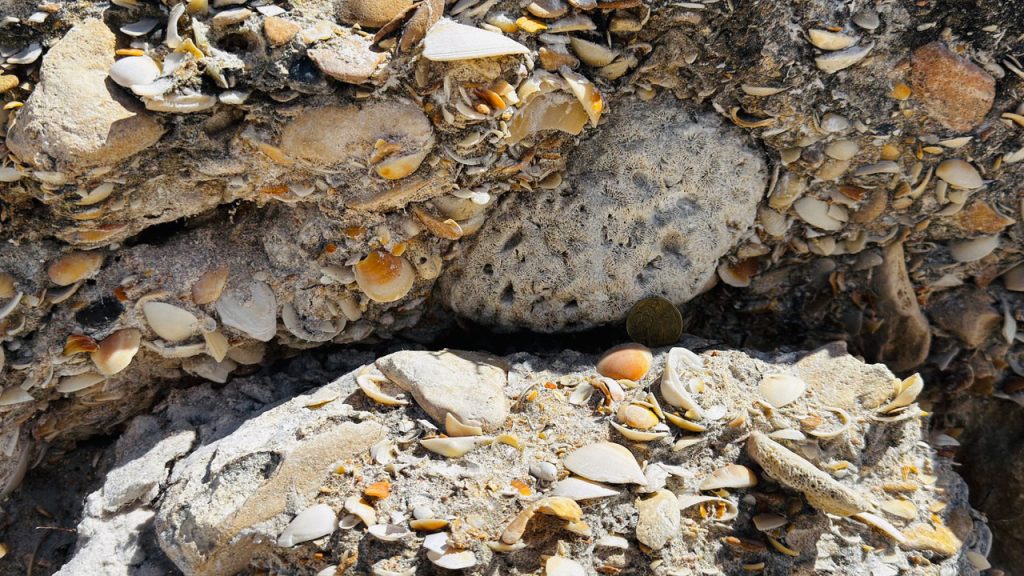


When it comes to gauging the ages of ancient bones and plants, radiocarbon dating is the gold standard. The method involves measuring the amount of radioactive carbon remaining in an object—say, a bird’s femur or a snail’s shell—to analyze how long it’s been since it died.
But Darrell Kaufman, a Regents’ professor at NAU’s School of Earth and Sustainability, said radiocarbon dating doesn’t work for the much older fossils he studies.
“Radiocarbon dating can bring you back 30,000 or 40,000 years, so it’s great for a lot of paleoecology and archaeology,” Kaufman said. “But to get at the ages of older materials, you need other techniques.”
That’s where Kaufman’s lab comes in. It’s one of just a handful of places on Earth built for amino acid geochronology—a method that can help scientists understand the ages of fossils that date back to the last several ice ages.
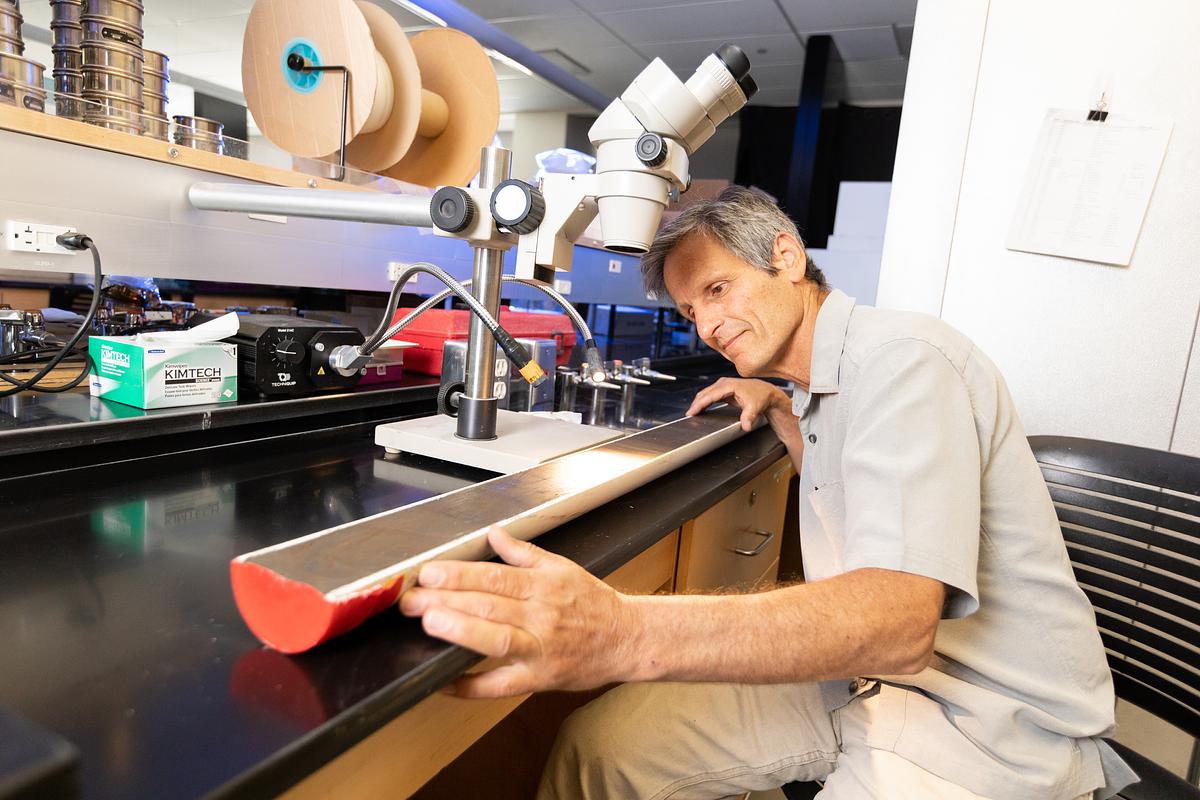
“This technique picks up where radiocarbon dating leaves off,” Kaufman said. “We can date things back hundreds of thousands of years—maybe even 1 million years, if they’re from somewhere cold like the Arctic.”
With a $358,360 grant from the National Science Foundation, Kaufman is rebuilding this decades-old technique into a standardized dating tool using ancient shells from Western Australia, Svalbard, the Mediterranean and other coastal areas across the globe. His work will help geologists pin down how high sea levels stood during the last interglacial period 125,000 years ago, the last time temperatures on Earth ran warmer than pre-industrial levels.
Kaufman explained that while there are many similarities between the last interglacial period and today, the parallel between the two times isn’t exact. The last interglacial, he said, was warmed by a wobble in Earth’s orbit that brought extra summer sunlight to the northern hemisphere—so while temperatures and sea levels rose, carbon dioxide did not. But while the cause of the warming 125,000 years ago differs from the cause of warming today, the ripple effects—retreating ice sheets and rising coastlines—could be similar.
“The last interglacial period was the last time ice on the planet was as diminished as it is now and the last time sea levels were as high,” Kaufman said. “Globally, the temperature was something like 1 degree Celsius above pre-industrial levels, roughly where we are today. It’s helpful to get a picture of what that might have looked like—higher sea levels, different distribution of species—so we can see where we might be headed.”
How amino acid dating works
Instead of using radiocarbon to analyze an object’s age, amino acid geochronology uses—you guessed it—amino acids.
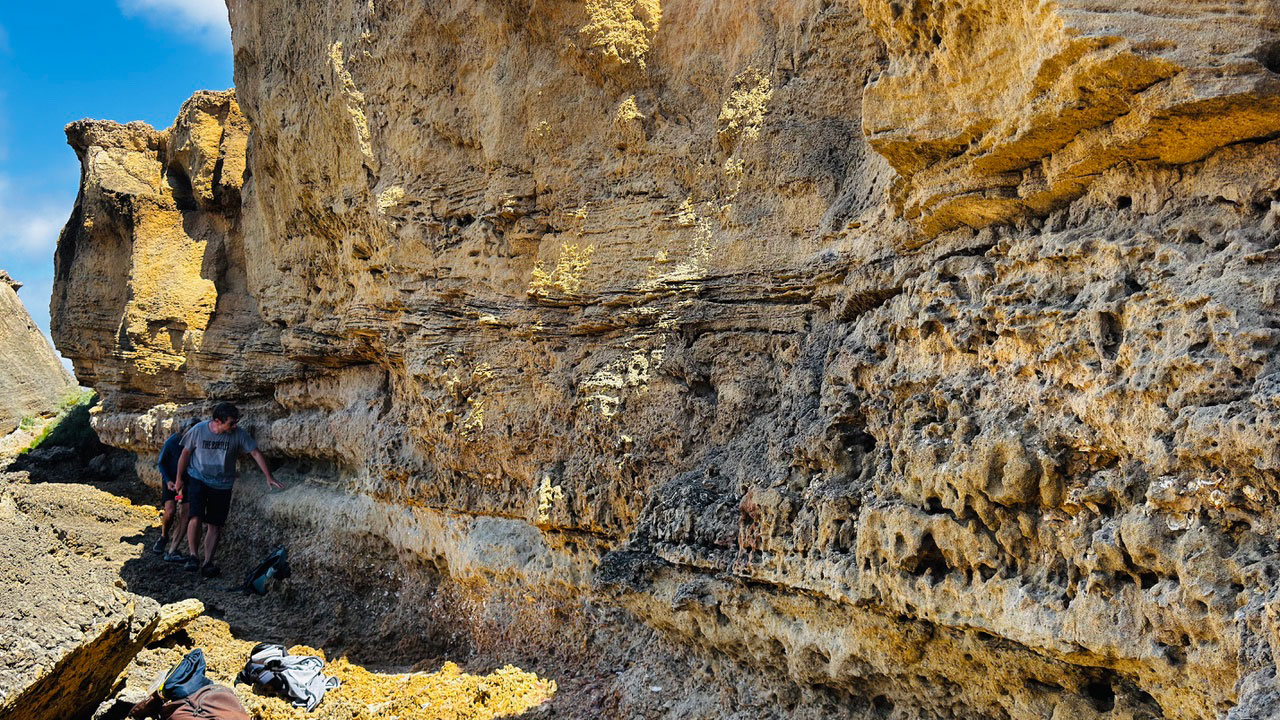 After Kaufman works with collaborators to gather shells from coastal outcrops and museum collections across six continents, he’ll return to the NAU geochronology lab to dissolve the shell samples in acid. What’s left behind, he said, are the shells’ proteins and their constituent amino acids, which he’ll then inject into a high-performance liquid chromatograph. This machine separates one type of amino acid from another, allowing Kaufman to measure the molecules’ racemization—that is, how many of them have flipped into their mirror image form.
“It turns out life, for the most part, builds proteins out of amino acids in one geometric form,” Kaufman said. “In a living organism they’re essentially all left-handed. After death, they start flipping at random into the right-handed version—same atoms, same bonds, but assembled in mirror image, the way your left hand mirrors your right. Given long enough, you end up with a 50-50 mix of left and right. It’s like a clock: We can look at the ratio between left and right to understand a shell’s relative age.”
But there’s a catch: The clock does not tick at a fixed rate. Amino acids flip sides at different speeds depending on the temperature of their environment. The amino acids of clamshells buried in the temperate Mediterranean Sea, for example, will flip briskly, whereas those in the freezing Barents Sea near Svalbard will flip slowly. That’s why Kaufman and his peers have only ever been able to measure an object’s comparative age—that is, how old it is compared to other objects they’ve analyzed.
Kaufman is working to change that. Using these grant funds, he’s creating a shell-dating formula that considers temperature. He’s measuring the ages of shells from shorelines whose ages have already been established, then pairing that information with a climate model’s estimate of the water temperatures at those shorelines over the last 125,000 years.
Do that with enough shell samples and across a wide enough temperature range, Kaufman said, and the amino acid ratios start to convert into numerical ages. Soon, Kaufman said, he’ll be able to predict what a shell from the last interglacial period should look like anywhere on Earth’s map.
“The more samples you can get, the better the calibration gets,” Kaufman said.
A peek at where we’re headed
Kaufman’s work will reveal which of the shoreline deposits and their seashells date back to the last interglacial period, which was the last time Earth was as warm as it is today.
“Greenland’s ice sheet was substantially smaller than it is today,” Kaufman said. “Sea levels were about 20 feet higher than they are today. This is roughly the world the climate models say we are headed toward, and this is a chance to check their answer against something that actually happened.”
If we want to understand how sea level rise will change ecosystems, Kaufman said, we can’t just rely on computer models. We also need to look to the past.
“This work provides a real-world view—not a computerized model view—of the last time this planet’s temperatures were as high as they are now,” Kaufman said. “Biological fossil materials like seashells can tell us a lot about how species migrated when the temperatures changed, how the ocean circulated and how high sea levels were.”
Kaufman will work with students in his lab to build an interactive map that contains geochronology information for every sample he collected and analyzed from the last interglacial period, alongside the model temperature histories behind them. Their work could help refine models of ice-sheet stability and coastal change and even inform earthquake hazard assessments, which depend on information about how fast a coastline has risen or sunk since its shorelines formed.
“With so few amino acid geochronology labs in operation, and only one in the United States, it can be tough for scientists to get access to information like this,” Kaufman said. “I want to not only share data that can support other research but also promote this technique, which can provide a crucial window into the past.”
Kaufman’s work is funded by NSF grant #2536604.

Jill Kimball | NAU Communications
(928) 523-2282 | jill.kimball@nau.edu