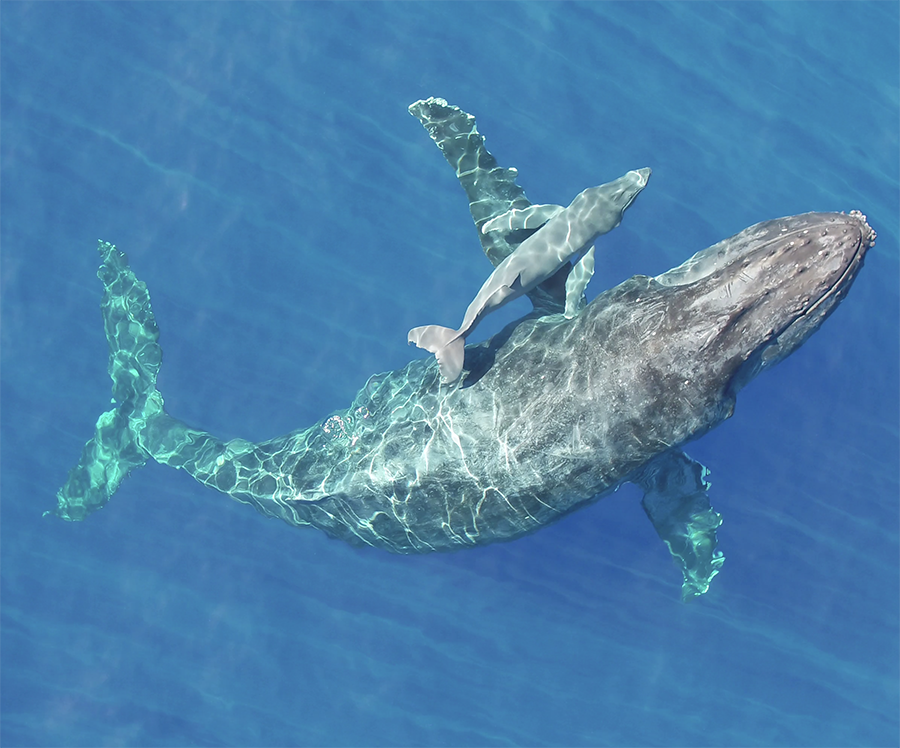


Can protecting elephants and whales help mitigate climate change?
There is a growing consensus among scientists that many different large animals, such as elephants, bison, tigers and whales, can fundamentally change how carbon is stored and recycled within ecosystems. This has raised an important question: Can restoring large animal populations help us mitigate the climate crisis? The answer, however, is far from straightforward, according to research co-led by Andrew Abraham, a research associate at Northern Arizona University.
The study, published Monday in Current Biology, examined the role of flagship megafauna in the Earth’s carbon cycle. They found that, although large animals play essential roles in ecosystem carbon balance, their impacts are also highly variable across animals and systems. Moreso, their carbon impacts and restoration timelines generally operate too slowly to aid in urgent climate goals by mid-century, as set by the Paris Agreement.
The research team, which included experts on animal-carbon roles from both terrestrial and marine ecosystems, synthesized decades of data on elephants and great whales. They found that while animals influence ecosystem carbon storage through many different and complex pathways—such as elephants toppling trees or whales recycling nutrients—the net effect is context-dependent and hard to generalize. In some cases, animals may increase carbon storage, while in others, their presence leads to a net release. Yet, even in the most optimistic scenarios, the carbon sequestration potential of these animals is negligible compared to the scale of current global fossil fuel emissions.
“Wildlife restoration should still start now,” Abraham said. “Large animal populations take time to recover and there are many additional benefits for ecosystems and people beyond carbon. While predicting the net carbon outcomes of animals is currently challenging, careful monitoring programs can help reveal if animals might play meaningful roles in long-term climate recovery, if human carbon emissions are drastically reduced.”
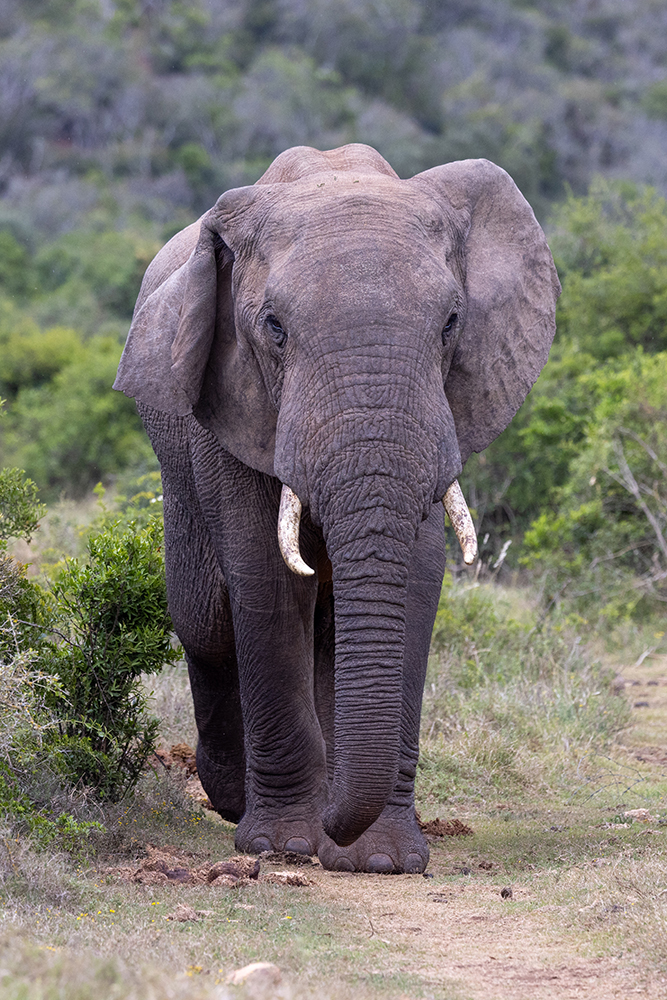
The authors emphasize that protecting existing wildlife populations remains essential, highlighting a key asymmetry: Rebuilding animal populations and accumulating carbon in ecosystems can take centuries or longer, while wildlife declines and associated carbon losses can occur much more rapidly. As a result, although exact animal-carbon mechanisms are not well understood for all animals and systems, it is prudent to avoid the possibility of additional carbon losses by conserving existing wildlife populations.
“Carbon and climate funds are looking for charismatic projects to invest in, and few things are as charismatic as conservation or rewilding with large wildlife while ‘saving’ the climate,” said Yadvinder Malhi, a professor of ecosystem science at the University of Oxford. “The scientific evidence for such climate benefits from animal wildlife, if they exist at all, is still weak. This leads to a real danger of backlash if these projects don’t deliver the climate benefits promised through carbon finance, even if they bring biodiversity and social benefit.”
Major takeaways from the study to consider for wildlife and climate:
- The most important carbon impacts of wildlife are uncertain and context-dependent, making their restoration a risky strategy as a climate change mitigation plan.
- Carbon benefits take more time than we have to effectively mitigate climate change, though restoration or conservation of these animals is still a priority, including for the benefit of long-term climate recovery.
- Animals could be included in climate policy, but uncertainty must be accounted for to align expectations with reality.
- Robust monitoring and research is needed to measure whether the proposed cabon benefits are actually being achieved, to ensure expected carbon sequestration is real and durable.
“Climate change is among the greatest challenges we face, and we need to be realistic about what can deliver meaningful solutions,” said ecologist Ethan Duvall, director of the Amazon Research & Conservation Collaborative and co-lead on the study. “Restoring these animals is an investment in healthier ecosystems and a more resilient planet. It should complement, not distract from the urgent need to reduce greenhouse gas emissions today.”

Heidi Toth | NAU Communications
(928) 523-8737 | heidi.toth@nau.edu