
Website Feedback Form
Institute for Human Development
Changing the way you experience the world
Upcoming Events
Northern Arizona Disability Resource Fair
An Event Focused on Disability Resources for People Living in Northern Arizona!
Date: Saturday, October 3, 2026
Time: 1:00 – 4:00 PM (AZT)
Location: High Country Conference Center
201 W. Butler Ave, Flagstaff, AZ 86001
Join us to learn about and connect with northern Arizona’s diverse disability community!
Meet individuals with disabilities of all ages, their families, caregivers, local service providers, and disability organizations.
Event Highlights:
- Over 40 exhibitors offering disability resources and supports
- FREE admission
- FREE parking
- Refreshments, entertainment, and door prizes
Visit the Disability Resource Fair Webpage

Not-Inspiration Pørn Disability Film Festival
Wednesday, October 7, 2026
The 5th Annual Not-Inspiration Pørn Disability Film Festival returns as part of NAU’s Disability Pride and Heritage Month celebration on Wednesday October 7th. Enjoy award-winning short films from around the globe alongside local productions that celebrate disability culture, creativity, and community.
Visit the Film Festival webpage for more event details!
Access | Attitude | Inclusion
Our Work:
- Impacts people at all life stages – individually and socially
- Facilitates research and programming to inform change that positively impacts individuals with disabilities
Vision: People with disabilities fully participate in all life experiences.
Mission: Promote full inclusion by advancing attitudes that value persons with disabilities while enhancing access to all aspects of the human experience.
IHD fosters the development of attitudes that promote the increased inclusion of individuals with disabilities in their communities. Attitudes, as barriers to or facilitators of inclusion, go hand-in-hand with access. Access, commonly thought of as access to services and supports, has a much broader meaning: while services are essential for inclusion, access also refers to access to information, education, inclusive physical environments, community participation, friendships, and relationships. Conceptually, access and attitude have reciprocal roles in promoting or inhibiting inclusion.
Senator Tom Harkin
Explore our degrees
News and Articles of Interest
2026 IHD Evidence for Success
Disability Conference: A Recap
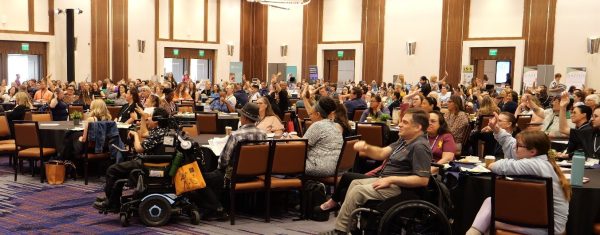
Our 27th annual Evidence for Success Disability Conference took place June 22-24, 2026, at the Wild Horse Pass Resort in Chandler, Arizona. This year’s conference welcomed more than 550 attendees, featured 50+ exhibitors, and offered 65 educational and professional development sessions.
The goal of the Evidence for Success Disability Conference is to provide a platform for sharing current information, innovative ideas, and best practices that promote greater inclusion and expanded opportunities for people with disabilities. The conference also serves as a valuable opportunity for networking, collaboration, and community-building, particularly within Arizona’s disability community.
Read More About the 2026 Conference
IHD Supports Talent from Within
At IHD, our greatest strength lies in our people. Every day, our team of dedicated professionals advances our mission of creating a more inclusive and equitable world for people with disabilities. We are proud to recognize team members whose talents and contributions have led to new opportunities within the organization. Please join us in congratulating two staff members as they transition into new roles at IHD.
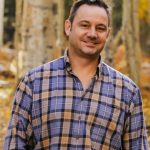
Noah Hayes-McKeirnan Named Assistant Director, Academic Programs
After more than four years with IHD as the Academic Program Coordinator, Noah Hayes-McKeirnan has recently stepped into the role of Assistant Director, Academic Programs. With a background as both a special educator and a disability resource advisor, Noah brings a wealth of experience supporting students and families in Flagstaff and northern Arizona.
In his new position, Noah will help strengthen IHD’s support for students pursuing post-secondary degrees at NAU.
Michele Lee Appointed Assistant Research Professor
Michele Lee, who has been with IHD for more than seven years, has been promoted to Assistant Research Professor. Since joining IHD as a research assistant in 2018, Michele has served in several research and evaluation roles while earning her master’s degree in Psychological Sciences and then completing her PhD in Interdisciplinary Health at NAU.
In her new role, Michele will continue collaborating with IHD and NAU colleagues on grant writing and research initiatives. She will also be affiliated with NAU’s School of Social Work. Her focus is on expanding IHD’s health research portfolio and deepening relationships with Arizona’s disability organizations and community. As a new parent, she hopes to also grow her research into how new parents navigate this stage of life.
Congratulations to Noah and Michele on their well-deserved achievements. We look forward to their continued leadership and impact at IHD.
Advancing Inclusion Through Collaborations
Helen Keller famously said, “Alone we can do so little; together we can do so much.”
At IHD, our vision is for people with disabilities to fully participate in all life experiences. While our many programs and initiatives advance this vision, we know that creating a truly inclusive world requires collaboration across communities and systems.
That’s why collaboration is at the heart of our work. By partnering with government agencies, community organizations, self-advocacy groups, and other stakeholders, we expand our impact and help address the barriers people with disabilities continue to face.
Our work involves numerous collaborative partnerships. Recent examples of these partnerships include:
Growing in Beauty and ADAPT Shop Team Up
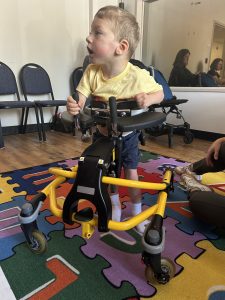
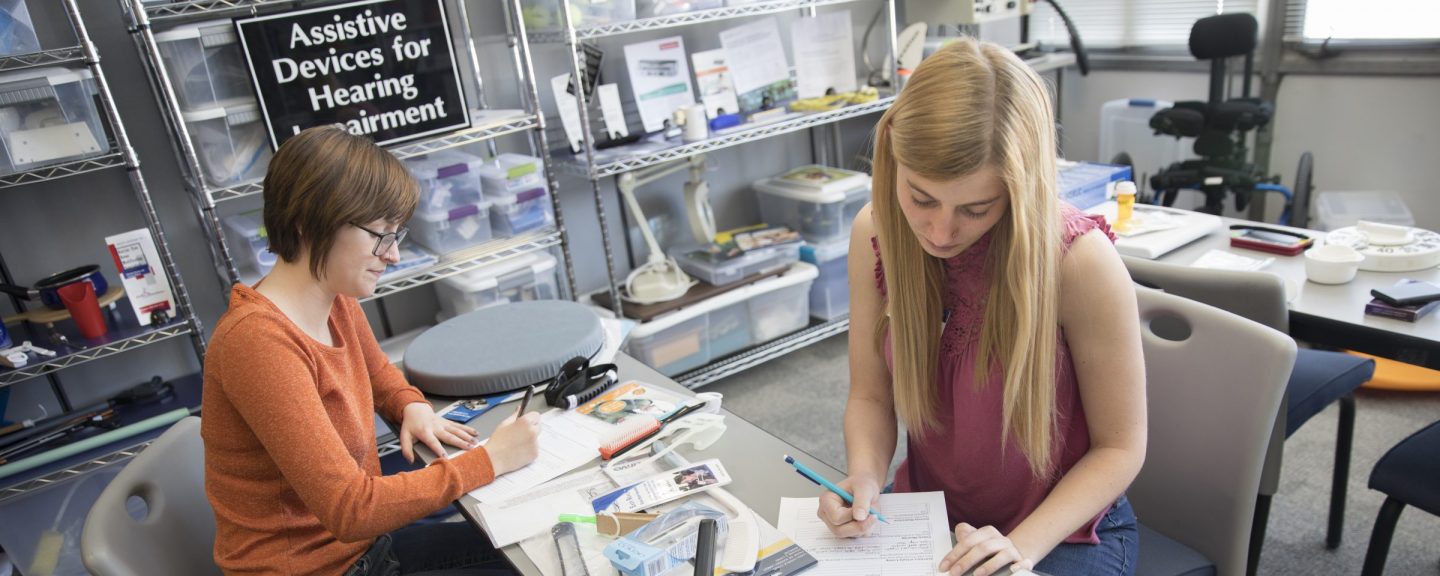
On June 17, 2026, our Growing in Beauty Partnership Program collaborated with Southwest Human Development’s ADAPT Shop to offer a remote clinic to Northern Arizona families who are enrolled in AzEIP. Although the ADAPT Shop is geographically located in Phoenix, this unique clinic allowed families from Northern Arizona to more easily access the ADAPT Shop providers’ expertise and custom-crafted creations.
The ADAPT Shop mission is to help young children with disabilities (ages birth to 5) develop the competence and confidence they need to become independent and active participants in their home, school, and community. They work with families and professionals involved in the child’s care to create custom equipment solutions that improve participation in daily life, developmental skills, and better overall health. They provide custom equipment solutions for different needs such as seating systems, trays, easels, toy and standing bars, light tables, feeding and crawling supports, tummy wedges, and more.
Typically, families need to travel to the ADAPT Shop in person to access these services. Through this unique collaboration, Northern Arizona families were instead able to meet with the ADAPT Shop at IHD in Flagstaff. Seven families from the Flagstaff, Kayenta, Gap, Wheatfields, and Dilkon areas attended the clinic in person, with each family leaving with custom-crafted equipment to support their child’s participation. In addition, for one family from the Jeddito area, GIBPP early intervention therapists collaborated remotely with the ADAPT Shop therapists, delivering the vital equipment without requiring the family to travel to the NAU IHD campus in Flagstaff.
Building on this success, the program is scheduled to meet with the ADAPT Shop soon to continue the collaboration and plan for the future.
A Partnership with CANAR
Another important partnership is our ongoing collaboration with Consortia of Administrators for Native American Rehabilitation, Inc. (CANAR), a national membership organization that improves vocational rehabilitation services, supports Tribal programs, and represents American Indians and Alaska Natives with disabilities.
Since CANAR is a volunteer-led organization, IHD was brought in to provide support services for CANAR’s two annual conferences. Now in our second year of collaboration, IHD’s comprehensive conference support includes:
- Pre-event planning and coordination assistance
- On-site conference presence and support
- Evaluation development, management, and post event analysis
With IHD’s support, the two annual CANAR conferences strengthen opportunities for collaboration and professional development among rehabilitation professionals serving Tribal communities across the country.
Project Updates
SCALE Students Reach New Milestones
This year, Supporting College Access, Learning, and Employment (SCALE) is proud to celebrate the achievements of students who have reached important educational and career milestones.
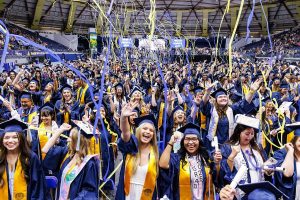
One recent graduate is beginning her career as a second-grade teacher. After completing her student teaching experience in a kindergarten classroom, she is excited to bring her passion for inclusive learning, dedication, and compassion to her new role in education.
SCALE is also celebrating a student who recently earned her associate degree from Mohave College. Known for her creativity and positive attitude, she is continuing her education by pursuing a Network Support Certificate while working part-time and building skills for her future career.
These accomplishments reflect the hard work, perseverance, and determination of SCALE students. The SCALE team is honored to support students as they pursue higher education, meaningful employment, and their personal goals. Congratulations to these graduates and to all SCALE students who continue to reach new milestones and make a positive impact in their communities.
IHD Works to Build a Statewide MTSS Coaching Model
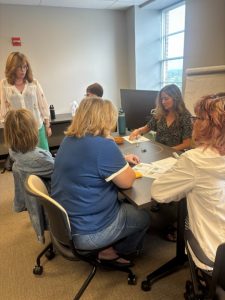
The IHD Research to Practice team is working with the Missouri Department of Elementary and Secondary Education to support high-quality professional development for K-12 educators. One element of this work is building a multi-tiered system of support
(MTSS) model for Missouri and preparing a statewide team of coaches to work with school districts. As part of that effort, we are capturing and calibrating the professional judgment embedded in that professional development, since supporting schools to implement MTSS effectively means understanding what works, when, and why.
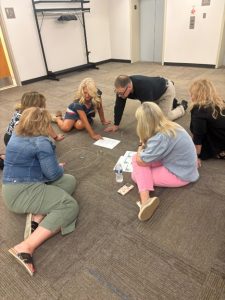
In a recent session with MTSS coaches, we used a marble activity to visualize direct and indirect impacts. That experience gave coaches a shared foundation for discussing a common mental model of how their coaching support affects instruction and student learning, both directly and indirectly. Over the year, we will continue to collectively examine statewide professional development practice so we can improve instruction and student learning.

AT BRIDGE: Supporting Students with Assistive Technology
IHD is leading AT BRIDGE (Assistive Technology: Building Readiness, Inclusion, and Direction for Goals in Education), an initiative funded by the Arizona Developmental Disabilities Planning Council (ADDPC).
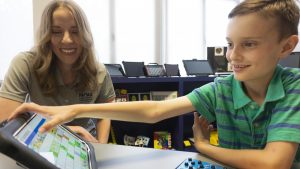
AT BRIDGE helps Arizona students with intellectual and developmental disabilities (I/DD) explore assistive technology that can support their goals after high school. Through individualized guidance, recommendations, and coaching, students learn how technology can enhance learning, communication, employment, and independence. The project also partners with families and educators to support successful transitions to college, career training, e
mployment, and community life.
As part of the project, eligible families can work one-on-one with the AT BRIDGE team to identify assistive technology solutions aligned with individual student strengths, interests, and future goals. Whether the student plans to attend college, enter a training program, get a job, or become more independent, assistive technology can help build confidence and support success after high school.
Who can participate?
- Arizona students in 11th or 12th grade
- Students with an intellectual or developmental disability (I/DD)
- Families interested in exploring assistive technology for life after high school
For more information or to determine whether your child is eligible, contact John McDermott at john.mcdermott@nau.edu.
LIVE: Living Independently Via Enabling Technology
Many individuals with intellectual and developmental disabilities (I/DD) rely on caregiver support to complete daily tasks. However, as both individuals and their caregivers age, additional support is often needed while caregivers may become less able to provide it. As a result, many aging adults with I/DD face challenges remaining in their preferred home environments.
Living Independently Via Enabling Technology (LIVE) is a research study that seeks to address these issues by exploring the potential of utilizing enabling and assistive technologies (ET/AT) to increase or maintain independence among aging individuals with I/DD. ET/AT refers to devices, equipment, or systems that support individuals with disabilities achieve more independence and self-sufficiency in various settings.
Funded by the Arizona Developmental Disabilities Planning Council (ADDPC), LIVE is focused on two goals:
- Understanding how aging individuals with I/DD are using ET/AT in their daily lives.
- Developing and piloting a technology-based intervention to increase independence among aging adults with I/DD who have not previously used ET/AT.
For more information, contact AJ Catalano at alexander.catalano@nau.edu
Success Stories
Assistive Technology for Employment and Independence (ATEI)
IHD’s Assistive Technology for Employment and Independence (ATEI) project provides comprehensive assistive technology services to Arizona Rehabilitation Services (RSA) vocational rehabilitation clients statewide.
Supporting RSA clients is at the heart of our work, and our team was pleased to receive the following feedback from a recent ATEI participant:
“The whole team was extremely helpful and I received so much care and thought into everything that may continue to help not just in the immediate future but ongoing. It has made things so much better and easier for my day-to-day living! Thank you to everyone who helped me out, I am extremely grateful!!”
American Indian Vocational Rehabilitation Training and Technical Assistance Center (AIVRTTAC)
The American Indian Vocational Rehabilitation Training and Technical Assistance Center (AIVRTTAC) provides vocational rehabilitation training and technical assistance to Tribal Vocational Rehabilitation (TVR) programs across the nation. One recent success comes from the Confederated Salish & Kootenai Tribes Vocational Rehabilitation Program (CSKT-VR).
With support from AIVRTTAC, CSKT-VR achieved measurable improvements in regulatory compliance. The program has increased capacity and confidence in managing staff, and staff have strengthened their knowledge and competence in case management practices. Case file reviews showed notable progress in two key areas: eligibility determinations and the development of comprehensive Individualized Plans for Employment (IPEs) in partnership with participants.
Importantly, AIVRTTAC’s assistance helped ensure that the CSKT-VR Program was able to provide onboarding and training at the pace necessary to meet participant needs and maintain continuity of services.
IHD in the Community
Supporting Educators in Ecuador
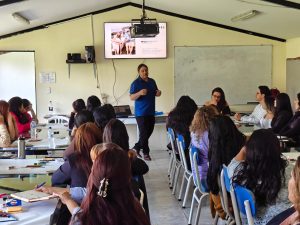 IHD partnered with the Center for International Education and the Honors College to deliver 16 hours of continuing education workshops for schoolteachers and school psychologists in the province of Pichincha, Ecuador. Noah Hayes-McKeirnan, IHD’s Assistant Director, Academic Programs, traveled to Ecuador over the summer to deliver the training, which focused on practices, strategies, and interventions for working with exceptional children.
USNS Solomon Atkinson Christening
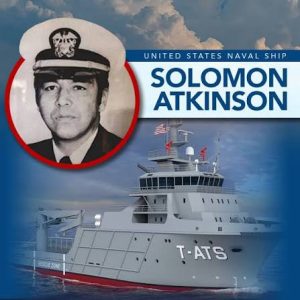 IHD’s AIVRTTAC program was honored to attend the christening of the USNS Soloman Atkinson (T-ATS 12). The vessel is named after Solomon “Sol” Atkinson, one of the first Native Navy SEALs and an Alaskan Native of the Metlakatla Indian Community.
Following a 20-year military career, Atkinson continued his lifelong commitment to service through Tribal Vocational Rehabilitation (TVR), helping individuals with disabilities in achieving employment and independence. His legacy lives through his daughter Michelle Guyah’s path, A TVR counselor who continues serving individuals with disabilities overcome barriers to employment, including many veterans.
More IHD News Articles
New Course Spotlight: Neurodiversity in Society
Digital Safety for All: The Online Privacy and Safety Project
Oakwood Creative Care Opens New Adult Day Club at IHD in Flagstaff
Honoring a Brother’s Legacy: The Mike Baker Fund Supports Inclusive Learning at NAU
Introducing TVR PATH: A Personalized, Holistic Tool for Tribal Vocational Rehabilitation Programs
IHD Completes Statewide Comprehensive Review and Analysis for ADDPC
New Resource Available: Plain Language Concepts to Consider
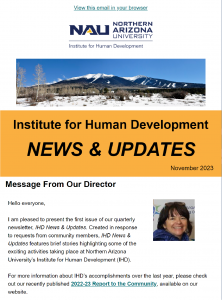
Click here to see past editions of the Institute for Human Development’s News and Updates
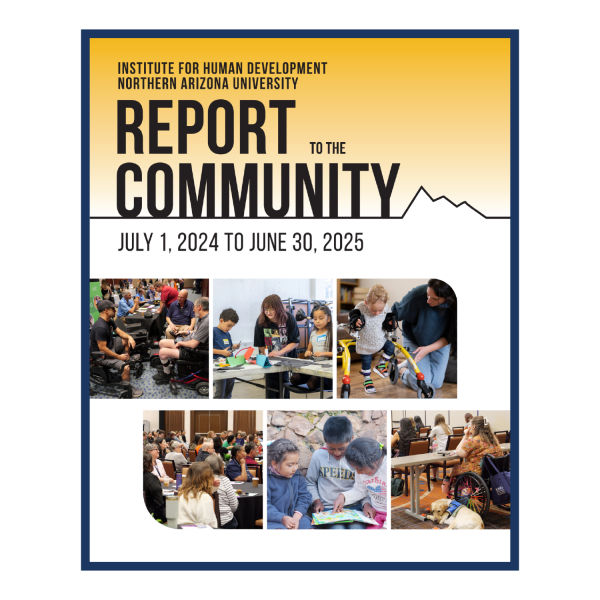 Click here to see IHD’s 24-25 Report to the Community
Parents, family members, or professionals in the field, do you need information on an AAC Evaluation? Go to the NAU AAC Evaluation Page for program and contact information.
Institute for Human Development PSA
AUCD: Growing Leaders, Driving Change
This website is supported by the Administration for Community Living (ACL), U.S. Department of Health and Human Services (HHS) as part of a financial assistance award totaling $673,700 with 100 percent funding by ACL/HHS. The contents are those of the author(s) and do not necessarily represent the official views of, nor an endorsement by, ACL/HHS or the U.S. Government.