Astronomy and Planetary Science
  • About us
    • People
    • News
      • Accomplishments
      • Newspaper & magazine articles
    • Events & colloquia
    • Faculty & staff directory
  • Degrees
    • Undergraduate degrees
    • PhD Astronomy & Planetary Science
  • Research
    • Faculty Research
    • NAU/NASA Space Grant
    • Research Experiences for Undergraduates in Astronomy (REU)
    • CCC2NAU Internship Program
  • Resources
    • Forms & Policies
      • Forms Index
      • Policies Index
    • Professional development
      • Research & employment opportunities
    • Tuition & aid
      • Tuition information
      • Financial Aid
      • Scholarships
    • Academics & support
      • Advising
      • Commencement
      • Course Syllabi
      • Handy links for homework/research
      • Tutoring
  • Give now
  • IN
  • Astronomy and Planetary Science
  • NAU Astronomy & Planetary Science In the News

PhD student Oriel Humes recently flew on SOFIA

Posted by on July 13, 2022

PhD student Oriel Humes recently flew on Stratospheric Observatory for Infrared Astronomy (SOFIA), which is NASA’s 747 airplane with a hole in the side of it through which a telescope points.

SOFIA soars over the snow-covered Sierra Nevada mountains with its telescope door open during a test flight. SOFIA is a modified Boeing 747SP aircraft. Credits: NASA/Jim Ross SOFIA with telescope bay open.

Oriel writes, “I wanted to share some of the pictures I took last week during my SOFIA flights. I flew on the 25th and 26th [of May]. We observed a target for the Trilling program on the 25th (Ino) and were scheduled to observe Siwa for my program on the 26th, but that target ended up getting switched to the 27th, so I wasn’t on that flight. This series also observed Sylvia on the 24th, and I got to take a sneak peek of that data on my flights too. We also observed some asteroids for Maggie McAdam’s program, along with some non-solar system targets including the galactic center, circumstellar disks, and AGB stars. All the flights in this series used FORCAST — here is a picture of me and the instrument at the back of the plane:
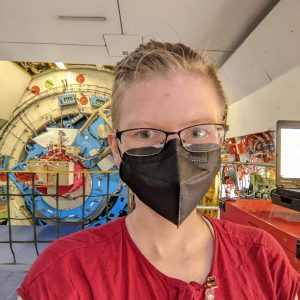
Oriel onboard SOFIA
Oriel and the instrument at the back of the plane.

“Each flight was about nine hours long. While I was the only Guest Observer on the flights, I also flew alongside about a dozen teachers from the US and Germany as part of the SOFIA Education/Public Outreach programs. On the first night, I gave them a short presentation about my research with SOFIA and they asked a ton of really great questions!

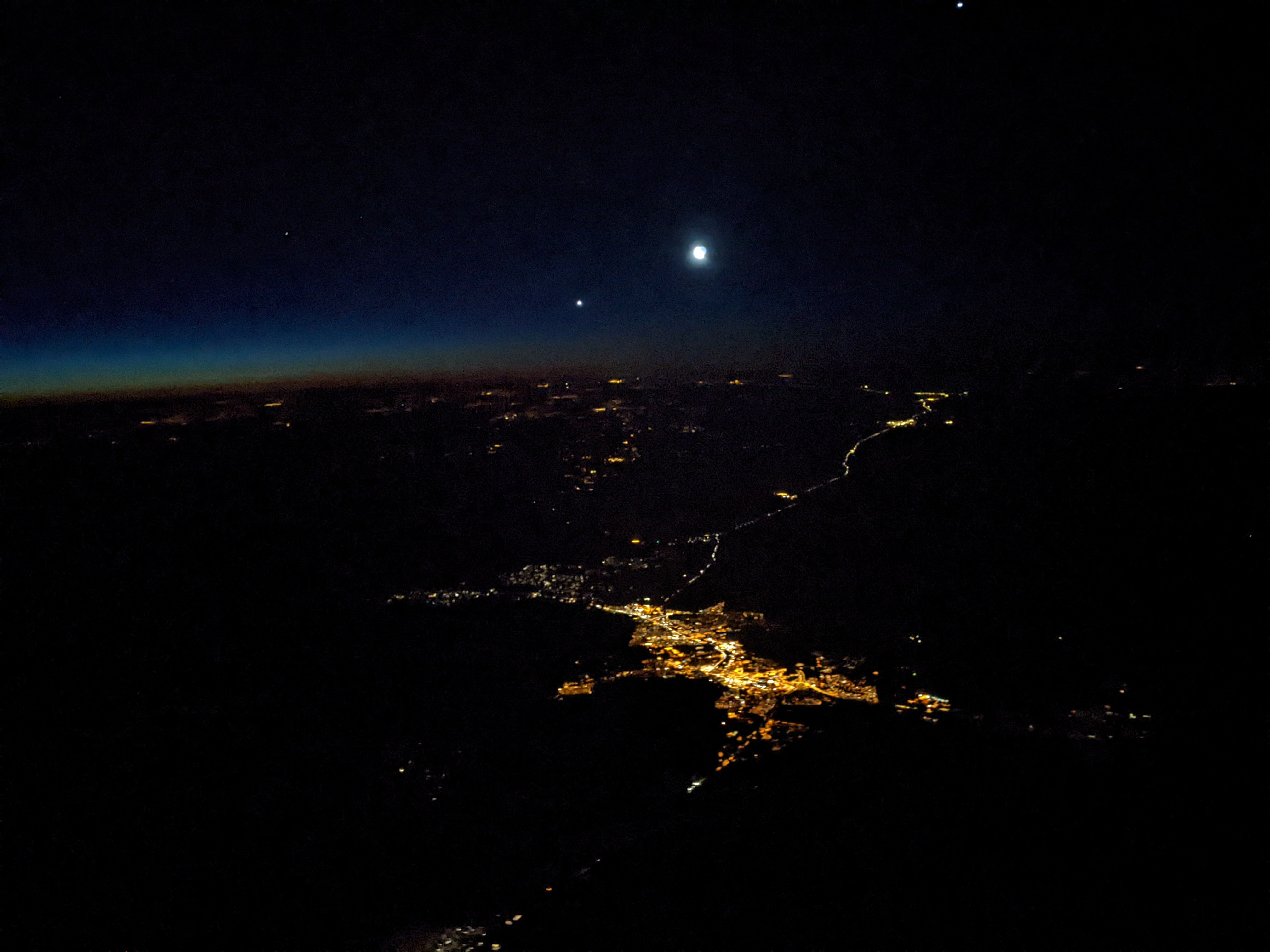
On the second night, I went up to sit with the pilots in the cockpit during a leg where we flew over Flagstaff. The pilots turned the lights off for me so I could get these pictures.
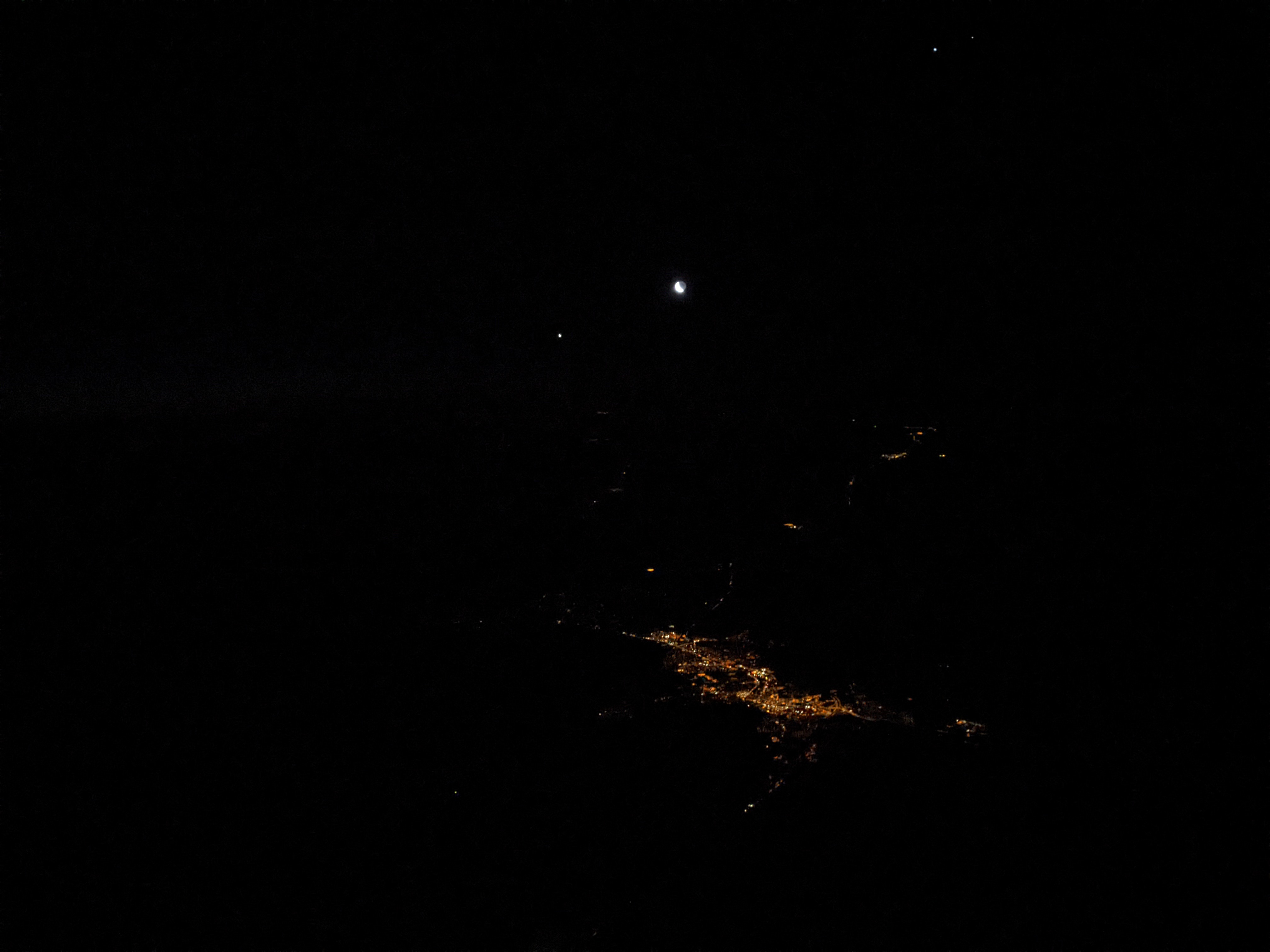
Flagstaff at night from SOFIA
Looking east while flying over Flagstaff, we can see Venus, the crescent Moon, Jupiter, and Mars over the signature sodium streetlights of Flagstaff.


Flagstff from SOFIA
This one is a bit longer exposure so you can see the first hints of dawn on the horizon, along with some more detail on the highways. Unfortunately, Mars isn’t visible in this picture, but Venus, the Moon, and Jupiter (right on the edge of the frame!) are still in this picture.

Filed Under: Astronomy, Astronomy and Planetary Science

Categories

Tags

Anna Baker Anna Engle Asteroids Astrobiology Astroinformatics astronomy Brain Food Christopher Edwards Cristina Thomas DART David Koerner David Trilling Deimos Ed Anderson EMIRS EMM Flagstaff Festival of Science Gavin Moriarty Hope Ian Marrs James Webb Space Telescope JWST KNAU Local News Lucas McClure LUCY Maria Chernyavskaya Mars Mars Moon Exploration Mary Lara Nadine Barlow NAU Near-Earth Asteroids OSIRIS-REx PhD Defense Phobos planetary defense Pluto Ryder Strauss Science and Technology Shae Raposa Trojan Asteroids via bookmarklet Wildfire XPRIZE

Archives

Recent Posts

  • Food grows better on the moon than on Mars, scientists find
  • Northern Arizona University student studies comet trajectories through work at Lowell Observatory
  • How to find a comet before it hits Earth
  • Crater on Mars named after former NAU department head
  • NAU professor who died of cancer has Mars crater named after her

Recent Comments

    Archives

    • January 2025
    • December 2024
    • November 2024
    • October 2024
    • September 2024
    • August 2024
    • July 2024
    • May 2024
    • April 2024
    • February 2024
    • December 2023
    • November 2023
    • October 2023
    • September 2023
    • August 2023
    • June 2023
    • May 2023
    • April 2023
    • March 2023
    • February 2023
    • January 2023
    • December 2022
    • November 2022
    • October 2022
    • September 2022
    • July 2022
    • June 2022
    • May 2022
    • April 2022
    • March 2022
    • February 2022
    • January 2022
    • December 2021
    • November 2021
    • October 2021
    • August 2021
    • May 2021
    • April 2021
    • March 2021
    • February 2021
    • January 2021
    • December 2020
    • November 2020
    • October 2020
    • September 2020
    • August 2020
    • July 2020
    • June 2020
    • May 2020
    • April 2020
    • February 2020
    • December 2019
    • September 2019
    • August 2019
    • July 2019
    • June 2019
    • April 2019
    • February 2019
    • January 2019
    • December 2018
    • November 2018
    • October 2018
    • August 2018
    • July 2018
    • June 2018
    • May 2018
    • April 2018
    • February 2018
    • January 2018
    • May 2017

    Categories

    • Astronomy
    • Astronomy and Planetary Science
    • Uncategorized

    Meta

    • Log in
    • Entries feed
    • Comments feed
    • WordPress.org
    Astronomy and Planetary Science
    Location
    Room 209 Building 19
    Physical Sciences
    527 S. Beaver St.
    Flagstaff, Arizona 86011-6010
    Mailing Address
    NAU Box 6010
    Flagstaff, Arizona 86011-6010
    Email
    astro@nau.edu
    Phone
    928-523-2661
    Social Media
    Facebook