Astronomy and Planetary Science
  • About us
    • People
    • News
      • Accomplishments
      • Newspaper & magazine articles
    • Events & colloquia
    • Faculty & staff directory
  • Degrees
    • Undergraduate degrees
    • PhD Astronomy & Planetary Science
  • Research
    • Faculty Research
    • NAU/NASA Space Grant
    • Research Experiences for Undergraduates in Astronomy (REU)
    • CCC2NAU Internship Program
  • Resources
    • Forms & Policies
      • Forms Index
      • Policies Index
    • Professional development
      • Research & employment opportunities
    • Tuition & aid
      • Tuition information
      • Financial Aid
      • Scholarships
    • Academics & support
      • Advising
      • Commencement
      • Course Syllabi
      • Handy links for homework/research
      • Tutoring
  • Give now
  • IN
  • Astronomy and Planetary Science
  • NAU Astronomy & Planetary Science In the News

NAU planetary scientist’s study suggests widespread presence of water on the Moon – NAU News : NAU News

Posted by on April 3, 2018

By Kerry Bennett
Office of the Vice President for Research


NAU assistant professor of planetary science Christopher Edwards co-authored a paper recently published in Nature Geoscience that has generated interest among scientists in the field as well as in mainstream science news, such as Science Daily.

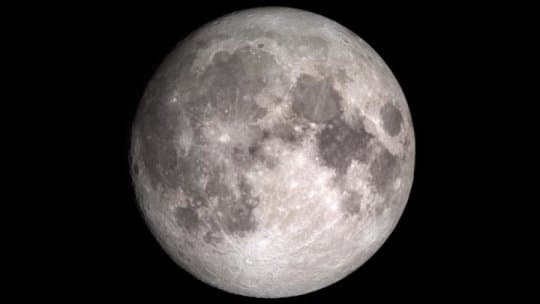
The researchers analyzed remote-sensing data from two lunar missions and concluded that water appears to be evenly spread across the surface of the moon, not confined to a particular region or type of terrain as previously thought. Although the water is not believed to be readily accessible, the findings of this study could help researchers understand the origin of the moon’s water and determine its feasibility as a future resource for space exploration.

Edwards collaborated on the study, “Widespread distribution of OH/H2O on the lunar surface inferred from spectral data,” with scientists from NASA’s Jet Propulsion Laboratory and Johns Hopkins University’s Applied Physics Laboratory, as well as with lead scientist Joshua Bandfield of the Space Science Institute. The study described in the paper builds on work funded through a grant awarded to Edwards by NASA and sponsored by the Space Science Institute.

“Josh Bandfield and I are longtime collaborators,” Edwards said. “In fact, he is one of my oldest collaborators and was the lead author on the first paper I ever participated on when I was just an undergraduate. Josh and I have continued to work on similar problems, instruments and generally have the same approach to scientific problems so we work well together.”

Edwards explains how he and his collaborators used improved technology to reach their novel conclusions.

“The study uses multiple datasets—topography and temperature—to better correct the Moon Mineralogy Mapper (M3) spectral dataset,” he said. “This improved correction has led to much better constraints on the availability of H2O (water) and OH (hydroxyl, a more reactive form of water) on the moon.”

He admits he was surprised by the study’s conclusions.

“To be honest, I was a little surprised at the beginning, but by the time we had finished the paper I was completely sold,” Edwards said. “This work has been a long time coming. Josh, I and others submitted abstracts on this topic to the Lunar and Planetary Science Conference over the past couple of years.”

As part of the ongoing project, Edwards plans to bring on a new student next year who will continue to refine this technique and look at the variety of lunar terrains to help understand how this new correction helps with the interpretation of the history of lunar volatiles.

All planetary bodies are “fair game”

Although Edwards may be better known for his work studying Mars, he considers looking at other planetary bodies to be part of the job.

“As a planetary scientist, all objects in the solar system are fair game, including Earth,” he said. “In general, I spend my time thinking about the ancient environments of Mars, but in reality, I use the same techniques developed for Mars on other planetary bodies. While the questions are somewhat different, they all still play on the same theme: what do the observations we make today tell us about how a planet or moon evolved, and what it was like in the past?”

Edwards’ research focuses on the composition, physical properties and processes and morphology of planetary surfaces, with an emphasis on rocky bodies including Mars and the Earth. A major element of his research has been the design and development of infrared remote sensing instruments for use in space, the laboratory and for fieldwork. His research uses infrared spectroscopy, radiometry, laboratory spectroscopic measurements, geologic field observations and numerical modeling.


Source: NAU planetary scientist’s study suggests widespread presence of water on the Moon – NAU News : NAU News

Filed Under: Astronomy and Planetary Science

Categories

Tags

Anna Baker Anna Engle Asteroids Astrobiology Astroinformatics astronomy Brain Food Christopher Edwards Cristina Thomas DART David Koerner David Trilling Deimos Ed Anderson EMIRS EMM Flagstaff Festival of Science Gavin Moriarty Hope Ian Marrs James Webb Space Telescope JWST KNAU Local News Lucas McClure LUCY Maria Chernyavskaya Mars Mars Moon Exploration Mary Lara Nadine Barlow NAU Near-Earth Asteroids OSIRIS-REx PhD Defense Phobos planetary defense Pluto Ryder Strauss Science and Technology Shae Raposa Trojan Asteroids via bookmarklet Wildfire XPRIZE

Archives

Recent Posts

  • Food grows better on the moon than on Mars, scientists find
  • Northern Arizona University student studies comet trajectories through work at Lowell Observatory
  • How to find a comet before it hits Earth
  • Crater on Mars named after former NAU department head
  • NAU professor who died of cancer has Mars crater named after her

Recent Comments

    Archives

    • January 2025
    • December 2024
    • November 2024
    • October 2024
    • September 2024
    • August 2024
    • July 2024
    • May 2024
    • April 2024
    • February 2024
    • December 2023
    • November 2023
    • October 2023
    • September 2023
    • August 2023
    • June 2023
    • May 2023
    • April 2023
    • March 2023
    • February 2023
    • January 2023
    • December 2022
    • November 2022
    • October 2022
    • September 2022
    • July 2022
    • June 2022
    • May 2022
    • April 2022
    • March 2022
    • February 2022
    • January 2022
    • December 2021
    • November 2021
    • October 2021
    • August 2021
    • May 2021
    • April 2021
    • March 2021
    • February 2021
    • January 2021
    • December 2020
    • November 2020
    • October 2020
    • September 2020
    • August 2020
    • July 2020
    • June 2020
    • May 2020
    • April 2020
    • February 2020
    • December 2019
    • September 2019
    • August 2019
    • July 2019
    • June 2019
    • April 2019
    • February 2019
    • January 2019
    • December 2018
    • November 2018
    • October 2018
    • August 2018
    • July 2018
    • June 2018
    • May 2018
    • April 2018
    • February 2018
    • January 2018
    • May 2017

    Categories

    • Astronomy
    • Astronomy and Planetary Science
    • Uncategorized

    Meta

    • Log in
    • Entries feed
    • Comments feed
    • WordPress.org
    Astronomy and Planetary Science
    Location
    Room 209 Building 19
    Physical Sciences
    527 S. Beaver St.
    Flagstaff, Arizona 86011-6010
    Mailing Address
    NAU Box 6010
    Flagstaff, Arizona 86011-6010
    Email
    astro@nau.edu
    Phone
    928-523-2661
    Social Media
    Facebook