Astronomy and Planetary Science
  • About us
    • People
    • News
      • Accomplishments
      • Newspaper & magazine articles
    • Events & colloquia
    • Faculty & staff directory
  • Degrees
    • Undergraduate degrees
    • PhD Astronomy & Planetary Science
  • Research
    • Faculty Research
    • NAU/NASA Space Grant
    • Research Experiences for Undergraduates in Astronomy (REU)
    • CCC2NAU Internship Program
  • Resources
    • Forms & Policies
      • Forms Index
      • Policies Index
    • Professional development
      • Research & employment opportunities
    • Tuition & aid
      • Tuition information
      • Financial Aid
      • Scholarships
    • Academics & support
      • Advising
      • Commencement
      • Course Syllabi
      • Handy links for homework/research
      • Tutoring
  • Give now
  • IN
  • Astronomy and Planetary Science
  • NAU Astronomy & Planetary Science In the News

Brain Food: Widespread Moon Water Offers New Promise for Space Exploration | KNAU Arizona Public Radio

Posted by on May 18, 2018

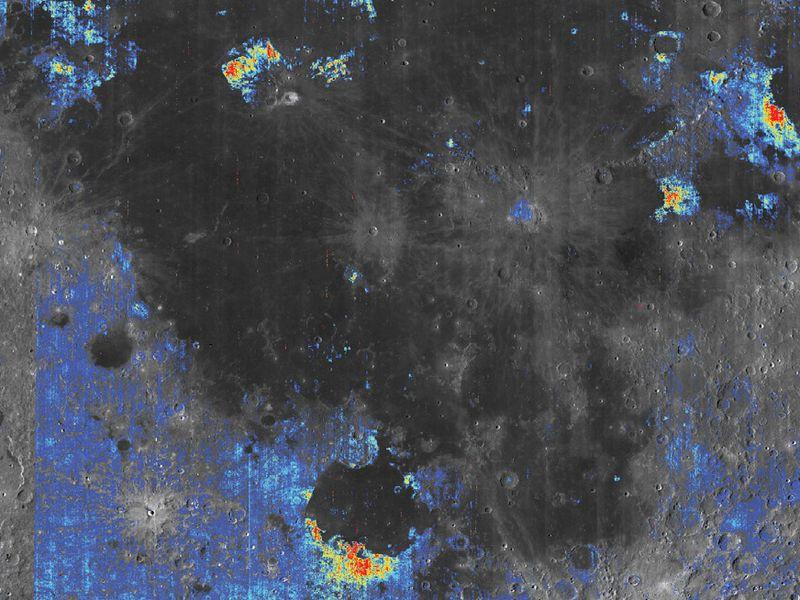
Flagstaff planetary scientist Christopher Edwards has detected water all over the moon, which could mean new possibilities for space travel using the moon as a basecamp.

break

Edwards, a professor at Northern Arizona University, says the water could be used to make rocket fuel, air to breathe and water to drink.

“The exact context of this water is not super clear. It might be absorbed onto little grains, so little water molecules sticking on the outside of these regolith grains, so the soil grains on the moon. Or it could be a part of the mineral structure that’s there as well. It’s actually kind of hard to tell and it depends a lot on the specific spectral properties that we observe from the spacecraft data,” he says.

Edwards used information from two lunar missions to study topography, temperature and light wavelengths. Although he doesn’t believe there’s a lot of water, the discovery does offer new promise for human exploration.

“One of the things NASA’s always thinking about is called In-Situ Resource Utilization. So what does that mean? Well, that’s really the idea that we could send something to the moon that would help us use the materials on the moon to further our space flight agenda. And if you could, for example, get something to the moon and then use the moon to generate your fuels—so the resources on the moon to generate fuel, which might be hydrogen or oxygen, for example, things that make up water, you could then have a much lower gravity, much lower escape velocity needed to get out of the Earth-Moon system, and so you could make it to other planetary bodies more easily. Or, humans need oxygen and water to breathe and drink, and so if we were ever to establish a moon base, or something like that, you could use these materials that are there already rather than having to ship a whole bunch of water and oxygen to the moon,” he says.

The next step, Edwards says, is to study different types of terrain, like the plains and highlands, to see if some places on the moon have more water than others.

Source: Brain Food: Widespread Moon Water Offers New Promise for Space Exploration | KNAU Arizona Public Radio

Filed Under: Astronomy and Planetary Science

Categories

Tags

Anna Baker Anna Engle Asteroids Astrobiology Astroinformatics astronomy Brain Food Christopher Edwards Cristina Thomas DART David Koerner David Trilling Deimos Ed Anderson EMIRS EMM Flagstaff Festival of Science Gavin Moriarty Hope Ian Marrs James Webb Space Telescope JWST KNAU Local News Lucas McClure LUCY Maria Chernyavskaya Mars Mars Moon Exploration Mary Lara Nadine Barlow NAU Near-Earth Asteroids OSIRIS-REx PhD Defense Phobos planetary defense Pluto Ryder Strauss Science and Technology Shae Raposa Trojan Asteroids via bookmarklet Wildfire XPRIZE

Archives

Recent Posts

  • Food grows better on the moon than on Mars, scientists find
  • Northern Arizona University student studies comet trajectories through work at Lowell Observatory
  • How to find a comet before it hits Earth
  • Crater on Mars named after former NAU department head
  • NAU professor who died of cancer has Mars crater named after her

Recent Comments

    Archives

    • January 2025
    • December 2024
    • November 2024
    • October 2024
    • September 2024
    • August 2024
    • July 2024
    • May 2024
    • April 2024
    • February 2024
    • December 2023
    • November 2023
    • October 2023
    • September 2023
    • August 2023
    • June 2023
    • May 2023
    • April 2023
    • March 2023
    • February 2023
    • January 2023
    • December 2022
    • November 2022
    • October 2022
    • September 2022
    • July 2022
    • June 2022
    • May 2022
    • April 2022
    • March 2022
    • February 2022
    • January 2022
    • December 2021
    • November 2021
    • October 2021
    • August 2021
    • May 2021
    • April 2021
    • March 2021
    • February 2021
    • January 2021
    • December 2020
    • November 2020
    • October 2020
    • September 2020
    • August 2020
    • July 2020
    • June 2020
    • May 2020
    • April 2020
    • February 2020
    • December 2019
    • September 2019
    • August 2019
    • July 2019
    • June 2019
    • April 2019
    • February 2019
    • January 2019
    • December 2018
    • November 2018
    • October 2018
    • August 2018
    • July 2018
    • June 2018
    • May 2018
    • April 2018
    • February 2018
    • January 2018
    • May 2017

    Categories

    • Astronomy
    • Astronomy and Planetary Science
    • Uncategorized

    Meta

    • Log in
    • Entries feed
    • Comments feed
    • WordPress.org
    Astronomy and Planetary Science
    Location
    Room 209 Building 19
    Physical Sciences
    527 S. Beaver St.
    Flagstaff, Arizona 86011-6010
    Mailing Address
    NAU Box 6010
    Flagstaff, Arizona 86011-6010
    Email
    astro@nau.edu
    Phone
    928-523-2661
    Social Media
    Facebook