From NAU Classrooms to Educators Worldwide: Model-Based Inquiry
An approach to science instruction that began with a question about preparing future teachers at Northern Arizona University has grown into books, professional learning, classroom resources, and a framework reaching thousands of educators around the world.
How do you help students build their own understanding of the natural world rather than simply receive it from a textbook?
That question has guided years of work by Ron Gray, J. Lawrence Walkup Distinguished Professor in NAU’s Department of STEM Education, and Todd Campbell, professor and department head at the University of Connecticut’s Neag School of Education.
Their answer became Model-Based Inquiry (MBI), an approach to science instruction that asks students to build, test, discuss, and revise models as they work together to explain real-world phenomena.
And what began through work with future science teachers at NAU is now reaching educators around the world.
Building an approach to science teaching at NAU
The idea for MBI grew from Gray and Campbell’s work with preservice science teachers in NAU’s NAUTeach and Master of Arts in Science Teaching (MAST) programs.
They knew what strong science instruction could look like. What they needed was a framework that could help future teachers design curriculum that supported that kind of learning.
MBI emerged from that challenge.
Rather than organizing science learning primarily around facts to memorize, an MBI unit begins with phenomena students work to explain. Students construct models, consider evidence, discuss competing ideas, and revise their thinking as they encounter new information.
The goal is not simply to arrive at the correct answer. The explanation students construct becomes a product of their learning.
For teachers, that can change what becomes visible in the classroom.
“I’ve used inquiry for years, but MBI helped me see how to make students’ thinking visible and revisable across an entire unit, not just in isolated lessons.”
– Jennifer Askew, Flagstaff High School science teacher and NAU MAST graduate
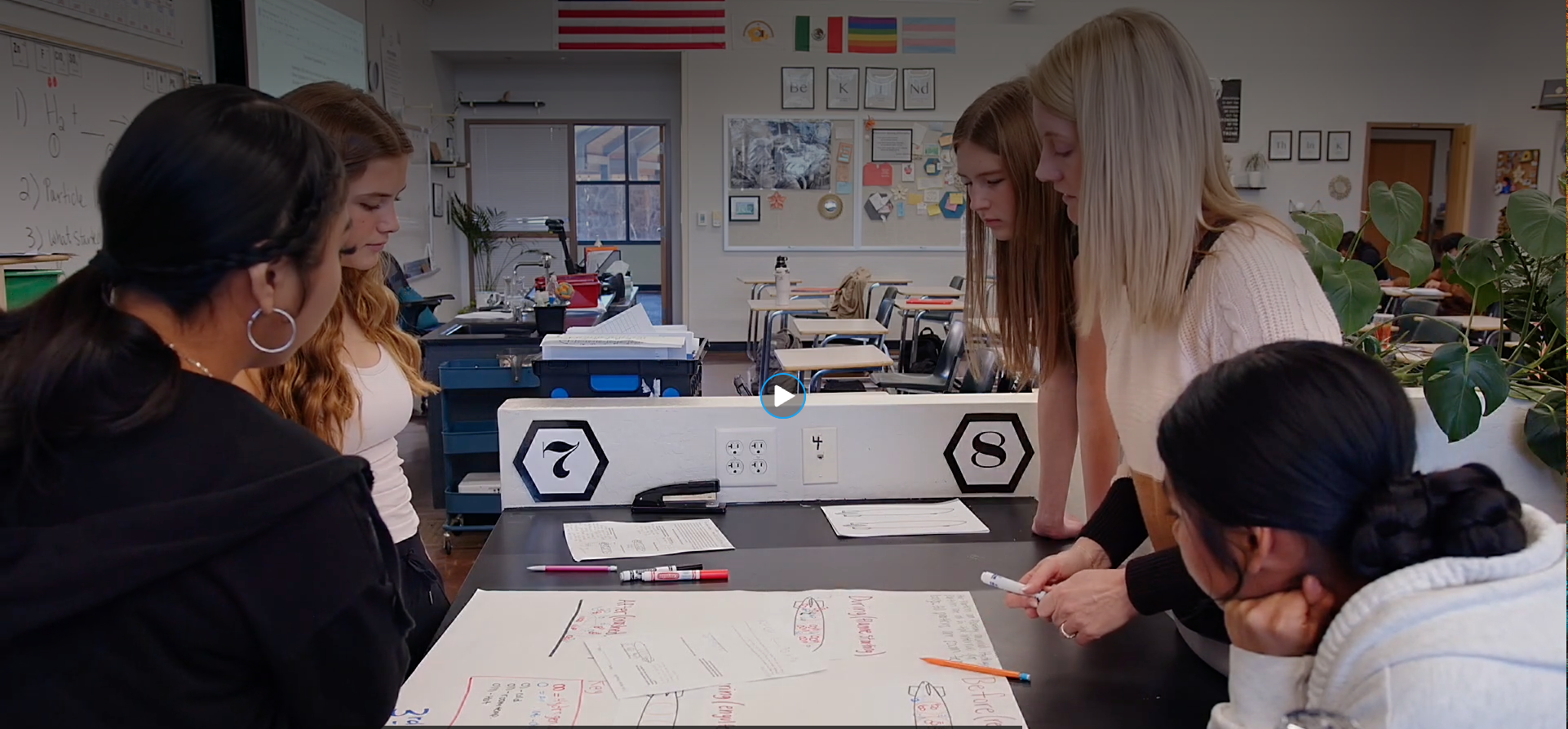
Flagstaff High School science teacher and NAU MAST graduate Jennifer Askew works with students using Model-Based Inquiry.
From an idea to a resource for thousands of educators
Today, MBI has moved well beyond the classrooms where the framework was first developed.
Through the Center for STEM Teaching and Learning at NAU, the team provides professional learning for K–12 teachers, instructional coaches, and district leaders. Workshops range from introductions to multi-day experiences in which educators examine student thinking, consider equity in science education, and develop MBI units for their own classrooms and communities.
During the past year, Gray and colleagues have shared MBI with teachers in Flagstaff Unified School District and Tuba City Unified School District, hundreds of educators attending the Arizona Science Teachers Association (ASTA) and National Science Teaching Association (NSTA) conferences, and science coordinators from districts across Texas through the Texas Science Education Leadership Association.
The digital reach is even broader.
So far this year, 4,000 educators from 72 countries have engaged with resources available through the MBI website.
The website was designed to make the framework practical. Educators can explore MBI’s five stages, use a complete unit-development template, and access example units and phenomena spanning grade levels and science disciplines.
The goal, Gray explains in describing the project, was never simply to tell teachers about MBI. The team wanted educators to leave with something they could actually use.
Putting classroom-ready MBI resources into teachers’ hands
That same goal led Gray and Campbell to partner with NSTA Press to create classroom-ready Model-Based Inquiry books.
Model-Based Inquiry in Biology and Model-Based Inquiry in Chemistry provide three-dimensional instructional units for grades 9–12. The NGSS-aligned units center instruction around phenomena ranging from the ecological effects of whale plumes to the chemistry of the Hindenburg disaster.
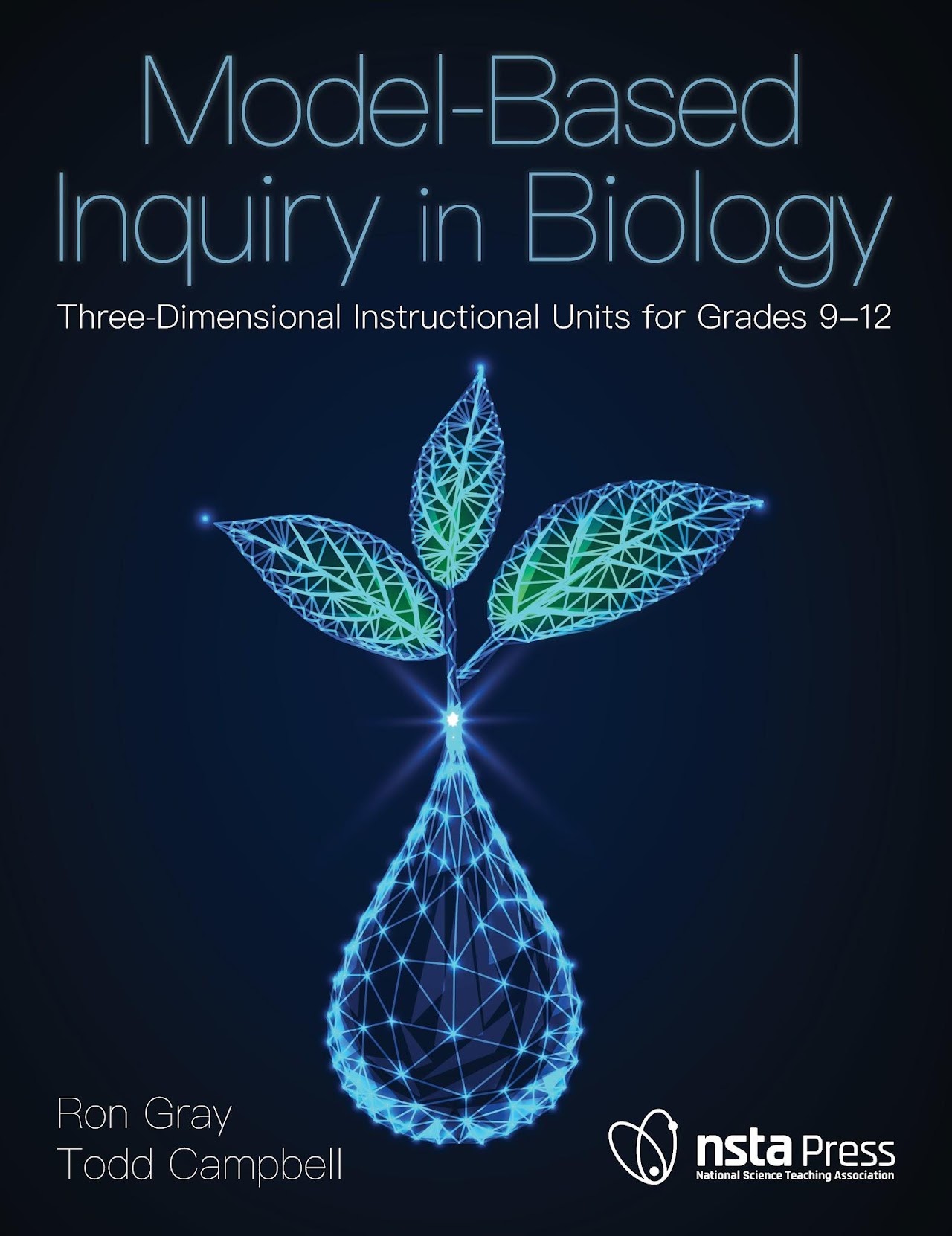
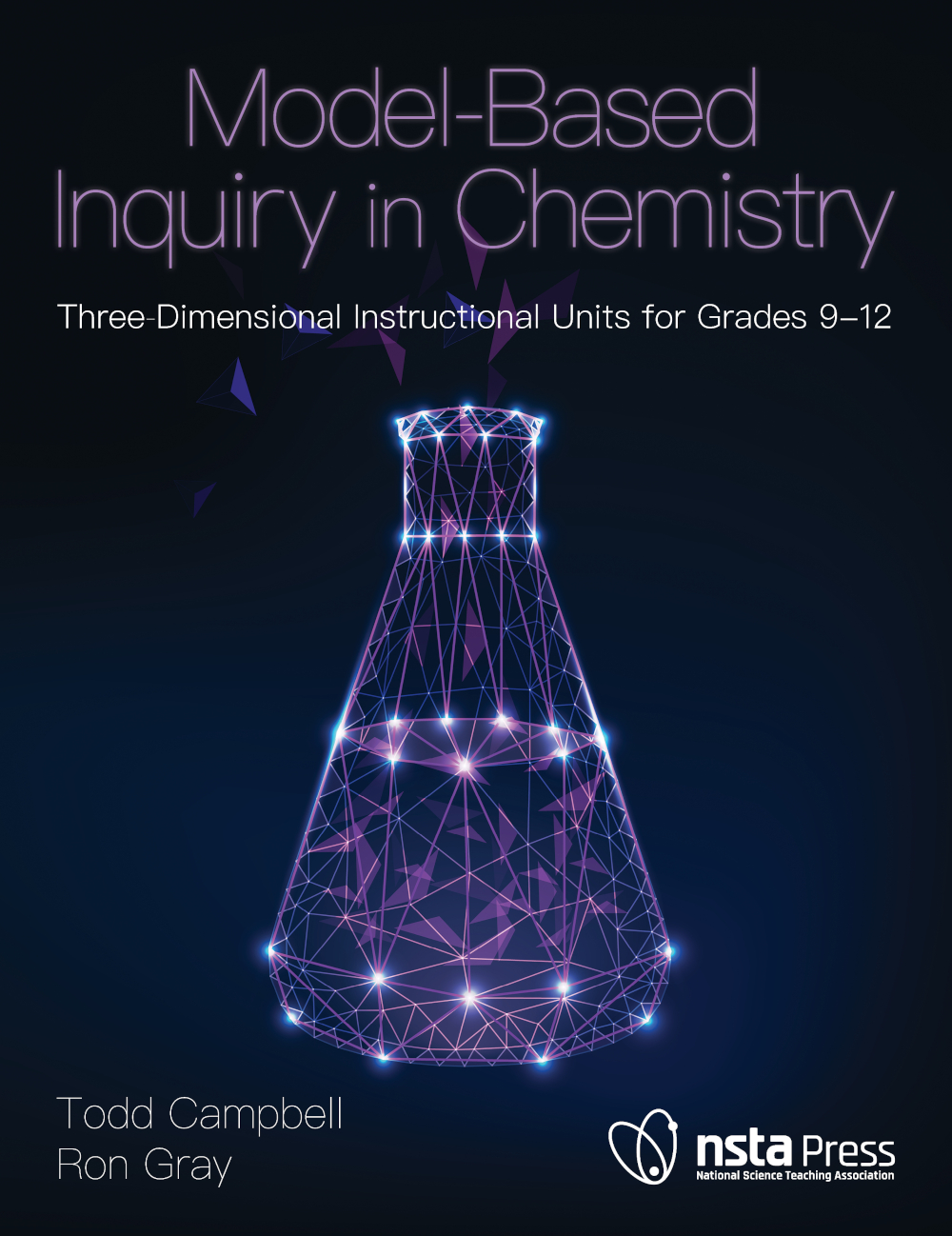
Model-Based Inquiry in Biology and Model-Based Inquiry in Chemistry, authored by Ron Gray and Todd Campbell and published by NSTA Press, provide classroom-ready instructional units for high school science educators.
For Gray, however, these aren’t simply books written for teachers.
They are built with teachers.
Classroom educators help design and test units with their students, providing feedback that helps ensure the materials work in actual science classrooms. Flagstaff High School teachers and NAU MAST graduates Jennifer Askew and Audrey Baird, for example, have piloted units and helped refine the framework.
How philanthropy helps research reach classrooms
That collaboration also illustrates how philanthropic support can extend the impact of faculty scholarship.
Gray holds the J. Lawrence Walkup Distinguished Professorship in the Department of STEM Education, an endowed position established through a foundational gift to the College of Education.
Support from the Walkup endowment allows the MBI team to compensate classroom teachers for the additional work involved in designing and testing units.
That investment matters. Teachers aren’t simply recipients of the finished resources; their classroom expertise helps shape them.
The result is a cycle connecting research, teacher preparation, practicing educators, and K–12 classrooms with what is learned in each setting informing the others.
What’s next for Model-Based Inquiry?
The work continues to grow.
A third book, Model-Based Inquiry in the Earth and Space Science Classroom, is scheduled for release this fall, and a physics volume is also in development.
Gray and colleagues will also continue sharing MBI with educators through the ASTA and NSTA conferences this year.
Meanwhile, MBI continues to come back to where much of the work began: teacher preparation at NAU. Undergraduate and graduate students in STEM Education use the framework as they learn to design science instruction of their own.
That means a framework developed in response to the needs of future teachers at NAU is now traveling a much larger circle; from NAU to classrooms and educators around the world, and back to the next generation of teachers preparing to enter the profession.
Interested in bringing Model-Based Inquiry into your classroom or district? Explore the MBI resources and professional learning opportunities available to educators and education leaders.
Professional Learning Opportunities