Contact the Department of Anthropology
Minors in Anthropology
Explore cross-disciplinary connections
Enhance your degree with from the Department of Anthropology. Learn more about our various minors here.
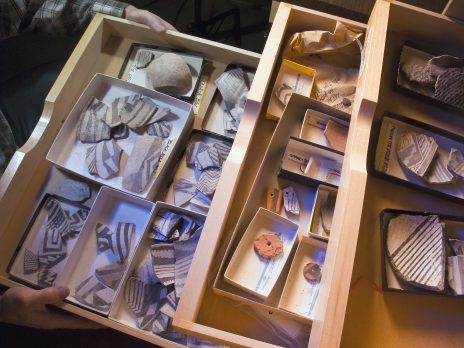
Why an Applied Archaeology Minor?
- Gain hands-on field, lab, and curatorial experience
- Learn how archaeology is practiced in professional settings
- Develop skills employers and graduate programs value
- Work with real materials, data, and archaeological methods
Perfect for Students Interested in:
ARCHAEOLOGY — CULTURAL RESOURCE MANAGEMENT — HERITAGE PRESERVATION — MUSEUMS — HISTORY
Learn more about the requirements, career paths, and other details of the Applied Archaeology Minor.
The Applied Archaeology Minor pairs well with our Bachelor of Science in Anthropology.
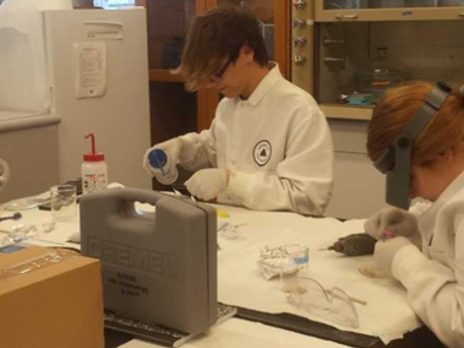
Why a Biological Anthropology Minor?
- Explore human evolution, variation, and behavior
- Develop scientific reasoning and research skills
- Gain hands-on experience in laboratory and field methods
- Apply biological anthropology to real-world questions
Perfect for Students Interested in:
HUMAN EVOLUTION — PRIMATOLOGY — BIOMEDICAL SCIENCES — HUMAN BIOLOGY — PRE-HEALTH
The Biological Anthropology Minor pairs well with our Bachelor of Science in Anthropology.

Why an Environmental Anthropology Minor?
- Understand human-environment relationships across time and cultures
- Explore the sociopolitical dimensions of environmental issues
- Connect anthropology with environmental and sustainability fields
- Evaluate and develop effective responses to real-world environmental challenges
Perfect for Students Interested in:
SUSTAINABILITY — ENVIRONMENTAL POLICY — CLIMATE CHANGE — CONSERVATION — WATER & LAND MANAGEMENT — COMMUNITY DEVELOPMENT
The Environmental Anthropology Minor pairs well with our Bachelor of Science in Anthropology.
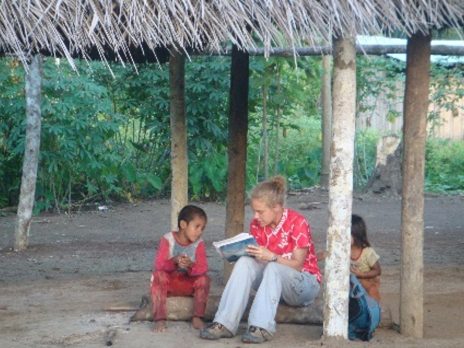
Why a Medical Anthropology Minor?
- Learn how culture shapes health, illness, and healing
- Explore global and local health challenges
- Build research and critical thinking skills
- Strengthen cultural competence for healthcare and helping professions
Perfect for students interested in:
PUBLIC HEALTH — NURSING — SOCIAL WORK — HEALTH SCIENCES — PSYCHOLOGY — BIOLOGY — MEDICINE
Learn more about the requirements, career paths, and other details of the Medical Anthropology Minor.
The Medical Anthropology Minor pairs well with our Bachelor of Science in Anthropology.
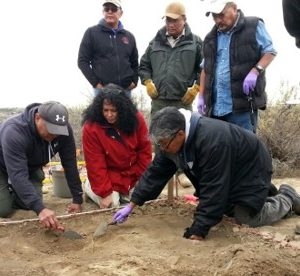
Why a Social Science Forensics Minor?
- Learn how anthropology contributes to forensics and criminal investigative work
- Gain hands-on field, lab, and curatorial experience
- Develop skills employers and graduate programs value
- Work with real materials, data, and archaeological methods
Perfect for students interested in:
LAW ENFORCEMENT — CRIME SCENE INVESTIGATION — MEDICAL EXAMINER — FORENSICS — CORONER’S OFFICES — EMERGENCY RESPONSE
The Social Science Forensics Minor pairs well with our Bachelor of Science in Anthropology.
Why an Anthropology Minor?
- Explore human diversity across cultures and time
- Develop a broader, cross-cultural perspective
- Connect anthropology with your major and interests
- Understand and thrive in an interconnected world
Perfect for students interested in:
ANTHROPOLOGY — PEOPLE & CULTURES — GLOBAL ISSUES — HUMAN DIVERSITY — CROSS-CULTURAL PERSPECTIVES
Learn more about the requirements, career paths, and other details of the Anthropology Minor.
The Anthropology Minor pairs well with myriad majors across the university, but is not available for students enrolled in the B.S. in Anthropology.