Sisk Fellowship Cultivates Future Conservation Leaders
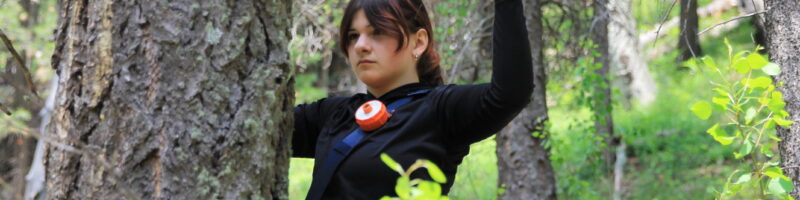
Growing up in Phoenix, Alexia “Lexi” Markoutsis didn’t have a forest in her backyard. In fact, that may be part of the reason she became so fascinated by them. “I was always so jealous of people who lived close to natural reserves or forests,” Lexi said. “Ever since I was little, I’ve always been the most drawn to forests and trees.”
Trips north to Flagstaff offered a glimpse into a landscape very different from the suburban environment she knew growing up. She remembers being captivated by the trees—so much so that, on one visit, she was nearly brought to tears.
That early curiosity eventually brought Lexi to Northern Arizona University, where she earned her bachelor’s degree in Environmental Science in just three years. Now, she is completing a master’s degree in Environmental Science and Policy through NAU’s School of Earth and Sustainability and has been selected as the second Sisk Fellow.
Finding her place in the forest
Lexi’s path within environmental science wasn’t always obvious. The field offered seemingly endless directions—from climate and geology to fisheries and atmospheric science—but she kept finding herself drawn back to forests.
As an undergraduate, she spent two years working on research related to Emory oak and later gained additional forestry research experience with NAU’s Ecological Restoration Institute. Together, those experiences helped her discover an interest in wildfire, conservation, biodiversity, forest ecology and the ways land management decisions shape the future of forests.
Today, that interest is at the center of her master’s research in NAU’s Lab of Conservation Ecology.
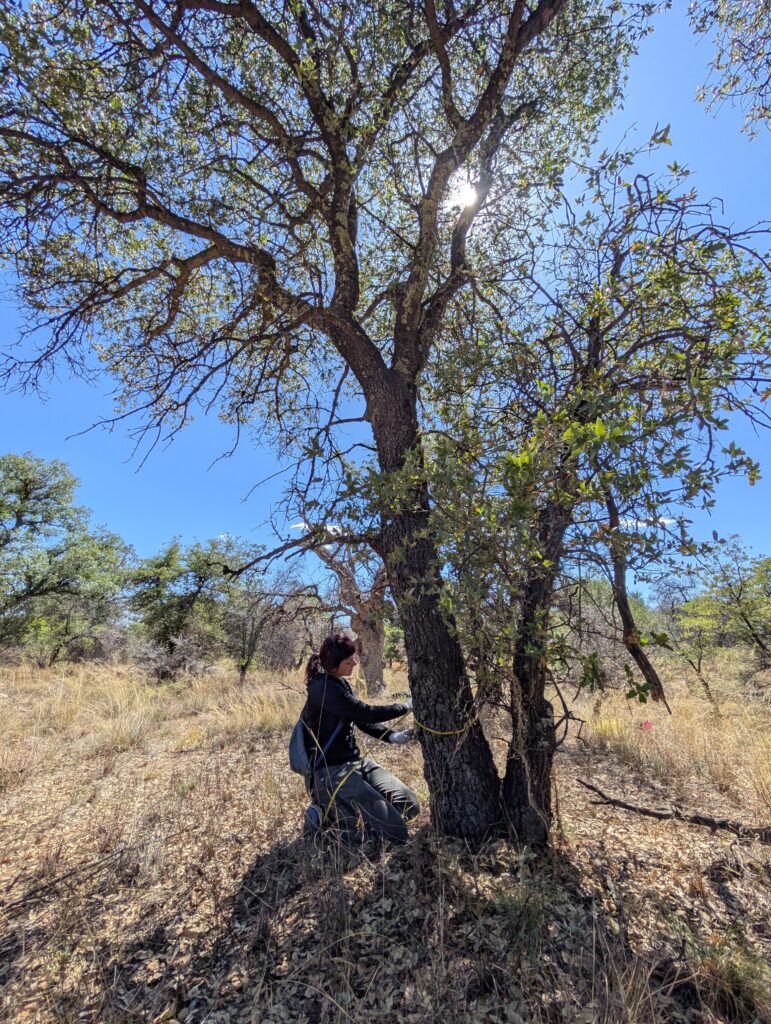
Lexi studies Emory oak, a culturally important tree species found throughout the Madrean oak woodlands of Arizona and Mexico. The species’ habitat overlaps with the ancestral homelands of Western Apache people, adding another important dimension to understanding its long-term health and resilience. Her research examines how fire and a fungal pathogen called Biscogniauxia affect Emory oak in southern Arizona.
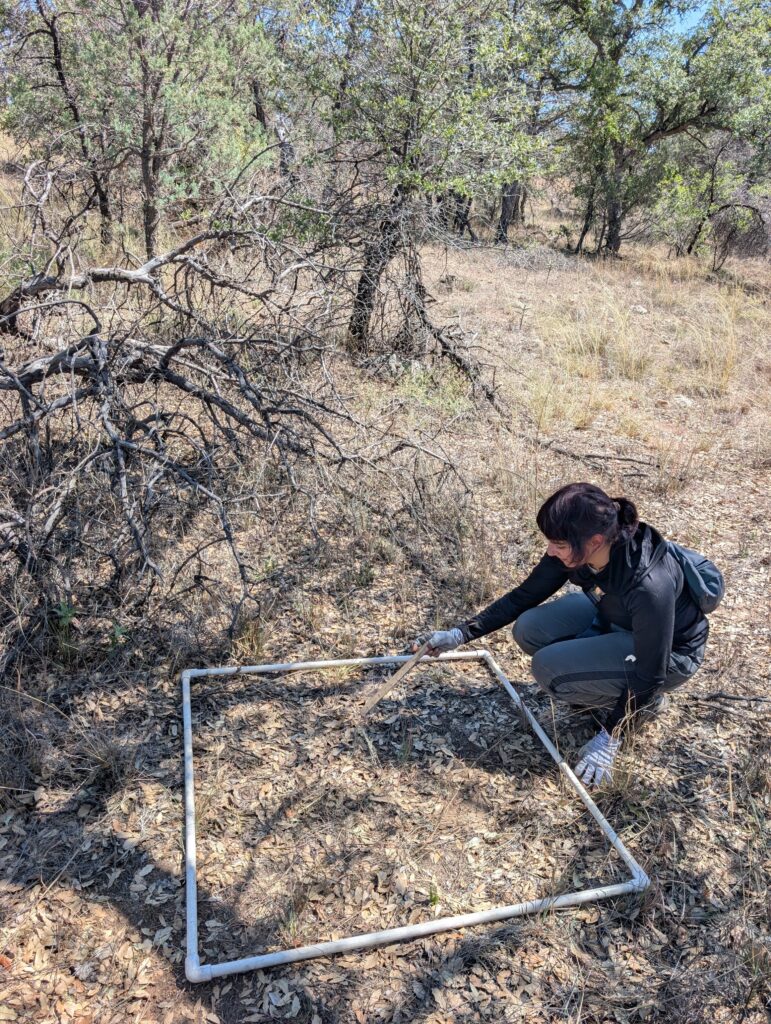
A prescribed burn conducted by the U.S. Forest Service in March 2026 created an opportunity for Lexi to study the forest before and after fire. She established plots before the burn, returned afterward to remeasure them and established control plots in a nearby area that had not experienced fire or active management in roughly a century. Now, she is analyzing the data to better understand relationships among fire, forest structure, tree growth, reproduction and disease. A cornerstone of the Sisk Fellowship is partnering fellows with these agencies to build confidence, foster career connections, and ensure their work will have real-world impact.
For Lexi, the research is ultimately about a much larger question: How do we help forests remain resilient in a changing environment?
“The climate isn’t the same as it used to be,” she said. “I feel like understanding how to manage forests in the wake of environmental change is the big thing that is driving me.”
Emory oak provides habitat and important ecosystem structure throughout the landscapes where it occurs. Understanding how fire, drought, disease and forest management interact could help inform future conservation of the species and the ecosystems and communities connected to it.
Becoming the second Sisk Fellow
Lexi first learned about the Sisk Fellowship through its inaugural recipient, Shawna Woody, who worked alongside her in the Lab of Conservation Ecology. When the opportunity came for Lexi to apply, she pursued it—and became the second student selected for the fellowship.
Established through philanthropy, the Sisk Fellowship supports graduate students pursuing applied conservation science while creating opportunities for students from different backgrounds and perspectives to contribute to the field. The Fellowship was created through a $250,000 fundraising effort, the fellowship honors Dr. Thomas Sisk, a conservation biologist and the first professor of the Olajos-Goslow Chair at NAU. A cornerstone of the fellowship is connecting fellows with agency and community partners, helping them build confidence, develop professional relationships and ensure their research has real-world impact.
“Lexi represents the kind of conservation scientist we hope to develop at NAU—someone who is curious, collaborative and committed to connecting rigorous science with the needs of the landscapes and communities we serve,” said Dr. Clare Aslan, director of the School of Earth and Sustainability. “Opportunities like the Sisk Fellowship give emerging scientists the support and partnerships they need to turn their research into meaningful conservation outcomes.”
For Lexi, receiving that support during the final year of her master’s program comes at an important point as she completes her research and prepares for what comes next.
“The support this fellowship has given me…is going to help me move into the next step of my career,” she said. “It’s definitely going to help me navigate through the chaos of finishing up my master’s degree and starting the next steps in my career.”
Looking toward what’s next
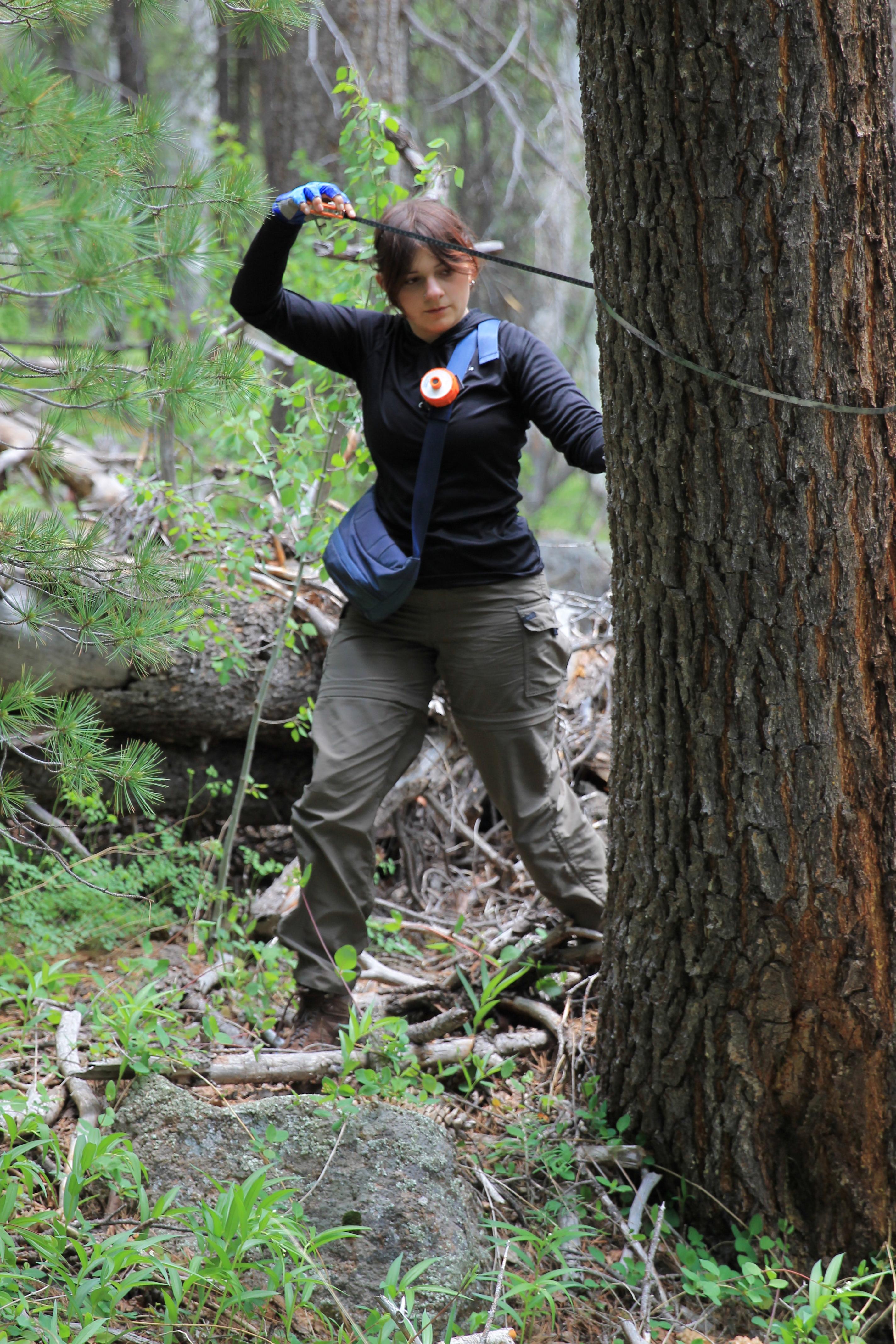
Lexi will graduate in spring 2027, completing both her bachelor’s and master’s degrees at NAU in just five years. Beyond her research, she stays connected to the Flagstaff community through her small jewelry business downtown and involvement in local community theater.
Looking ahead, Lexi is considering pursuing a Ph.D. and hopes to continue building a career at the intersection of forest ecology, management and wildfire. Whether through research or agency work, she is eager to contribute to the future of forest conservation.
As she considers her future, Lexi remains committed to embracing new ideas, perspectives and approaches to conservation.
“I don’t want to be held back by the way that things used to be,” Lexi said. “I just want to always be working toward a better future for people, for the ecosystem and for the planet.”
Tackling complex conservation challenges requires looking beyond any single discipline. Lexi’s time at NAU has shown her the power of bringing together different perspectives, ideas, and expertise to address environmental challenges. For a student who once gazed longingly toward the forests from the suburbs of Phoenix, the Sisk Fellowship has helped turn that curiosity into meaningful research experience, opening doors to new opportunities and bringing her one step closer to a career dedicated to protecting the landscapes that first inspired her.