Curiosity, community and discovery at Hat Ranch
For four weeks this summer, a group of NAU students traded the traditional classroom for something very different: Hat Ranch.
As part of CEFNS 240 – Hat Ranch Field Course, undergraduate students lived, learned and conducted research at the historic property, exploring questions in ecology, geology, forestry, astronomy, entomology and environmental science. Led by School of Forestry faculty Kelsey Bryant and Derek Uhey alongside graduate teaching fellows Keven Griffen, Luke Ritter and Justin Crevier, students experienced firsthand what it means to turn curiosity into scientific discovery.
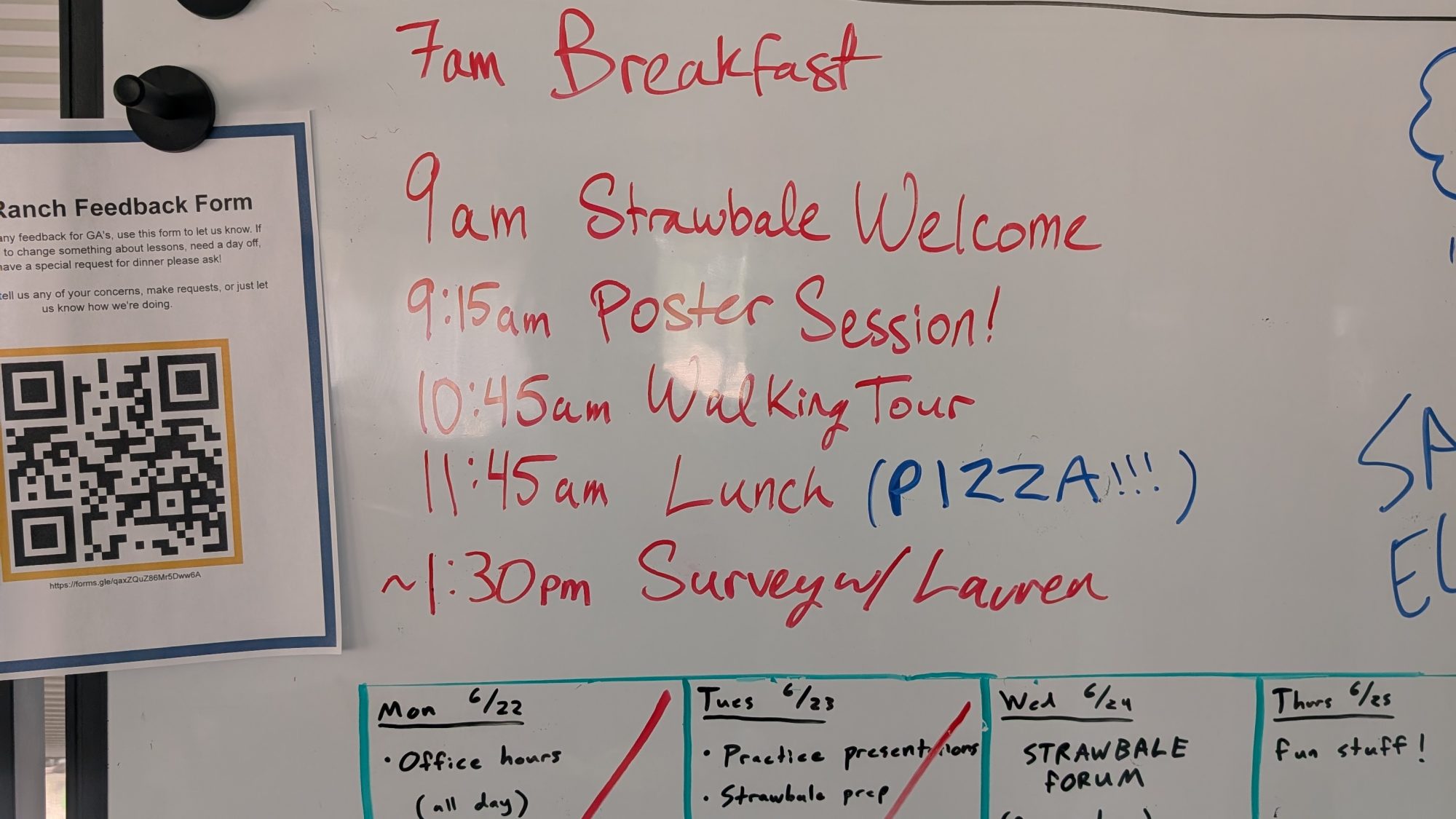
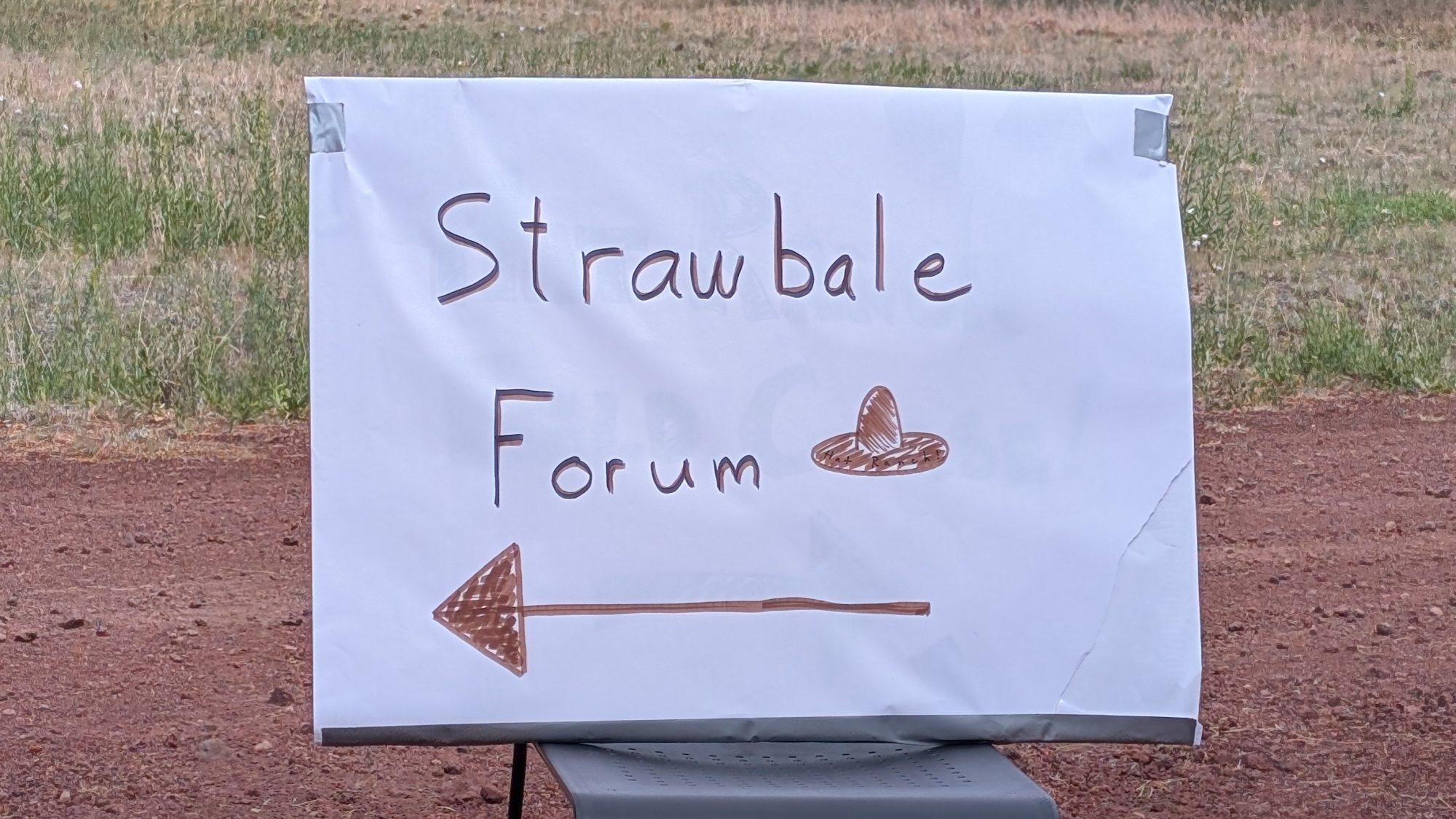
Their four-week experience culminated in the 2026 Straw Bale Forum, where students shared their research with faculty, alumni, friends and members of the NAU community.
A living laboratory for student discovery
At Hat Ranch, research starts with the landscape.
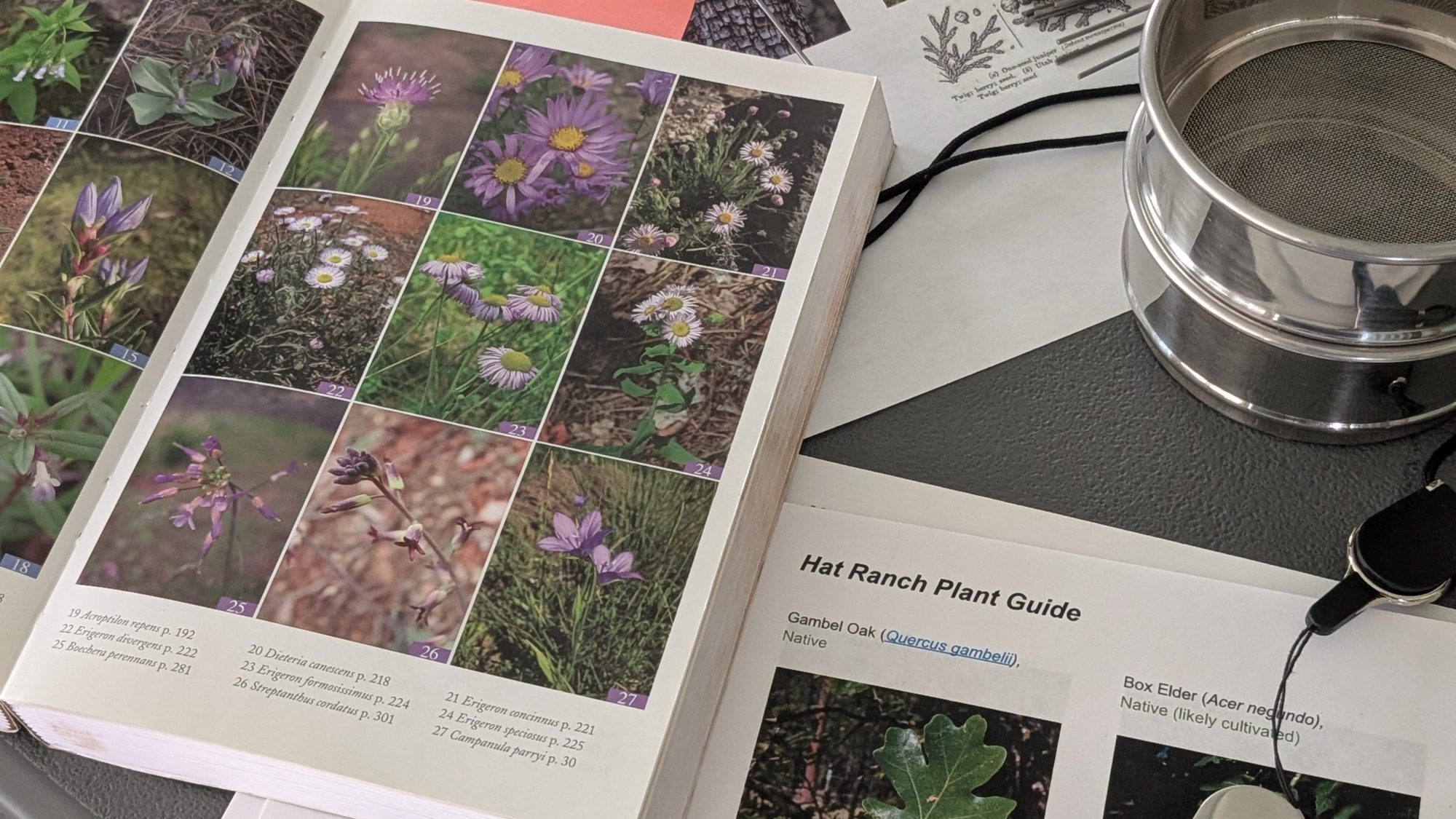
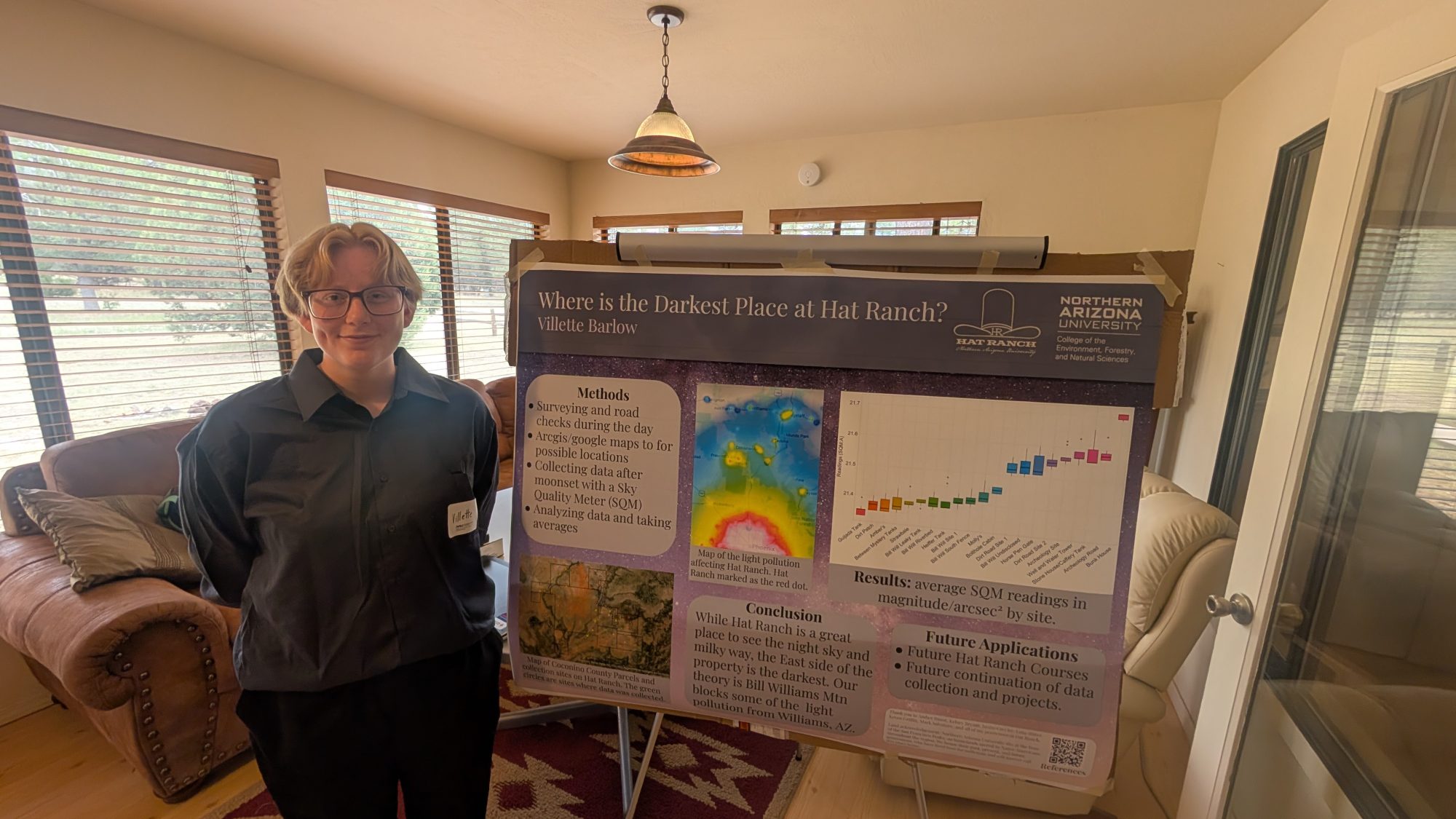
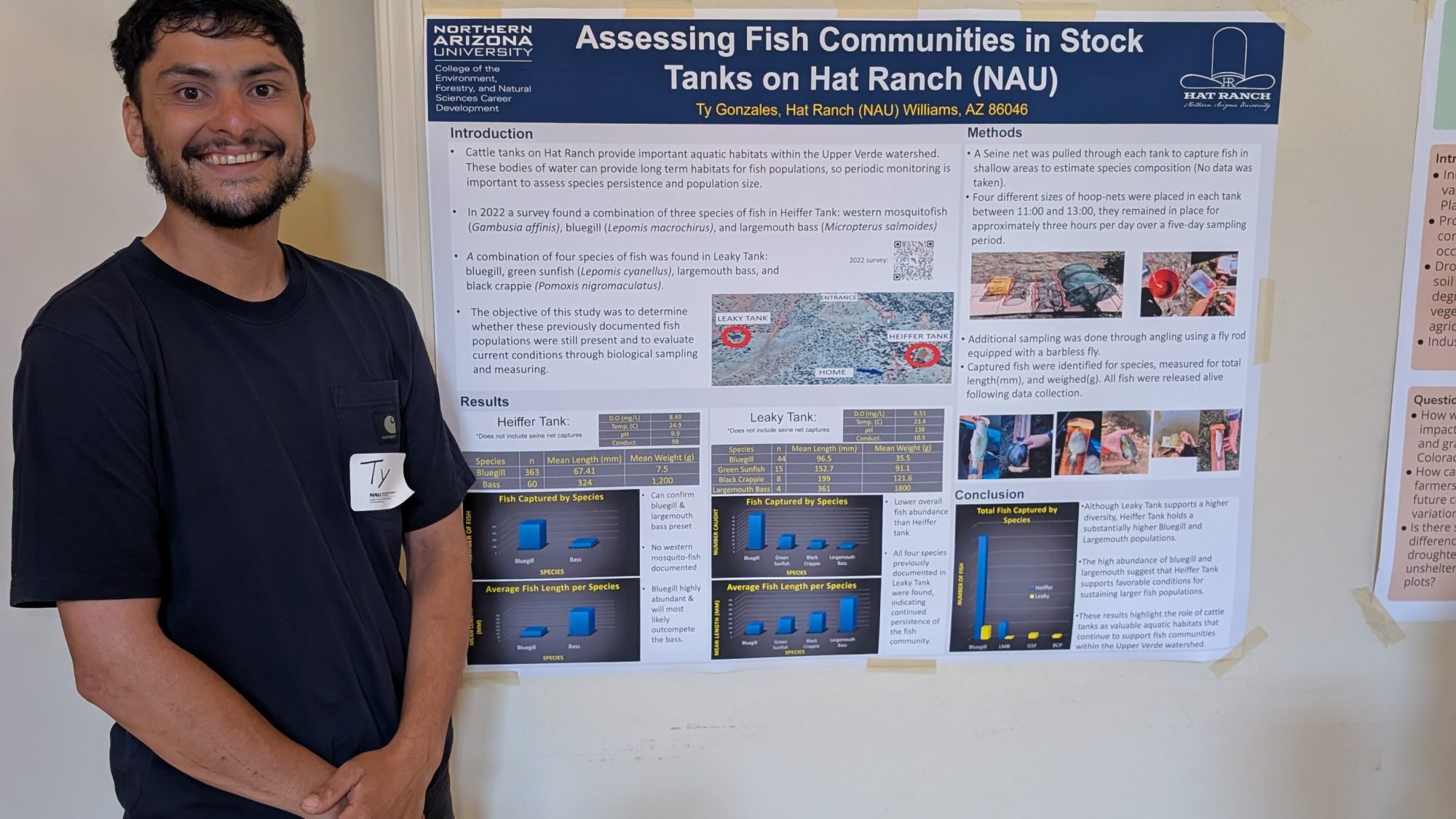
Throughout the course, students investigated questions inspired by the environment around them: How dark are the skies at Hat Ranch? How do Forest Service roads affect nearby plant communities? How does access to water influence bird populations? What happens to soil health during drought? What can moth populations tell us about the ecosystem?
Answering those questions meant experiencing the realities of field research—collecting data at sunrise, making observations after dark, adjusting methods when things didn’t go as planned and spending hours learning to see the landscape in new ways.
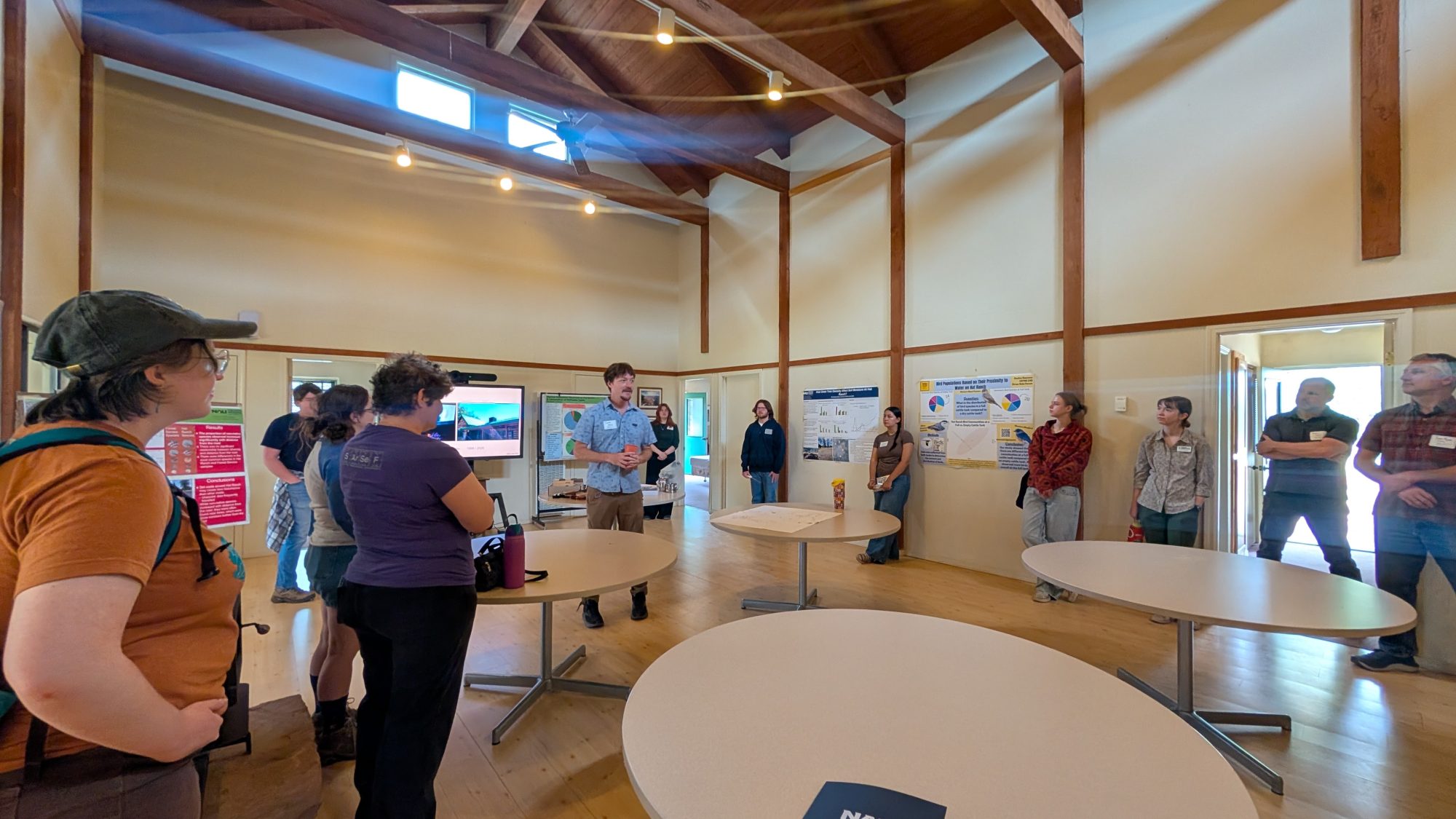
At the Straw Bale Forum, that work came together as students stood beside their research posters and shared not only what they discovered, but how they discovered it.
And many were already thinking about what they would do differently—or what they wanted to investigate next.
“If we had just a few more weeks…”
“I would have tried a different method…”
“I’d love to explore this question further…”
Those comments capture something important about the Hat Ranch experience. Students don’t simply learn how research works. They leave with new questions they want to answer.
More than a research experience
The Straw Bale Forum has deep roots at Hat Ranch.
Conservationist and philanthropist Bazy Tankersley began the gathering more than three decades ago as a way to bring curious people together to discuss the environment and issues affecting Arizona. Over time, the Forum grew to include experts from universities, research institutes, nonprofit organizations and government agencies who gathered to exchange ideas and explore challenges facing Arizona and the Southwest.
Today, that spirit of curiosity and discovery continues—with students at the center of it.
As the 2026 poster session wrapped up, conversations moved from research findings to the experiences students had shared along the way: adventures at the Grand Canyon, memorable morning lectures, time with faculty mentors, evenings around the campfire, encounters with the ranch’s cats and dogs, and friendships built over four weeks of living and learning together.
Those moments are part of the learning, too.
Students come to Hat Ranch to study science, but they also gain confidence as researchers, learn what it means to live and work as part of a community, and develop a deeper connection to the landscapes they study.
Learning science by doing science
Experiences like CEFNS 240 offer students something that is difficult to replicate inside a traditional classroom: the opportunity to learn science by doing science.
At Hat Ranch, students can ask a question, walk outside and begin investigating it. They work alongside faculty and graduate mentors, learn to navigate the unexpected challenges of field research and discover how different scientific disciplines can come together to better understand the natural world.
It’s the kind of place-based, experiential learning at the heart of NAU’s vision as a Field School of the West—and preparation for students who may become the next generation of scientists, educators and environmental professionals.
The 2026 Straw Bale Forum ended with a tour of the ranch, a shared meal and a few spirited games of cornhole. But for the students who spent four weeks learning, researching and building community at Hat Ranch, the questions—and the experience—will continue long after summer ends.
Explore the students’ research
See CEFNS 240 through the students’ eyes
Interested in supporting field-based learning at Hat Ranch and creating more opportunities like CEFNS 240 for NAU students? Contact Jill Stillwagon at jill.stillwagon@nau.edu.