Instructional Leadership, emphasis: K-12 School Leadership (MEd)

Where Literacy Comes to Life: NAU’s Literacy Lounge Connects Future Teachers and Young Learners


Through a collaboration between NAU’s Early Learning and Development Center and ECI 402, preservice teachers are turning literacy coursework into meaningful experiences with young children.

On Monday afternoons at Northern Arizona University’s College of Education, a university learning space becomes something more: a place where future teachers and preschool children discover literacy together.

Preservice teachers sit on the floor sharing books with young learners. Children experiment with letters, explore sounds and words, and build stories through play. Around the room, conversations, read-alouds, and hands-on activities create opportunities for learning.

These experiences are part of a collaboration between the College of Education’s Early Learning and Development Center (ELDC) and ECI 402, a primary literacy methods course.

Each week, children from the ELDC PreK classroom visit the Literacy Lounge/Lab, where preservice teachers have opportunities to apply what they are learning about early literacy development and instruction.

The result is a learning experience that benefits both groups: young children encounter engaging literacy opportunities, while future teachers begin translating educational theory into thoughtful instructional practice.
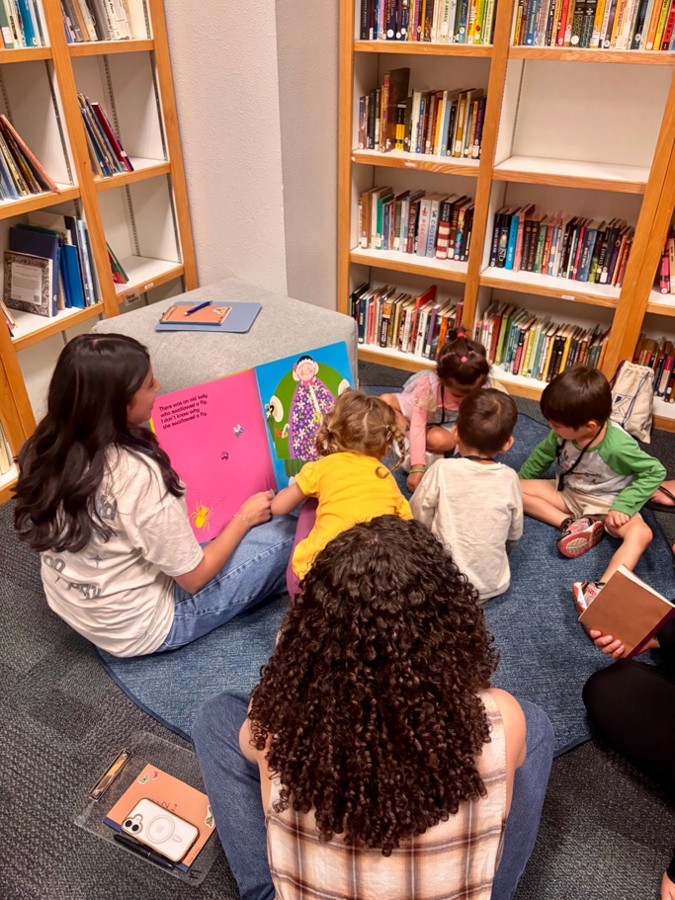
Preservice teachers and young children sit together on the floor in front of bookshelves, sharing a colorful book during a literacy activity.

Preservice teachers and children from NAU’s Early Learning and Development Center explore books together in the Literacy Lounge/Lab.

Reimagining a space for literacy learning

The Literacy Lounge/Lab began with a vision shared by College of Education literacy faculty and instructors Stephanie Branson, Tina Chaseley, and Bobby Macias.

They saw an opportunity to transform an existing, unused space into a resource where literacy learning could extend beyond traditional university coursework.

With transformative support from the Peck Family and the Peck Family Foundation, that vision became a flexible learning environment filled with children’s and young adult literature, instructional resources, Science of Reading materials, and hands-on literacy manipulatives.

The space was designed to serve more than one course or program.

Today, faculty, instructors, and students across the College of Education use it to explore instructional approaches, prepare for field experiences, examine literature, and collaborate on literacy education.

Students in ECI 403, for example, can use class sets of young adult novels for book clubs. Others select books for classroom read-alouds or explore materials that demonstrate how foundational literacy skills can be taught.

The space also supports interdisciplinary learning.

During the summer, the Literacy Lounge/Lab hosted a pilot of Heather Caska’s Reading Between the Pines program, bringing together preservice teachers and master’s students in Communication Sciences and Disorders to provide systematic, explicit literacy instruction to children from a local school partner.
# Where Literacy Comes to Life: NAU's Literacy Lounge Connects Future Teachers and Young Learners

**Through a collaboration between NAU's Early Learning and Development Center and ECI 402, preservice teachers are turning literacy coursework into meaningful experiences with young children.**

On Monday afternoons at Northern Arizona University's College of Education, a university learning space becomes something more: a place where future teachers and preschool children discover literacy together.

Preservice teachers sit on the floor sharing books with young learners. Children experiment with letters, explore sounds and words, and build stories through play. Around the room, conversations, read-alouds, and hands-on activities create opportunities for learning.

These experiences are part of a collaboration between the College of Education's **Early Learning and Development Center (ELDC)** and **ECI 402, a primary literacy methods course**.

Each week, children from the ELDC PreK classroom visit the **Literacy Lounge/Lab**, where preservice teachers have opportunities to apply what they are learning about early literacy development and instruction.

The result is a learning experience that benefits both groups: young children encounter engaging literacy opportunities, while future teachers begin translating educational theory into thoughtful instructional practice.

*[Hero image: Preservice teachers and children participating in a literacy activity in the Literacy Lounge/Lab.]*

## Reimagining a space for literacy learning

The Literacy Lounge/Lab began with a vision shared by College of Education literacy faculty and instructors **Stephanie Branson, Tina Chaseley, and Bobby Macias**.

They saw an opportunity to transform an existing, unused space into a resource where literacy learning could extend beyond traditional university coursework.

With transformative support from **the Peck Family and the Peck Family Foundation**, that vision became a flexible learning environment filled with children's and young adult literature, instructional resources, Science of Reading materials, and hands-on literacy manipulatives.

The space was designed to serve more than one course or program.

Today, faculty, instructors, and students across the College of Education use it to explore instructional approaches, prepare for field experiences, examine literature, and collaborate on literacy education.

Students in ECI 403, for example, can use class sets of young adult novels for book clubs. Others select books for classroom read-alouds or explore materials that demonstrate how foundational literacy skills can be taught.

The space also supports interdisciplinary learning.

During the summer, the Literacy Lounge/Lab hosted a pilot of **Heather Caska's Reading Between the Pines program**, bringing together preservice teachers and master's students in Communication Sciences and Disorders to provide systematic, explicit literacy instruction to children from a local school partner.

The pilot offered NAU students opportunities to learn across disciplines while providing focused literacy support for children. Plans are underway to expand the partnership in future summers.

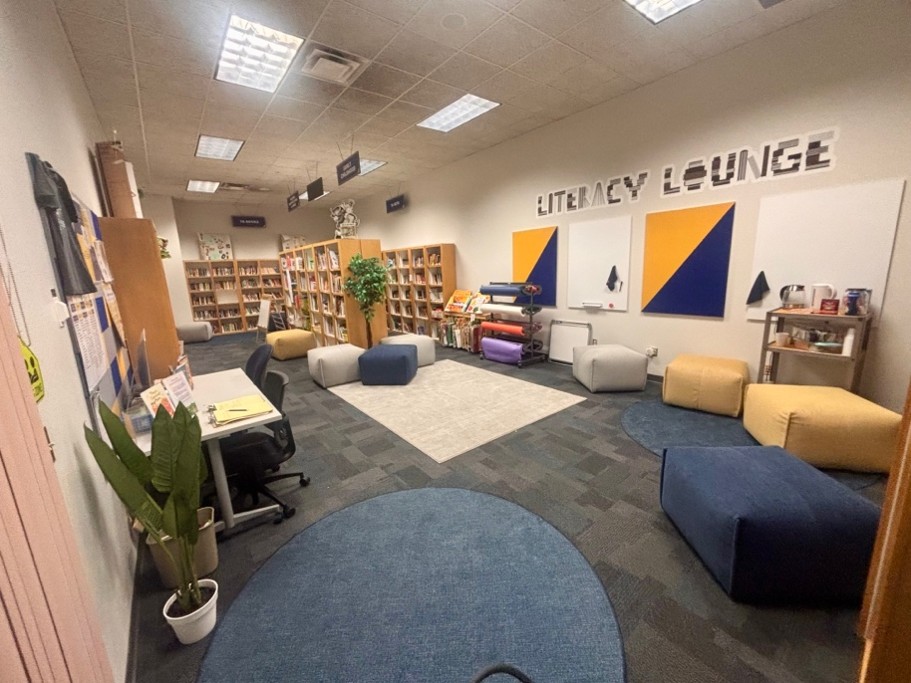
*[Supporting image: Wide view of the Literacy Lounge/Lab showing bookshelves, flexible seating, and learning resources.]*

## Connecting coursework with real children and real decisions

The weekly partnership between ECI 402 and the ELDC grew from conversations among **Jolene Chavez**, an ELDC teacher; **Tori Damjanovic**, chair of Teaching and Learning; and **Stephanie Branson**, a literacy faculty member.

They recognized an opportunity to bring together two complementary needs: a learning space equipped for literacy exploration and preservice teachers seeking meaningful experiences with children.

Working alongside **Rebecca Cirzan, director of the ELDC**, and ELDC staff, the partners developed Monday experiences that invite children and future teachers to learn together.

Activities include interactive read-alouds, oral language experiences, phonological and phonemic awareness, alphabet knowledge, dramatic play, and open-ended exploration.

But the goal is not simply to give future teachers a collection of activities they can repeat.

Instead, the collaboration helps them understand how literacy develops through language, play, relationships, books, and intentional instruction.

Consider a dramatic play center. What appears to be imaginative play can also create opportunities for children to develop vocabulary, tell stories, negotiate roles, and encounter written language in meaningful contexts.

A child exploring letters might begin by spelling their name, noticing similarities between words, or asking questions about sounds.

During a read-aloud, a child might make a personal connection, introduce a new idea, or change the direction of the conversation.

For preservice teachers, these moments require observation, reflection, and responsive decision-making.

When should a teacher model a skill? When is it better to ask a question? How can an activity be adjusted to meet a child's interests and developmental needs?

These are the decisions teachers make every day. In the Literacy Lounge/Lab, students have opportunities to practice making them while working directly with children.
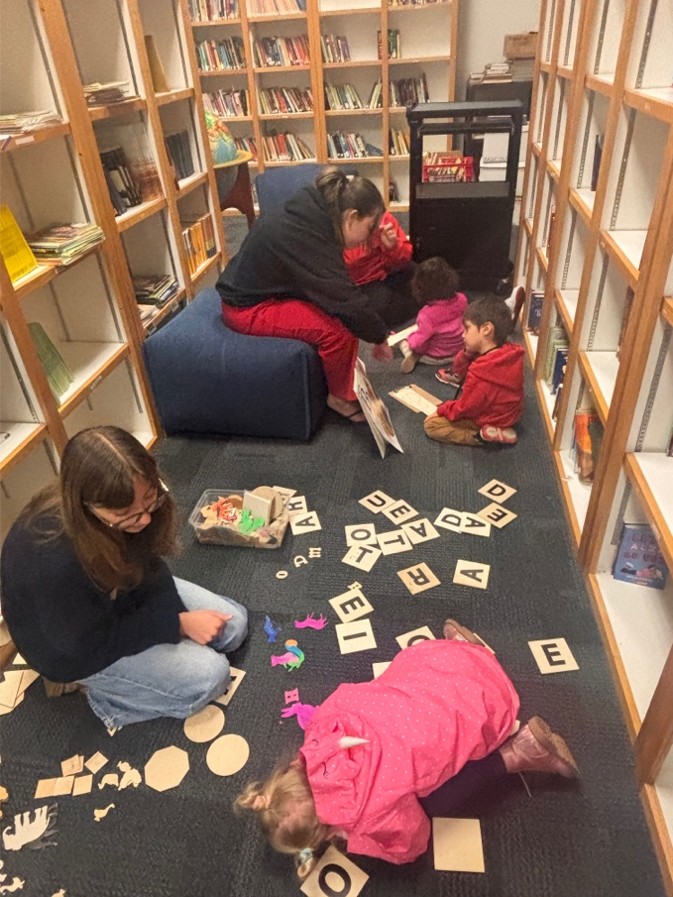
*[Supporting image: Preservice teachers and preschool children participating in small-group literacy activities.]*

## A shared learning experience with lasting possibilities

The Literacy Lounge/Lab demonstrates how an intentionally designed university space can support multiple forms of learning.

For ELDC children, Monday afternoons offer opportunities to explore books, develop language, experiment with letters, build relationships, and learn through play.

For ECI 402 students, the same experiences provide opportunities to observe early literacy development, practice instructional strategies, and reflect on their emerging teaching skills.

For faculty and instructors, the space supports collaboration, demonstrations, and the continued development of literacy teaching approaches.

And for the College of Education, the initiative illustrates the value of connecting academic preparation with authentic learning experiences.

The Peck Family's investment has helped make these connections possible by supporting a space where instructional resources are not simply collected but actively used to support learning.

As the Literacy Lounge/Lab continues to evolve, its partnerships and possibilities continue to grow.

Through the ELDC collaboration, literacy methods coursework, interdisciplinary summer experiences, and future initiatives, NAU is helping prepare educators who have opportunities not only to study effective literacy teaching but also to experience it firsthand.

**Learn more about the Northern Arizona University College of Education and its commitment to preparing educators through meaningful, practice-based learning experiences.**

With support from the Peck Family and the Peck Family Foundation, the Literacy Lounge/Lab provides a flexible environment for literacy coursework, collaboration, and hands-on learning.

The pilot offered NAU students opportunities to learn across disciplines while providing focused literacy support for children. Plans are underway to expand the partnership in future summers.

Connecting coursework with real children and real decisions

The weekly partnership between ECI 402 and the ELDC grew from conversations among Jolene Chavez, an ELDC teacher; Tori Damjanovic, chair of Teaching and Learning; and Stephanie Branson, a literacy faculty member.

They recognized an opportunity to bring together two complementary needs: a learning space equipped for literacy exploration and preservice teachers seeking meaningful experiences with children.

Working alongside Rebecca Cirzan, director of the ELDC, and ELDC staff, the partners developed Monday experiences that invite children and future teachers to learn together.

Activities include interactive read-alouds, oral language experiences, phonological and phonemic awareness, alphabet knowledge, dramatic play, and open-ended exploration.

But the goal is not simply to give future teachers a collection of activities they can repeat.

Instead, the collaboration helps them understand how literacy develops through language, play, relationships, books, and intentional instruction.

Consider a dramatic play center. What appears to be imaginative play can also create opportunities for children to develop vocabulary, tell stories, negotiate roles, and encounter written language in meaningful contexts.

A child exploring letters might begin by spelling their name, noticing similarities between words, or asking questions about sounds.

During a read-aloud, a child might make a personal connection, introduce a new idea, or change the direction of the conversation.

For preservice teachers, these moments require observation, reflection, and responsive decision-making.

When should a teacher model a skill? When is it better to ask a question? How can an activity be adjusted to meet a child’s interests and developmental needs?

These are the decisions teachers make every day. In the Literacy Lounge/Lab, students have opportunities to practice making them while working directly with children.

Young children and adults gather on the floor in a book-lined learning area, exploring alphabet tiles and other literacy materials.

Children explore letters and hands-on learning materials alongside future educators.

A shared learning experience with lasting possibilities

The Literacy Lounge/Lab demonstrates how an intentionally designed university space can support multiple forms of learning.

For ELDC children, Monday afternoons offer opportunities to explore books, develop language, experiment with letters, build relationships, and learn through play.

For ECI 402 students, the same experiences provide opportunities to observe early literacy development, practice instructional strategies, and reflect on their emerging teaching skills.

For faculty and instructors, the space supports collaboration, demonstrations, and the continued development of literacy teaching approaches.

And for the College of Education, the initiative illustrates the value of connecting academic preparation with authentic learning experiences.

The Peck Family’s investment has helped make these connections possible by supporting a space where instructional resources are not simply collected but actively used to support learning.

As the Literacy Lounge continues to evolve, its partnerships and possibilities continue to grow.

Through the ELDC collaboration, literacy methods coursework, interdisciplinary summer experiences, and future initiatives, NAU is helping prepare educators who have opportunities not only to study effective literacy teaching but also to experience it firsthand.

Learn more about the Northern Arizona University College of Education and its commitment to preparing educators through meaningful, practice-based learning experiences.

TAGS

TAGS

CATEGORIES

CATEGORIES