Institute for Native-serving Educators
  • Who we are
    • Program staff
    • University Advisory Council (UAC)
    • Contact us
  • Professional development programs
    • K-12 Teachers
      • Diné Institute for Navajo Nation Educators (DINÉ)
      • Teacher Leadership Shiłgozhóó Institute (TLSI)
      • Culturally Sustaining Investigative STEM (CSIS)
      • Let's Talk Code (LTC)
      • Teacher Leaders for Native Futures (TLNF Fellowship)
    • Preschool/Headstart Teachers
      • Indigenous Early Childhood Educators (IECE)
    • K-12 School Leaders
      • Indian Country School Leadership Institute (ICSLI)
    • School Counselors
      • The Indian Country School Counselors Institute (ICSCI)
  • Events
    • Showcase
    • Borderlands Teach-in
    • Indigenous Educational Futures Summit
  • Apply to our programs
  • Curricula & resources
  • TIIC
  • Support the INE
  • IN
  • Institute for Native-serving Educators
  • Indigenous Histories of the U.S.-Mexico Borderlands

Contact the Project Team

Email:
lauren.lefty​@nau.edu

Indigenous Histories of the U.S.-Mexico Borderlands Teacher-In

The NAU Department of History and Institute for Native-serving Educators (INE) were proud to host the  Indigenous Histories of the U.S.-Mexico Borderlands Teach-In.

PROGRAM OVERVIEW

Faculty from NAU’s History Department and Institute for Native-Serving Educators offered a teach-in around the theme Indigenous Histories of the US-Mexico Borderlands.

During this three-day online summer institute, participants learned with Indigenous faculty and leading historians specializing in borderlands, Native American history, and culturally sustaining pedagogy. The program empowered teachers to center Indigenous histories, themes, and ways of knowing in their classrooms. The program was geared toward secondary Social Studies and STEM teachers, but open to all.
About the Institute
Project Team
Bibliography


SEMINAR RECORDINGS


Teach In Day 1 (Part 1)

Indigenous Histories of the U.S. Mexico Borderlands

In this opening zoom session, the project co-directors introduced themselves and set the groundwork for the Institute. Space was made for a land acknowledgement (and discussion of such statements), an overview of the Institute’s goals, essential questions, schedule, community contract building, and a get-to-know-you activity. During this session, teachers had the opportunity to discuss the Week 1 pre-work in large and small groups, based on Ned Blackhawk’s book Rediscovering America: Native Peoples and the Unmaking of U.S. History. Laying the Groundwork: Culturally Sustaining and Responsive Orientations of Indigenous Pedagogies The Institute for Native-serving Educators (INE) is a collaborative initiative to strengthen schools across Indian Country. Housed in NAU’s Office of Native American Initiatives, existing partnerships with Native Nations, Indigenous-serving schools, and public school districts on and bordering Indigenous homelands. Dr. Joseph will engage participants with the foundational principles of culturally sustaining and responsive pedagogies to address educational inequities impacting Indigenous youth and communities. Participants will be encouraged to examine emic socio-cultural and socio-political contexts to further understand the relationality of their experiences in education with the experiences of education by Indigenous students and communities.

Suggested Readings and Materials:

  • Ned Blackhawk, “Part I,” Rediscovering America: Native Peoples and the Unmaking of U.S. History (New Haven: Yale University Press, 2023).
  • Webinar: Foundations for Teaching and Learning About Native Americans (Parts 1-2), National Museum of the American Indian


Teach In Day 1 (PART 2)

Navajo Epistemology: Using Sa’ah Naaghai Bik’eh Hozhoon (SNBH) as an Educational Tool

Sa’ah Naaghai Bik’eh Hozhoon (SNBH) is the foundation of Diné (Navajo) philosophy that has been passed down through many generations of Diné people. In this session, Dr. Vangee Nez will share what SNBH is and how it can be used by teachers and researchers to cultivate a culturally responsive and sustaining classroom space. The SNBH paradigm is particularly significant to the lives of Diné youth because SNBH provides a foundation to illuminate or share knowledge to reclaim Diné ways of knowing, and reclaim the stories to formulate a balanced mind, body, and spirit. Dr. Nez will share insights from her research and work with Indigenous educators to help participants to cultivate the right epistemological framework for teaching the Indigenous histories participants will explore in the rest of the Institute.

Suggested Readings and Materials:

  • L. Emerson, “Diné Culture, Decolonization, and the Politics of Hózhó,” in Diné Perspectives Revitalizing and Reclaiming Navajo Thought, L. L. Lee, ed., (Tucson, AZ: The University of Arizona Press, 2014), p. 49-67.
  • S. Wilson, Research as ceremony: Indigenous research methods. (Black Point, Nova Scotia, Canada: Fernwood, 2008), 6-11; 52-79.


Teach In Day 1 (PART 3)

Indigenous Sovereignty, Education and Federal Indian Law/Policy 

Indigenous communities within the United States are sovereign Nations. In this session Dr. Alisse Ali-Joseph will lead participants through historical and contemporary experiences of Indigenous Nations and Indigenous Peoples’ sovereignty, self-determination, and distinct political status through an overview of Federal Indian Policy. This session will engage in conversation about the application of these experiences and policies into social studies education, for, with and by Indigenous communities.

Suggested Readings and Materials:

  • Roxanne Dunbar-Ortiz, An Indigenous Peoples’ History of the United States (Boston: Beacon Press, 2014), 1-14.
  • K.T. Lomawaima & T. McCarty, To Remain an Indian: Lessons in Democracy from a Century of Native American Education (New York: Columbia University Teachers Press College Press, 2015), 1-15.
  • C. Pewawardy, A. Lees & Zape-Tah-Hol_Ah Minthorn, Unsettling Settler Colonial Education: The Transformational Indigenous Praxis Model, Multicultural Education (New York: Columbia University Teachers Press College Press, 2022), excerpts.
  • Rebecca Nagle (Cherokee), “2022 Indigenous People’s Day Teach-In Keynote: What is Tribal Sovereignty?,” National Museum of the American Indian, 2022.


Teach In Day 2 (PART 1)

Indigenous Borderlands History: An Introduction

Co-Director Dr. Eric Meeks, a leading historian of the U.S. Mexico borderlands. He will provide an introduction to the field of Indigenous borderlands history, defining what we mean by a borderland and discussing key contributions of the field. During the session, participants will engage with maps and select primary sources to illustrate these ideas. After laying this groundwork, Dr. Meeks will guide teachers more deeply into the subject through case studies of specific Indigenous communities, such as the Yaquis and Tohono O’odham, whose populations live on both sides of the U.S.-Mexico border. The session will challenge notions of Native Americans as a monolith and instead offer rich detail about specific communities through time and place.

Suggested Readings and Materials:

  • Eric V. Meeks, “Navigating the Border: The Struggle for Indigenous Autonomy in the Arizona-Sonora Borderlands,” Journal of Arizona History 61:3&4 (Autumn/Winter 2020), 639-666.
  • Select primary sources from the Yaqui and Tohono O’odham nations in the United States and Mexico.


Teach In Day 2 (PART 2)

We Are an Indian Nation: A History of the Hualapai People 

During this session, Dr. Shepherd will present an overview of Hualapai history through the lens of three themes: land and belonging; gender and tribal leadership; and tourism and tribal sovereignty. The first theme will focus on the era between 1883 and the passage of the Indian Reorganization Act in 1934, and the very unusual trajectory of tribal members refusing to live on the newly created reservation because it did not encompass the territories of most band members. The second theme, gender and tribal leadership, focuses on the exceptional trend, starting in 1951, of women serving on the Tribal Council and as Tribal Chairpersons. Long before the postwar Women’s Movement, Hualapai women held elected positions in tribal government. And finally, the third theme focuses on the construction of the Hualapai Skywalk in the 21st century, on the west end of the reservation and on the rim of the Grand Canyon. This project confounded Indian Affairs’ experts, worried the Department of the Interior, and raised important questions about economic development, but it ultimately demonstrated the directions and possibilities of tribal sovereignty.

Suggested Readings and Materials:

  • Jeffrey Shepherd, “The Politics of Native Resistance, 1915-1941,” We Are an Indian Nation: A History of the Hualapai People (Tucson, AZ: University of Arizona Press, 2010), 1-6; 89-114.


Teach In Day 2 (PART 3)

Corrupting Identities: Government Interventions and Development of Arizona Apachean Identities of the Nineteenth and Twentieth Centuries 

Co-Director Dr. Marcus Macktima will present on his research related to the San Carlos Apache nation in central Arizona, of which he is a tribal member. The session will also draw on his experience as an instructor for the Apache History course at the San Carlos Apache College. A gap in the historiography, related specifically to the Apachean peoples, is represented by the lack of information available concerning the peoples of Arizona in the aftermath of the Apache Wars of the nineteenth century. Moreover, much of the larger literature reflects solely on the history and culture of the Chiricahua Apachean peoples, though more recent work has highlighted Western Apachean peoples. As he will demonstrate, an understanding of the diversity of identities in Arizona during the twentieth century is necessary to comprehend the impact of the developing state on the Apachean peoples, post-Apache Wars. These communities do not act as static bystanders watching the state grow into a political power, but are active participants and possess moments where they engage with the system that attempted to eradicate their presence within the boundaries of Arizona Territory. During the session, participants will be exposed to another key example of an Indigenous tribe’s political confrontation with a developing state in the borderlands region.

Suggested Readings and Materials:

  • Marcus Macktima, “A Manufactured Identity: Cattle Raising, the Coolidge Dam, and the Creation of the San Carlos Apachean Peoples,” Journal of Arizona History 64, no. 2 (Summer 2023), 173-202.
  • Marcus Macktima, “Sacred Space and Identity: The Fight for Chi’chil Biłdagoteel (Oak Flat) and the History of the San Carlos Apachean Peoples,” In The North American West in the Twenty-First Century, edited by Brenden W. Rensink, (University of Nebraska Press, 2022) 59-80.


Teach In Day 3 (PART 1)

Food as Resilience: Indigenous Foodways in the Borderlands 

History is not only written in books, but understanding Indigenous history can be done through the foods we eat, the knowledge of the landscape, the language use to call specific places, foods, and plants. It is also in the knowledge of how to prepare a meal for sustenance, for travel or medicine. Understanding our history through foods is an act of resilience. In this session, Dr. Anabel Galindo will reveal how food has played an integral part in the unfolding of historical processes from the encounter period, the wars, the changes to the landscape and our foods, but also the resilience of culture and traditions. We will conclude with a discussion about the current efforts to cultivate and share the importance of food as part of our identity and the history of the borderlands. This session will take place in Tuba City on the Navajo Nation.

Suggested Readings and Materials:

  • Anabal Galindo and James Hopkins, “Rio Yaqui–the Hiak Vatwe: The Transformation of a Cultural Landscape,” Open Rivers: Rethinking Water, Place & Community no. 8 (Fall 2017), 52-63.


Teach In Day 3 (PART 2)

Yavapai and Dilzhe’e Apache History in the Verde Valley

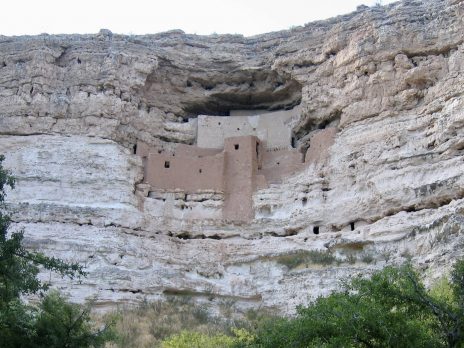
The Verde Valley, so named for the Verde River that flows through it, is the most fertile region of Arizona, and more importantly, the homeland of Yavapais and Dilzhe’e Apaches. Dr. Crandall will discuss how his community faced successive waves of exploitation of the land and its resources. This day trip will highlight the long Indigenous history of the area, taking participants to ancestral sites such as Montezuma Well (the Yavapai-Dilzhe Place of Emergence from the Underworld into their current existence) and Boynton Canyon (the place where the first woman, Kamalapukwia, came to live after the world flooded). Teachers will also visit sites of violence and conflict, such as Fort Verde State Park, from which General George Crook pursued his military campaigns in the 1870s. Most importantly, the trip will take the group to the Yavapai-Apache Cultural Resource Center, where we will learn from tribal elders, highlighting the Verde Valley’s long history as an Indigenous borderland, where settlers, the military, resource extraction companies, and the Sedona tourism industry have all sought in various ways to displace and dispossess Yavapais and Dilzhe’es, who have, in turn, adopted strategies to persist and retain a portion of their ancestral homelands and live as borderlands peoples.

Suggested Readings and Materials:

  • Maurice Crandall, “Yava-Who?: Yavapai History and (Mis)Representation in Arizona’s Indigenous Landscape,” Journal of Arizona History 61, no. 3&4 (Autumn/Winter 2020), 487–510.


Teach In Day 3 (PART 3)

Strength from the Waters: Indigenous Water Activism in the US-Mexico Borderlands

This session will focus on Indigenous water rights in the Southwest and Northern Mexico, beginning in the period of the first major reclamation projects–the late nineteenth and early twentieth century–and ending with some of the agreements and unsatisfied claims of recent decades. Dr. James Mestaz will begin with a broad overview of some of the most oppressive laws in both Mexico and the U.S. in the late 19th century, and then look at the Winters Doctrine and of usurpation of Indigenous water rights in the early 20th century. He will then zero in on specific examples such as the Mayo of Sonora and Sinaloa, Yaqui of Sonora, and Akimel O’odham of Arizona. This will provide a deeper, more intimate understanding, focusing in on Indigenous claims, activism, and Indigenous rituals. Class participation, discussion, and engagement will be a major focus of this session.

Suggested Readings and Materials:

  • James Mestaz, Strength from the Waters: A History of Indigenous Mobilization in Northwest Mexico (Lincoln, NE: University of Nebraska Press, 2022), excerpts.


Teach In Day 3 (PART 4)

Partnering with Museums and Archival Collections to Create Inquiry-driven Lessons on Indigenous History

Archives and museums can function as powerful teaching tools. Dr. Lefty will discuss how institutional collections often reflect gaps, silences, and power dynamics in the historical record, but also invite students to critically engage with often unrecognized voices and histories. To do so, teachers will engage in an inquiry-driven exploration of the exhibit “Native Peoples of the Colorado Plateau,” the result of an innovative partnership between museum curators and forty-two tribal members from the region. Presented in their own words, the ethnology exhibition recounts tribal histories, values, and cultures of ten tribes of the Colorado Plateau, including the Acoma, Dilzhe’e Apache, Diné, Havasupai, Hopi, Hualapai, Southern Paiute, Southern Ute, Yavapai, and Zuni. While learning significant content, teachers will also acquire skills for using archival and museum collections to help center Native voices, move beyond outdated stereotypes, and develop key historical thinking skills in their students. Teachers will conclude the day with reflection time to digest their learning so far.

Suggested Readings and Materials:

  • Wendy Ng and J’net AyAyQwaYakSheelth, NEH Museum Educators, “Decolonize and Indigenize,” Medium, June 12, 2018.
  • Tina M. Ellsworth, “Can We Believe What We Learn From Museums and Other Historic Sites?” in Using Inquiry to Prepare Students for College, Career, and Civic Life. (Secondary Grades), S. M. Waring, ed. (Silver Spring, MD: National Council for the Social Studies, 2023).

Would you like to stay up-to-date on all things related to the Institute for Native-serving Educators? If so, please subscribe to our email list! We will periodically send out updates and announcements through this system. Click here to subscribe to INE’s email list.