Contact the Early Learning and Development Center
Early Childhood Innovations Conference
Saturday, April 18th | 9:00 – 4:30 pm
DuBois Ballroom
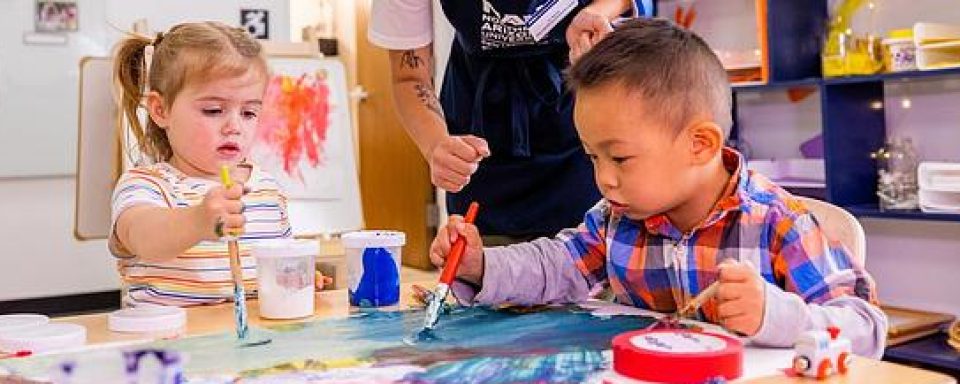
The Early Learning and Development Center is pleased to host the annual Early Childhood Innovations Conference at NAU. Meet with experts and fellow educators to learn about innovative practices for young children.
Parking, lunch, and resources are provided for all participants!
Keynote Speaker: Dr. Marti Canipe
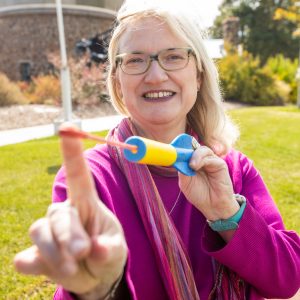
Ooh, Aah, and A-ha!
Why Wonder and joy Matter in Science
Remember wondering why the sky is blue or why puddles disappear? That curiosity is your superpower! Let’s talk about why genuine wonder and joy are essential to inspiring young scientists. Discover how playful questioning and authentic delight transform science from a subject into an adventure. Your wonder is contagious—let’s reclaim it together!
Conference at-a-glance Accordion Closed
Ongoing: ELDC tours
8:00-9:00: Registration
9:00-9:15: Welcome and opening remarks
9:15-10:15: Keynote speaker: Dr. Victoria Damjanovic, Children as Researchers
10:15-10:30: break
10:30-12:00: Breakout sessions
12:00-1:00: lunch
1:00-1:45: Community café
1:45-2:00: break
2:00-3:30: Breakout sessions
3:30-4:15: Closing session
Registration Accordion Closed
The NAU Ticketing system is experiencing technical difficulties. If you are unable to register through the link below, please call ticketing directly at 928-523-5661 or email tickets@nau.edu.
Northern Arizona University | Ticketing – ELDC Early Childhood Innovations Conference
Early Bird Registration (through February 28th): $55
Regular Registration (starting March 1st): $65
Early Bird Student Registration: (through February 28th): $43
Student Registration: (starting March 1st): $53
Group registrations can be placed by emailing eldc@nau.edu and requesting a bulk registration form.
Would you like Arizona Workforce Registry credit? Please fill out the additional registration form here.
All registered participants are welcome to tour our Reggio-inspired classrooms. To register for a tour, please complete the following form here.
ELDC Innovations Conference Tours Accordion Closed
The Early Learning and Development Center is an innovative lab school focused on cultivating life-long learners through high-quality, inclusive education. We exemplify an inquiry approach to teaching and learning, improving early childhood pedagogy through education, research, and community engagement.
All registered participants are welcome to tour our Reggio-inspired classrooms. To register for a tour, please complete the following form here.
Presenters and Sessions Accordion Closed
AM sessions:
What Happens When Children Hold the Camera? Documenting Learning Through Child-Led Media
Dr. Catharyn Shelton, Associate Professor, Department of Educational Specialties at Northern Arizona University
In this session, you’ll see how children can take photos and videos to make their learning visible. You’ll learn easy, practical ways to use tablet apps with preschoolers to show, reflect, and share their learning and ideas.
The Big Five Classroom Practices
Korina Callahan M.Ed, BCBA, LBA, CEO/Founder of Kaibab Behavior Services and Rising Mountain Academy
Challenging behavior doesn’t happen in isolation—and it doesn’t have to be addressed reactively. The Big Five Classroom Practices training focuses on prevention-based strategies that build strong relationships, increase predictability, and teach social-emotional skills intentionally. Through hands-on examples and practical tools, educators learn how small, consistent practices can lead to calmer classrooms, stronger connections, and better outcomes for all children.
Supporting Families from Indigenous Communities
Linda Begaye, Co-Teacher at the Early Learning and Development Center, Northern Arizona University
Families have a variety of perspectives on school and childcare. Among those perspectives, indigenous families face additional systematic challenges. Providing early learning to indigenous families requires a culturally responsive approach to ensure that children feel represented in a meaningful way. Hear about approaches to building reciprocal relationships with families and children to provide a foundation for creating a respectful and inclusive learning environment.
PM sessions:
How to Project Approach with EVERY Student
Jolene K. Chavez, NBCT, M.Ed. Early Childhood Special Education Mentor Teacher, ELDC
Does “Project Approach” seem like the newest Early Childhood catch phrase? Do you believe that you can’t possibly do project work in your classroom because you have standards and expectations that must be met? How can you possibly do a project when you have so many challenging behaviors to handle? You’re not the only Early Childhood educator who has felt this way. This session will answer these questions and provide real examples of how EVERY student can be successful using the Project Approach. We will discuss that the unique needs of our young learners shouldn’t be a reason why we can’t do project work, but why we absolutely should. You may even realize, that project work will decrease challenging behaviors and increase engagement. Come along with us on a Project Approach Journey and experience the joyful learning that comes with project work!
Beyond the Worksheet: Turning Standards into Open-Ended Provocations
Brena Kee, M.Ed. Elementary Education and Early Childhood Education, Mentor Teacher, ELDC
Worksheets are a familiar resource many educators use to highlight learning goals and a primary tool used in many classroom settings to document, assess and connect to learning standards. But what happens if we look beyond the page and bring the same goals into play?
This session invites educators to re-envision worksheets by uncovering the learning standards hidden within worksheets and redesigning them into open-ended, play-based explorations. Come explore how you can use the same goals to extend your activities to invite creativity, collaboration, build social/emotional skills and create authentic data for documentation through playful, inquiry-driven experiences. Participants will explore how play can serve as an authentic form of assessment while supporting diverse learners, languages, cultures, and developmental pathways. Through hands-on examples and collaborative reflection, educators will leave with practical strategies and at least one provocation ready to implement in their own classroom.
Please Don’t Say I Can’t: Rethinking Toddler Learning
Carmen Xitlally Arciniega Avila, M.Ed. Bilingual and Multicultural Education and Early Childhood Education, Mentor Teacher, ELDC
I like the materials that are presented, but my toddler can’t play with that. It’s not safe.
It get’s too messy and I try to avoid it.
I don’t know how to present materials to a young age group.
Yeah, but…
Toddlers are often underestimated because their abilities are subtle, emerging, and expressed differently from older children. Yet, between ages one and three, toddlers and older toddlers demonstrate remarkable capacities for problem-solving, communication, and cognitive development. They observe patterns, test hypotheses through play, and use gestures, sounds, and early words to convey complex ideas. Toddlers are deeply motivated learners who: persist through trial and errors, imitate adults and peers, and actively seek meaning in their environments. Recognizing these competences shifts early learning toward investing in nurturing curiosity, agency, and relationships; Foundations that support lifelong learning.
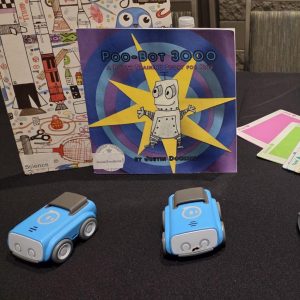
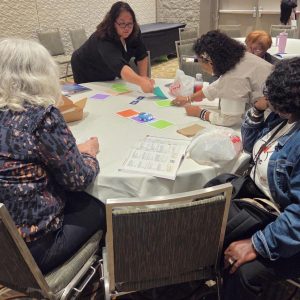
Thank you to our sponsors:




Call for Exhibitors and Sponsors:
The Early Learning and Development Center is an innovative lab school focused on providing high quality care and learning for young children, working families, student-parents, pre-service and in-service educators, and industry leaders. Early childhood educators are among one of the lowest paid professions; yet, research shows when children have access to high-quality early learning experiences, they are more likely to graduate high-school, have higher earnings in employment, and have better health outcomes. They are also less likely to repeat a grade, obtain special education, and avoid incarceration.
Your support goes towards a network of care that makes a difference in their communities. Educators are looking forward to connecting with industry experts, community resources, and brands that support the profession.
Learn about our packages and register as a sponsor or exhibitor by visiting our ticketing page: Northern Arizona University | Ticketing – ELDC Early Childhood Innovations Conference