Training tomorrow’s hygienists | Elevate, The Campaign for NAU
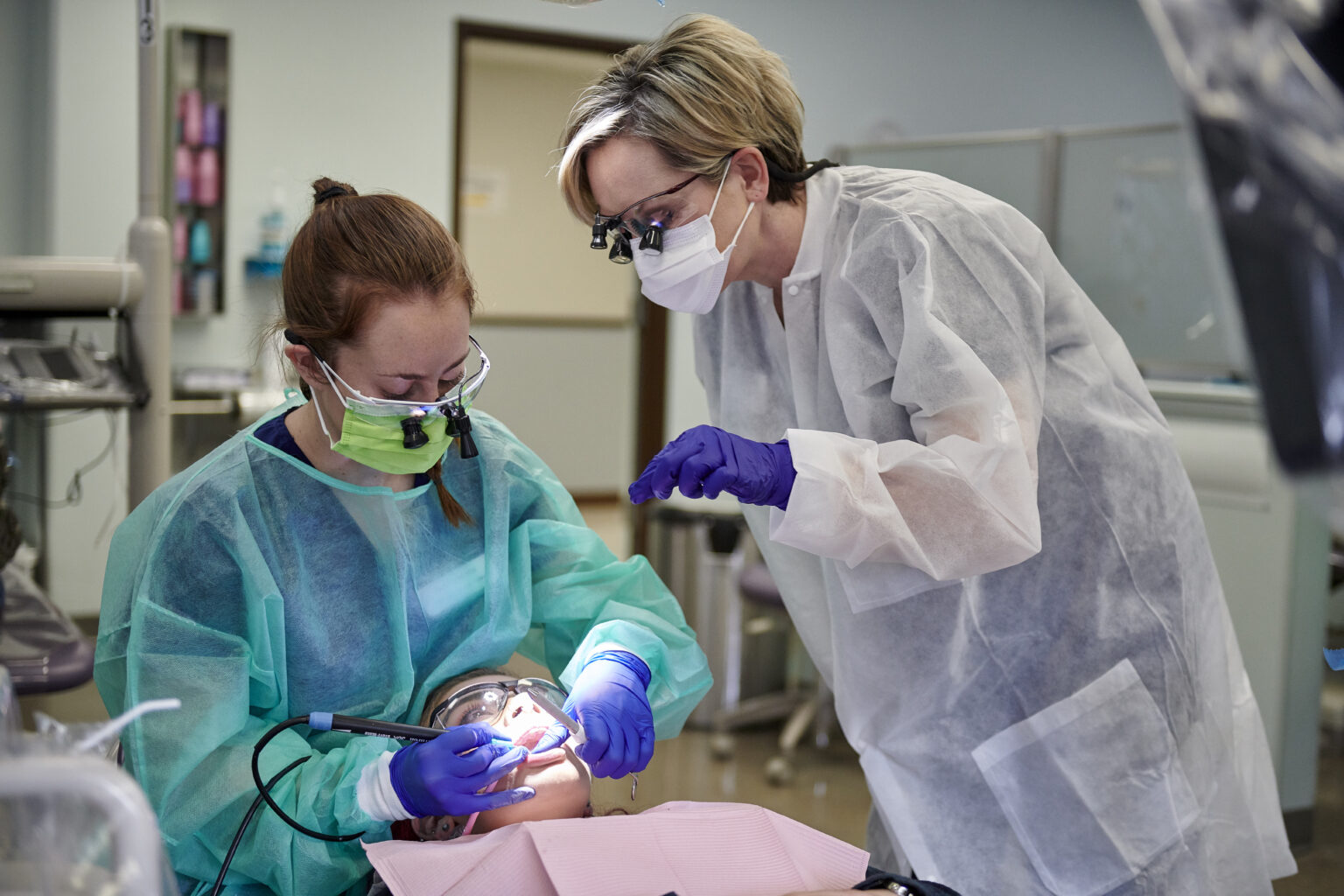
Inside a small clinic tucked just south of the Skydome, Northern Arizona University students are providing high-quality dental hygiene care to patients across northern Arizona—while gaining the real-world training that sets them apart as health professionals.
The NAU Dental Hygiene Clinic, part of the university’s Department of Dental Hygiene, has been serving the Flagstaff community for over 50 years. It offers affordable preventive services including oral exams, periodontal assessments, X-rays, sealants, fluoride treatments, and teeth whitening. Most patients pay a flat fee of $70 for a full range of services, with discounts available for NAU students, faculty, and staff.
“Our clinic serves the community with affordable, preventive dental care,” said Heather Thomas, chair of the department. “We also provide a powerful learning environment for students.”
That learning begins on campus, where students work directly with patients in a supervised setting. The clinic also serves as a hub for several key outreach programs, including Smiles for Veterans, which offers free care to qualifying veterans; the Kiddie Clinic, which introduces children to dental care in a supportive environment; and the Coconino County Dental Voucher Program, which helps low-income residents access needed services.
“Our partnerships with organizations like Delta Dental and Coconino County help us do more,” Thomas said. “They make it possible for us to serve those who often fall through the cracks.”
In addition to their clinic work, students complete rotations at hospitals, tribal health centers, and community clinics throughout northern Arizona. These placements allow them to work with underserved populations, bringing much-needed care directly to communities that often lack consistent access.
“Our students are out seeing people in communities who may not have had dental care before,” Thomas said. “That real-world experience is what makes our program different. A lot of other schools don’t offer anything like it.”

For Catherine Orth, ’25, those off-campus experiences were some of the most meaningful. During her time at NAU, she completed clinical rotations at the Hopi Health Care Center, North Country HealthCare, Flagstaff Medical Center, and the Northern Arizona Healthcare Children’s Health Center.
“I love being able to have these experiences through NAU,” Orth said. “We see so many kids where there’s a cavity on every tooth, and that’s not something they should have to deal with.”
Orth, who is from Anchorage, Alaska, didn’t always feel comfortable in the dental chair herself.
“I was always nervous going to the dentist growing up,” she said. “That’s part of what drew me to this field—wanting to help people feel more comfortable.”
It was her own hygienist who first told her about the shortage of providers in Alaska and encouraged her to pursue the field.
In one rotation, she cared for a patient in a coma who had developed pneumonia. Orth and her classmates stepped in to provide essential oral hygiene that hospital staff, stretched thin, couldn’t regularly perform.
“The patient couldn’t take care of it herself, and her partner didn’t know how,” Orth said. “We used sponges to clean her mouth every couple of hours. It really put into perspective how much we can give back to our patients sometimes without them even realizing.”
Orth said her experiences at NAU have prepared her to return home and serve in healthcare.
“I want to give back to communities like the ones I trained in here,” she said. “And I feel ready to do that.”
The program’s outcomes reflect that preparation. The department receives around 100 applications each year but admits just 32 students. Graduates maintain a 100% pass rate on national board exams, and many secure jobs before finishing the program.
“The faculty are amazing,” Orth said. “They give such great constructive criticism and do such a good job getting us ready to go into dental offices in the real world.”
Still, Thomas said the clinic’s aging equipment limits its ability to grow. Many of the clinic’s dental chairs are more than 20 years old. With donor support, the department hopes to modernize its facilities, expand its student cohort, and eventually launch a dental therapy program to further address the state’s oral health workforce shortage.
“At NAU, students, faculty, and patients are all part of a tight-knit community,” Thomas said. “That sense of connection drives everything we do.”
“Every patient and every faculty member has made me the dental hygienist I am today. Each taught me something new,” said Orth.
See the original article from Elevate, The Campaign for NAU.