
From Curiosity to Discovery: Nathan Jacobs guest lecture December 1
When Nathan Jacobs took his first steps into computer science as an undergraduate, he had no idea he was heading toward a career at the forefront of machine learning and multimodal vision research. Now a professor of computer science, assistant vice provost for digital transformation, and director of the Multimodal Vision Research Laboratory at Washington University in St. Louis, Jacobs will share his journey and insights with NAU students and faculty on December 1 as part of the SICCS Weekly Seminar Series.
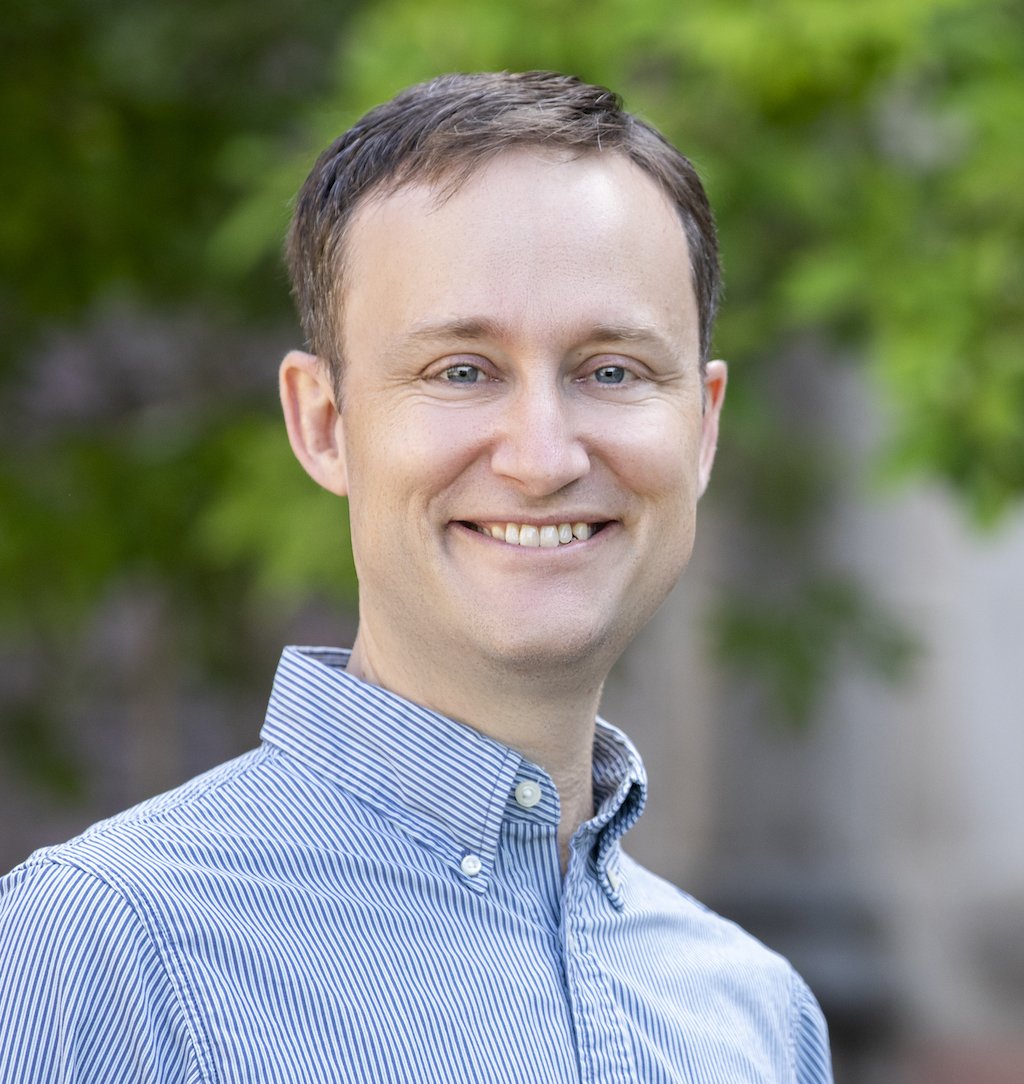
Jacobs’ path into computer vision wasn’t a straight line. After completing his bachelor’s degree in 1999, he joined the wave of innovation sparked by early search engines like Google. He spent several years as a software developer while completing an MS in computer science, but the more he explored research, the more he realized this was where his curiosity thrived. That curiosity led him back to graduate school, where—by chance—he landed in the lab of computer vision researcher Robert Pless.
“I didn’t know much about the area before starting graduate school,” Jacobs said, “and it was a fairly niche research area. I quickly fell in love with the work. There were so many things to learn, the field was very dynamic.”
That passion deepened as his advisor received an NSF CAREER award for a project called “Passive Vision,” which used long-term observations from static cameras to understand the world. The idea helped shape Jacobs’ research trajectory and remains influential in his work today.
Machine learning at the frontier
In the years since, the field has transformed dramatically. Jacobs points to one example that still amazes him: the ease of asking natural-language questions about images.
“The idea of saying ‘outline all of the cars in this photograph,’ and it works, is amazing,” he said. With rapidly advancing models, “this will have deep and lasting impacts on many aspects of our lives.”
His current work combines multimodal datasets—imagery, language, ecological data, and more—to better understand the Earth and how it changes across time and space. These methods have already been used in surprising ways: mapping agricultural fields worldwide, detecting cracks in permafrost, identifying tree mortality, and enabling language-based exploration of biodiversity data.
Multi-disciplinary discussion
Jacobs’ lecture at NAU will appeal to students in a wide range of disciplines, from computer science and engineering to environmental science, data analytics, and biology.
“This talk will explore research at the frontier of computer vision, with an emphasis on the use of multimodal datasets to understand the earth,” Jacobs shared. “Some of this will focus on applications in ecology, but there are many potential applications for the tools we are developing.”
His work is not just driven by datasets and algorithms—people are central to his inspiration. One long-running project traces back to his father, an avid observer of bird species across Missouri. Jacobs’ desire to capture, model, and share those ecological insights has resulted in multiple research papers that help naturalists and conservationists alike.
Behind the scenes: Creativity and curiosity
For all his technical expertise, Jacobs admits that creativity plays an unexpected role in his research. “I often find myself really excited about the potential title of a paper, sometimes before I have concrete ideas about the data and methods to use,” he said with a laugh. One such early title idea—Street-view Anywhere—led to a 2017 CVPR paper that continues to inspire a niche but active community of researchers.
Join us on December 1
Nathan Jacobs’ talk promises to be both inspiring and accessible, offering a glimpse into how machine learning and computer vision are reshaping our understanding of the world. Students and faculty alike are invited to see how multidisciplinary thinking, creativity, and cutting-edge technology come together in his research.
There is a catered lunch available to students! Advanced sign-up is required to participate in the lunch. Please RSVP by emailing Andrew Richardson.
SICCS Weekly Seminar Series
Monday, December 1 from 11:30-12:30
Building 90, room 102